The ENVS Experience

Blake Slattengren's Student Site

  • Courses
    • ENVS 160
      • Synthesis Posts
      • All Posts
    • ENVS 220
      • Synthesis Posts
      • Lab Posts
      • All Posts
    • ENVS 330
      • Goal Posts
      • Normative Research Project
      • Research Proposals
      • All Posts
    • ENVS 499
      • All Posts
    • SOAN 110
      • All Posts
  • Projects
    • Unsettling Sustainability
    • Urban Green Spaces and Development in Portland
    • Second Hand Stores in Portland: An Analysis of Consumer Values on Yelp
  • Concentration
  • Capstone
    • Portfolio
    • Actor Network Map
    • Annotated Sources
  • All Posts
  • About
You are here: Home / Posts / ENVS 220 / 220 Synthesis Posts / GIS Reflections

GIS Reflections

October 11, 2015 By Blake Slattengren

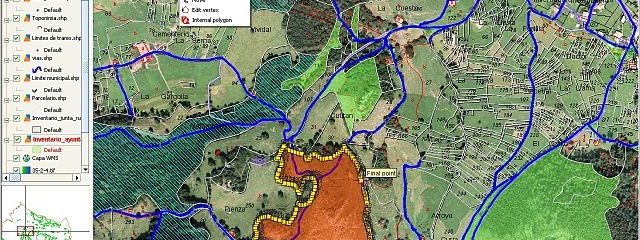
After using GIS for the past two labs, I finally think I can call myself proficient at ArcGIS. Not good, but good enough to get by. ArcGIS has proved itself to be a super useful program, but also not super intuitive. It has a lot of techie features that would be almost impossible to figure out without help. Thankfully Jim and Scotti figured everything out before us and were able to help with all the little bugfixes and other speed bumps. Also having Audrey in my lab group, who had worked with ArcGIS in a previous class, was a great resource. She knew what she was doing and helped a lot with formatting everything.

With plenty help, I learned a lot. Originally, I had questioned why we were devoting so much time to this one program, but now I can see why GIS is so important. It is crucial to understand and present data spatially in order to recognize trends on a local or global level. Combining this with the statistical analysis we learned earlier this year, correlations can be both physically seen and described through more traditional graphs and charts. ArcGIS is clearly a very important program that will be a valuable resource in upcoming projects. For example, in my concentration, I can imagine myself mapping countries with the greatest amount of investment in AgTech in order to see if countries invest more if they agriculturally more or less developed.

Besides the actual program, the skills learned through ArcGIS can be translated to other programs. For instance, a new program can have a fairly steep learning curve, and it is definitely helpful to have other people to walk through the program with. This is certainly common with the other programs, WordPress and SSPS, that we have worked with so far. Also, speed bumps are to be expected, it seems as if it always takes more time than I think. Now however, I feel more comfortable being able to take on and use a new program or application. ArcGIS is definitely a good teaching tool.

Share this:

  • Click to share on Facebook (Opens in new window)
  • Click to share on Twitter (Opens in new window)
  • Click to share on Google+ (Opens in new window)

Related

Filed Under: 220 Synthesis Posts Tagged With: Data Analysis, GIS

About Me

I am an undergrad student at Lewis and Clark college majoring in Environmental Studies and minoring in Chemistry. You can read all about my studies and adventures here.

View My Blog Posts
Mt Rainer, WA
Seattle, WA
Portland, OR
Portland, OR
Mt Defiance, WA
Lookout Mt, WA
Mt Dickerman, WA
Seattle, WA
Portland, OR
Pendelton, OR
Canyonlands, UT
Delicate Arch, UT
Flower in Moab, UT
Parma, ID
Alpine Lakes Wilderness, WA
Seattle, WA

Post Categories

  • Posts (97)
    • Concentration (15)
    • ENVS 160 (13)
    • ENVS 220 (30)
      • 220 Synthesis Posts (19)
      • ENVS Lab (8)
      • PDX Project (6)
    • ENVS 330 (14)
      • Goal Posts (6)
      • Normative Research Project (2)
      • Research Proposals (3)
    • ENVS 400 (12)
    • ENVS 499 (6)
    • Other (12)
    • SOAN 110 (5)

Old Posts

  • December 2017 (3)
  • November 2017 (4)
  • October 2017 (5)
  • September 2017 (2)
  • January 2017 (3)
  • December 2016 (2)
  • October 2016 (1)
  • May 2016 (4)
  • April 2016 (6)
  • March 2016 (7)
  • February 2016 (6)
  • January 2016 (4)
  • December 2015 (5)
  • November 2015 (11)
  • October 2015 (14)
  • September 2015 (7)
  • April 2015 (5)
  • March 2015 (4)
  • February 2015 (4)

Tags

Agriculture AgTech Anthropocene anthropology Autonomous Technology Big Data brainstorming California Capstone Concentration Conducting Research Environment Across Boundaries Environmental Literature Environmental Theory ENVX Equity Food Framing Question GIS GMOs Interviews Kale Lab Report Lewis and Clark Midterm Reflections Nature PDX place Precision Farming Purity Questions Research Outline scale Startups statistics Sustainability Assessment Sustainability in Higher Education Symposium Technology Tech of the Future The World Without Us Urban Greenspaces urbanization western apache Wilderness

Digital Scholarship Multisite © 2018 · Lewis & Clark College · Log in