For my capstone project, this week was all about situated contexts. Over the week, I tried out different framing questions, finally settling on: How can new technology adoption promote global sustainable development? With that framework set, it was time to play with place and see where I can go from my framing question. I chose three different situated contexts to explore and wrote a brief paragraph outlining each:
- In this first context, I would analyze agricultural technologies in the Western US. While innovative AgTech can be found in countries around the world, many of the highest valued and most influential AgTech companies come from the Western US. California, in particular, is a hotbed for agricultural innovation and funding. This puts the Western US at the forefront of many of the biggest current and up and coming AgTech. My focus question would be: In what ways can technologies of the fourth industrial revolution promote sustainable development of Western America through agriculture? My research would include a comprehensive analysis of academic research on the fourth industrial revolution and the future of agriculture. Following this, I will need to research current and planned policy around technology transfer in agriculture as well current scientific research and companies who work with AgTech. This can be supplemented with interviews with farmers, policymakers, scientists, and businesspeople who are at the forefront of agricultural innovation. Potentially a social network analysis could also show how these various actors are or are not connected.
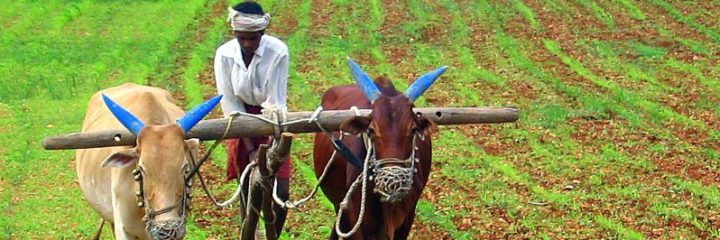
- In my second context, I would analyze agricultural technologies in India. India is another hotbed for AgTech innovation and funding. Indian agriculture is unique in that it is very widespread and varied in size and resources across the country and there is comparatively little modern technological influence. My focus question would be: How can technologies of the fourth industrial revolution promote sustainable development of India through agriculture? My methods would also require an extensive analysis of technology policy, scientific research, and entrepreneurship related to the latest in AgTech. An additional important factor would be cultural attitudes toward AgTech. One way to analyze sustainable development of agriculture would be to spatially analyze farms through GIS to see how different technologies can be used in different economic and geographic contexts.
- A third, entirely different context would be to analyze a specific technology, such as artificial intelligence, as a situated object in the context of periphery countries. This would also focus on agriculture as an area of change, but also include transportation, labor, and urbanization. My focus question would be: Through political, scientific, and entrepreneurial methods, what are ways in which artificial intelligence can promote sustainable development in periphery countries? My methodology would require a focus on and comparison between at least two different countries, such as Vietnam and Columbia. I would analyze the current state of policy, science, and entrepreneurship related to technology transfer, especially any relating to artificial intelligence. The specific environments leading to these conditions would be especially important to research as these could then be mapped through GIS and lead to extrapolating to other periphery countries.
Through exploring these three different contexts, it was initially difficult to know how much to stray from my original idea from my outline last week. For example, my second context is essentially the same as my first context, but in another country and with the implications that that brings. Once I decided to not be tied down to that format, I could go so many different places with my focus question and I wasn’t sure what to focus on. This helped to expand ways to approach my research and introduce new methodologies I hadn’t previously considered. However, upon reflection, my focus questions seem too broad and there may be ways to combine several of my ideas.