The ENVS Experience

Blake Slattengren's Student Site

  • Courses
    • ENVS 160
      • Synthesis Posts
      • All Posts
    • ENVS 220
      • Synthesis Posts
      • Lab Posts
      • All Posts
    • ENVS 330
      • Goal Posts
      • Normative Research Project
      • Research Proposals
      • All Posts
    • ENVS 499
      • All Posts
    • SOAN 110
      • All Posts
  • Projects
    • Unsettling Sustainability
    • Urban Green Spaces and Development in Portland
    • Second Hand Stores in Portland: An Analysis of Consumer Values on Yelp
  • Concentration
  • Capstone
    • Portfolio
    • Actor Network Map
    • Annotated Sources
  • All Posts
  • About
You are here: Home / Posts / Other / Bear’s Ears Monument: Are Trump’s Actions Morally Justified?

Bear’s Ears Monument: Are Trump’s Actions Morally Justified?

December 22, 2017 By Blake Slattengren

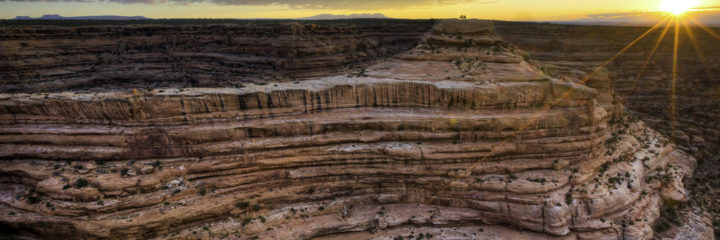
On Monday, December 4th, President Donald Trump announced a reduction of the Bears Ears National Monument by as much as 90%. President Obama protected these mesas, cliffs, and canyons that are home to over 100,000 Native American archaeological and cultural sites. Some of these sites date back 12,000 BCE and the Obama Administration argued they have great aesthetic value. However, Trump argues for the economic value of the area and that President Obama established the monument non-democratically without representing the interests of Utahns.

Even if protecting the Bears Ears National Monument does not represent the opinion of the majority of Utahans, it is still worth it to preserve the aesthetic value of the area. This is because aesthetic value applies to many more people than just Utahans. People all around the world visiting Utah can appreciate the cultural, historic, and aesthetic importance of the area. Without even physically being there, people around the world can also appreciate the aesthetic value of Bears Ears through photographs and stories about the area. Beyond even people alive today, future humans will also be able to appreciate the aesthetic value of the area if preserved. Everyone around the world from today to the future adds up to a significant amount of aesthetic value that the area holds, and with the added value of future Utahans, it could be argued that the preservation of Bears Ears does, in fact, represent the interests of Utahans. As an aside, it could also be argued that preservation of this land is also in favor of Utahans, as the land will be used for fossil fuel extraction, increasing US reliance on fossil fuels and exacerbating climate change effects, such as drought, for Utah.

Yet, the economic value the area holds for current Utahans is also of importance. Depending on the economic need for the state, it could be favorable to use some of the set aside land for development or fossil fuel extraction. However, I do not believe that Utah has demonstrated the significant need to justify the development of this land yet. This exact line where it makes sense to develop the area would be difficult to define and would need to result in a significant benefit to the livelihood of a majority of Utahans. I think is fair to say that Utah is not currently struggling enough to justify this. And if Utah was in significant economic struggle, a compromise could be made between the boundaries defined by Obama and by Trump to represent everyone’s best interests.

Share this:

  • Click to share on Facebook (Opens in new window)
  • Click to share on Twitter (Opens in new window)
  • Click to share on Google+ (Opens in new window)

Related

Filed Under: Other, Posts Tagged With: Federal Lands, Philosophy, Wilderness

About Me

I am an undergrad student at Lewis and Clark college majoring in Environmental Studies and minoring in Chemistry. You can read all about my studies and adventures here.

View My Blog Posts
Mt Rainer, WA
Seattle, WA
Portland, OR
Portland, OR
Mt Defiance, WA
Lookout Mt, WA
Mt Dickerman, WA
Seattle, WA
Portland, OR
Pendelton, OR
Canyonlands, UT
Delicate Arch, UT
Flower in Moab, UT
Parma, ID
Alpine Lakes Wilderness, WA
Seattle, WA

Post Categories

  • Posts (97)
    • Concentration (15)
    • ENVS 160 (13)
    • ENVS 220 (30)
      • 220 Synthesis Posts (19)
      • ENVS Lab (8)
      • PDX Project (6)
    • ENVS 330 (14)
      • Goal Posts (6)
      • Normative Research Project (2)
      • Research Proposals (3)
    • ENVS 400 (12)
    • ENVS 499 (6)
    • Other (12)
    • SOAN 110 (5)

Old Posts

  • December 2017 (3)
  • November 2017 (4)
  • October 2017 (5)
  • September 2017 (2)
  • January 2017 (3)
  • December 2016 (2)
  • October 2016 (1)
  • May 2016 (4)
  • April 2016 (6)
  • March 2016 (7)
  • February 2016 (6)
  • January 2016 (4)
  • December 2015 (5)
  • November 2015 (11)
  • October 2015 (14)
  • September 2015 (7)
  • April 2015 (5)
  • March 2015 (4)
  • February 2015 (4)

Tags

Agriculture AgTech Anthropocene anthropology Autonomous Technology Big Data brainstorming California Capstone Concentration Conducting Research Environment Across Boundaries Environmental Literature Environmental Theory ENVX Equity Food Framing Question GIS GMOs Interviews Kale Lab Report Lewis and Clark Midterm Reflections Nature PDX place Precision Farming Purity Questions Research Outline scale Startups statistics Sustainability Assessment Sustainability in Higher Education Symposium Technology Tech of the Future The World Without Us Urban Greenspaces urbanization western apache Wilderness

Digital Scholarship Multisite © 2018 · Lewis & Clark College · Log in