You’re in the world of The Walking Dead, Fallout, or Max Max, and the world as you know it is gone. You can either sit back and accept your doom or do something about it. In these worlds, human interactions are the the driving forces of existence. The heros are there to save people and […]
Environmental Theory
This class is an "advanced exploration of major theoretical assumptions underlying environmental studies, including the nature of environment, environmental knowledge (including role of sciences and humanities), and environmental problems and solutions." We discussed major theoretical realms such as knowledge, politics, ethics, and reality, applied them to a situated context by creating and carrying out a praxis project, and developed our own environmental theories.
Scientific literacy and the Role of Science in ENVS
What is scientific literacy? What should we learn about science, and who should decide? These are some of the questions we have been dealing with in ED 455: Science Education in the 21st Century for the past few weeks, and this week in Environmental Theory we talked about science and the role it should and […]
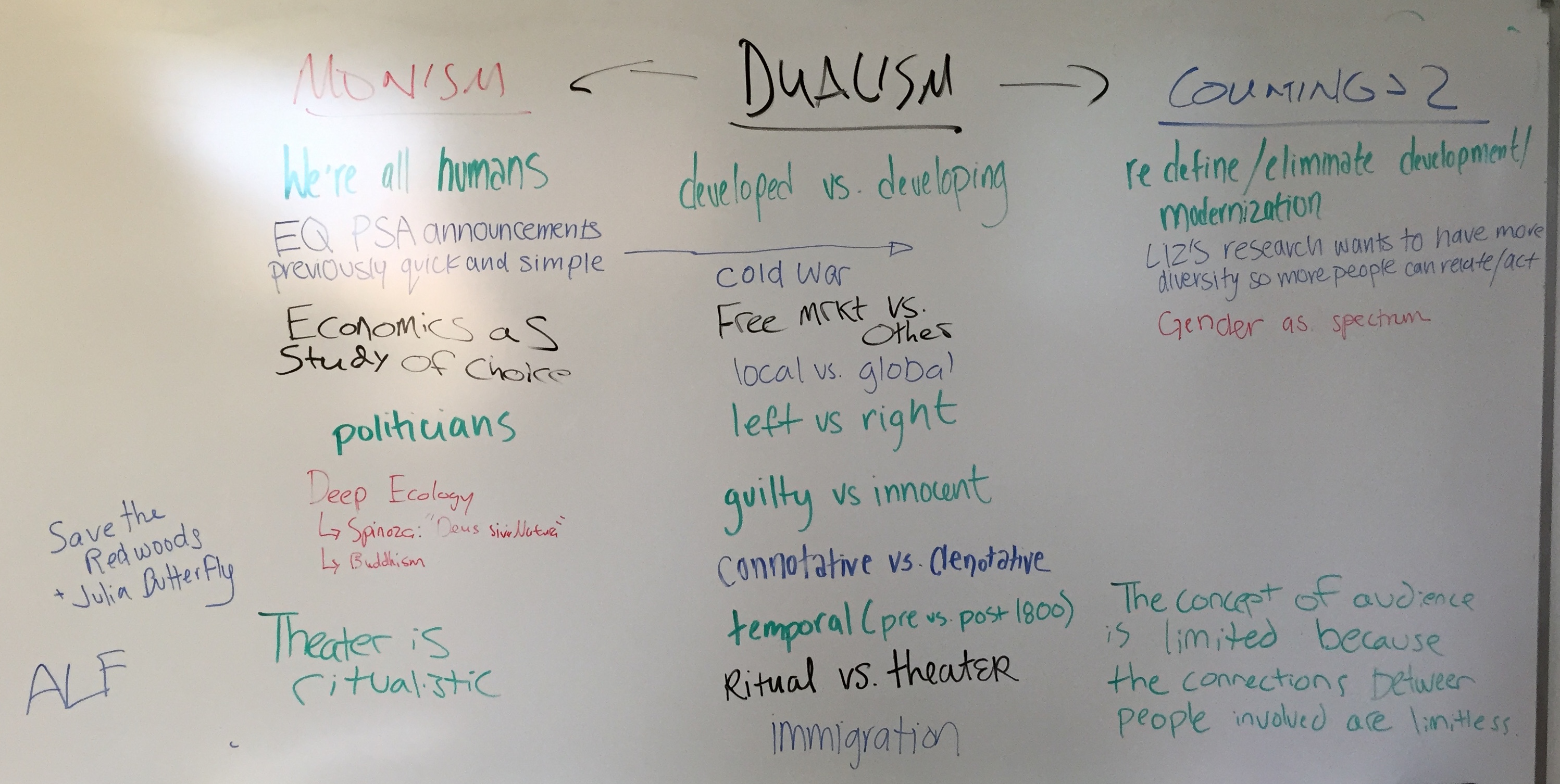
One, Two, Infitinity
This week was a shout out to the 2014 Environmental Studies Symposium: We the Anthropos. In addition to focusing on the Anthropocene, we examined the different views of reality in the Anthropocene. Many of these views had to do with what our view of nature is: is it wild and untouched or is it tame […]
Place and Translocal Solidarities
This past week, we focused on notions of place, a big topic of interest for me, considering my concentration in place-based education. After all, to understand place-based education first we must understand place — what’s important, where it is, and how it’s changed over time. We struggled with the ideas of nature/culture, local/global, and stasis/change, […]
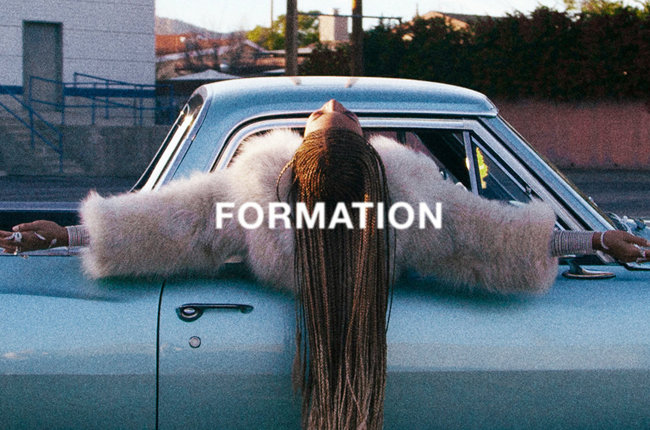
Formation: Strategic Essentialism?
Although I wasn’t in Portland last semester, I still heard a lot about the racially charged events that took place on our campus in the fall. Every year since I came to Lewis & Clark there has been some act of hate on our campus, usually following the Ray Warren Symposium on Race and Ethnic Studies. […]
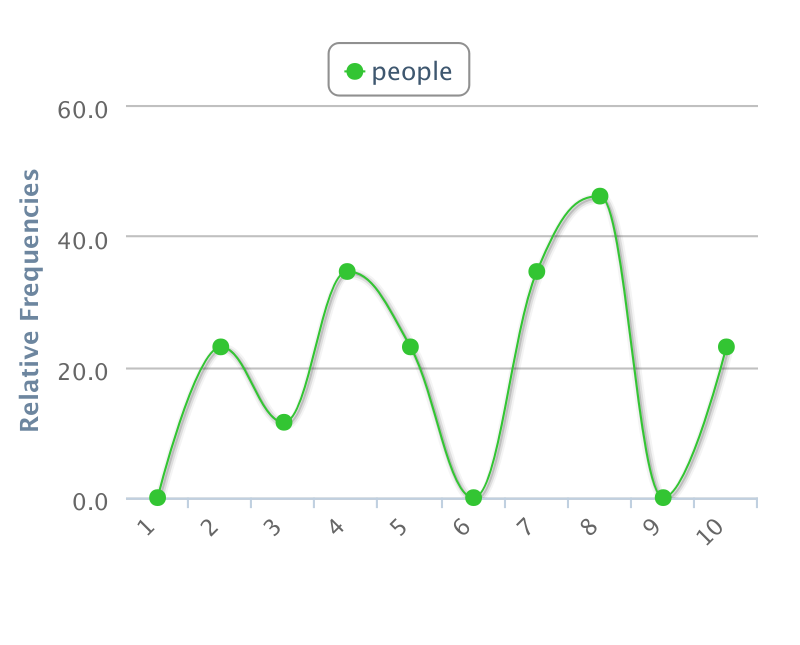
Text Analysis: Big Words in the Malheur Occupation
After examining the various actors within the Malheur Occupation, we gathered a collection of primary source information to analyze using Voyant Tools. Voyant Tools is a “web-based reading and analysis environment for digital texts,” that makes it possible to produce word clouds and graphical representations of word trends within a certain text. I decided to analyze […]