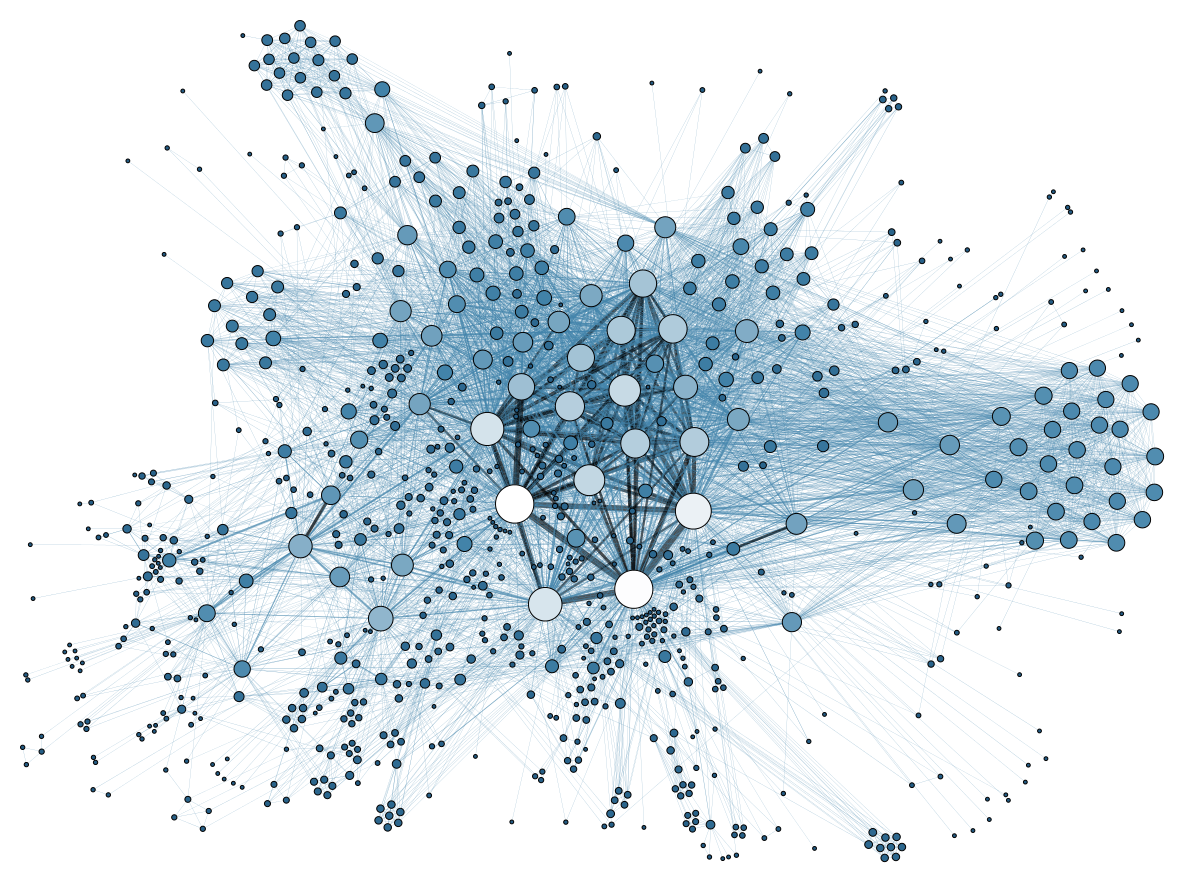
As resources for scientists have increased, single author papers have decreased substantially. With the practice of “big science” in tandem with increased funding, working in teams is often necessary. Better communication methods and ease of mobility have helped collaboration intra-institution as well as internationally. Wolfgang Glänzel and András Schubert are critical of representing scientific networks through co-authorship because this form of identifying collaboration often leaves out contributors within the authors institution. However, “co-authorship seems to reflect research collaboration between institutions, regions, and countries in an adequate manner”(Glänzel and Schubert 259). Since I am more interested in collaboration across institutions and countries rather than intra-institutional collaboration, this method seems appropriate for my research. Collaboration across countries is very dependent on the size of the country as well as the political and economic state. While exception exist, international collaboration and collaboration is generally seen as a positive phenomena, because of its ability “to promote research activity, productivity, and impact.” Thus, it should be “encouraged and supported by the means of research management and science policy”(Glänzel and Schubert 274). With my network of co-authorship of cloud classification papers, I hope to highlight international collaboration as well as see if there are sub-networks that are more intra-institutional. I expect there to be much more international collaboration with school affiliations because there is often no more than one person of each specialty at a university, whereas a huge national laboratory like ARM would benefit from many people working on similar projects.