The new plan for my thesis is to dig into master planned eco-cities. Beginning in the early 2000s, dozens of development plans for brand new, sustainable cities began showing up in countries as diverse as the United Arab Emirates, Nigeria, China, Singapore, Kenya and Ghana. China is purported to have literally hundreds of these new cities in the works (I’m unsure how many are specifically branded as “eco-cities”), and there are well over a dozen in various African countries. These multi-billion dollar projects are often privately financed, and make claims to both environmental sustainability and economic profitability. Many are also designed as discrete communities, with some literally walled off from their surrounding urban environments.
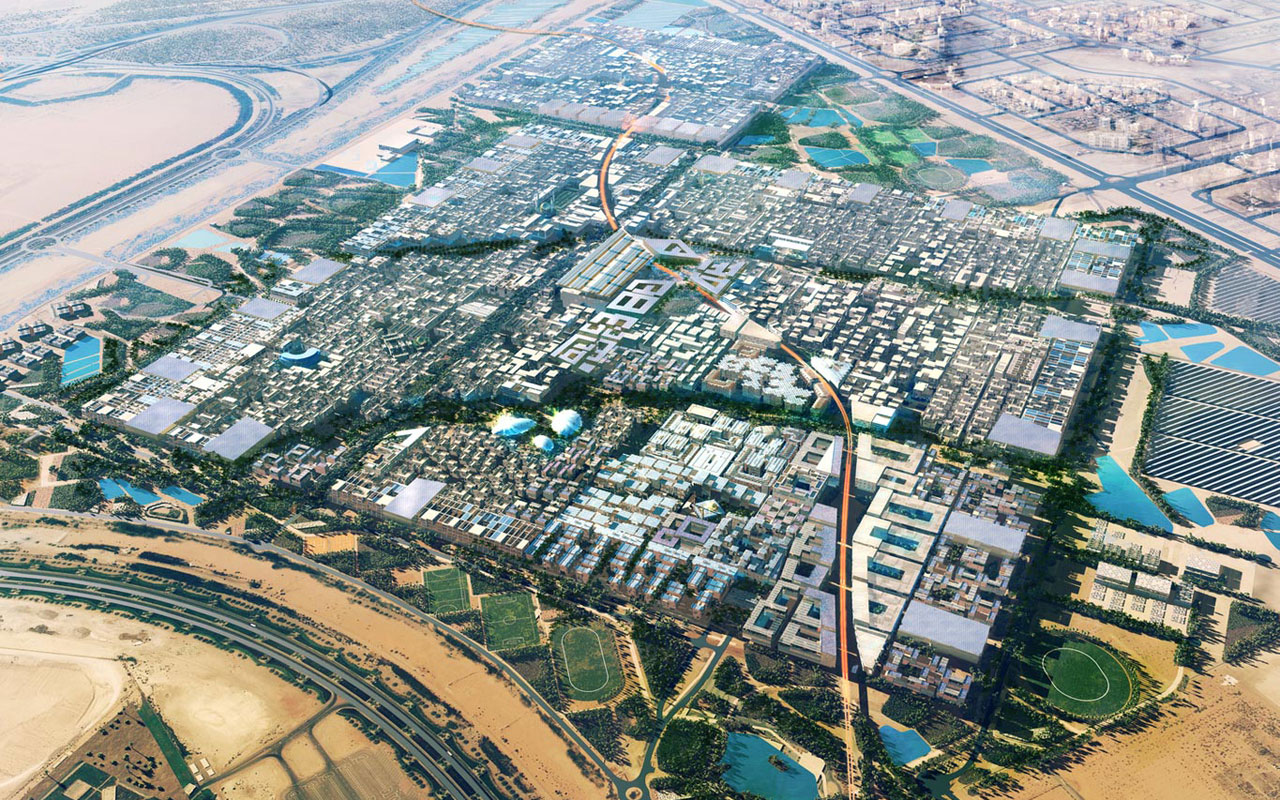
Masdar City, UAE
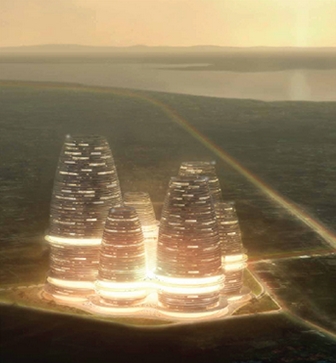
HOPE (Home, Office, People, Environment) City, Ghana
I think that what makes these new, utopian cities interesting is that they are such a phenomenon—that is, that dozens of similar projects have popped up all over the world in a relatively short time span. Because of that, I’m leaning toward doing a kind of meso-level study, and trying to flesh out the connections/ divergences between a variety of eco-city developments. As outlined in my most recent post, right now I have four big sets of questions, related to (1) eco-cities as utopian/iconic landscapes, (2) historic antecedents to master planned eco-cities, (3) goals/motivations/assumptions of specific eco-city projects, (4) connections to broader theory and discourse on sustainability. These categorizations may turn out be a bit arbitrary, but they do help to define my methodology:
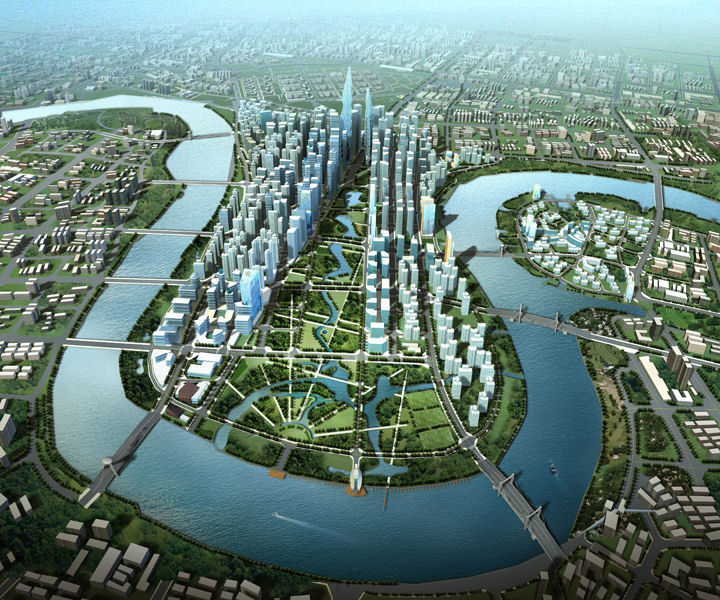
Tianjin Eco-City, China
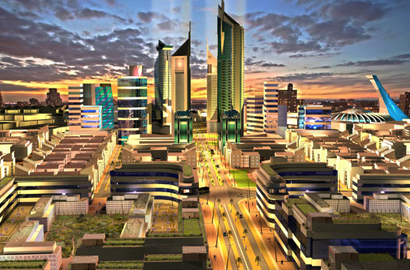
Konza Techno City, Kenya
Parts 1, 2 and 4 will largely be approached through focused literature review. Part 2 in particular will require a historical approach, looking at both the material (architectural) and ideological traditions that current eco-city projects are built upon. This means identifying key historical trends in urban planning and architecture, tracing how and why they developed, and what consequences arose. This section will also likely entail some visual analysis—that is, visual comparison of current eco-city designs with other city plans—to pin point what elements may be unique to the eco-city phenomenon.
Part 3 will entail a discourse analysis of the eco-cities’ websites, promotional materials, evaluation reports, and any other documents I manage to collect. (A key methodological question here is how many and which eco-cities to analyze). One goal will be to pick out their particular goals and motivations regarding sustainability, paying attention to the relative weight given to ecological, economic and social concerns. Another goal is to figure out who is planning, financing and constructing these cities and for what purposes. Lastly, I want to try and tease out what kind of assumptions about climate change are built into these cities. That is, how do the planners conceptualize the “nature” of the problem, and how does that affect their approach to solutions?
Lastly, theory! Part 1 and especially part 4 will analyze these cities in light of specific theorizations about sustainability, politics, and utopianism. I imagine I’ll lean pretty heavily into critical theory for this— right now at the forefront of my thoughts are David Harvey’s notion of “dialectical utopianism” and Slavoj Žižek’s conceptualization of “post-politics.” More on these soon…