By Kara Scherer
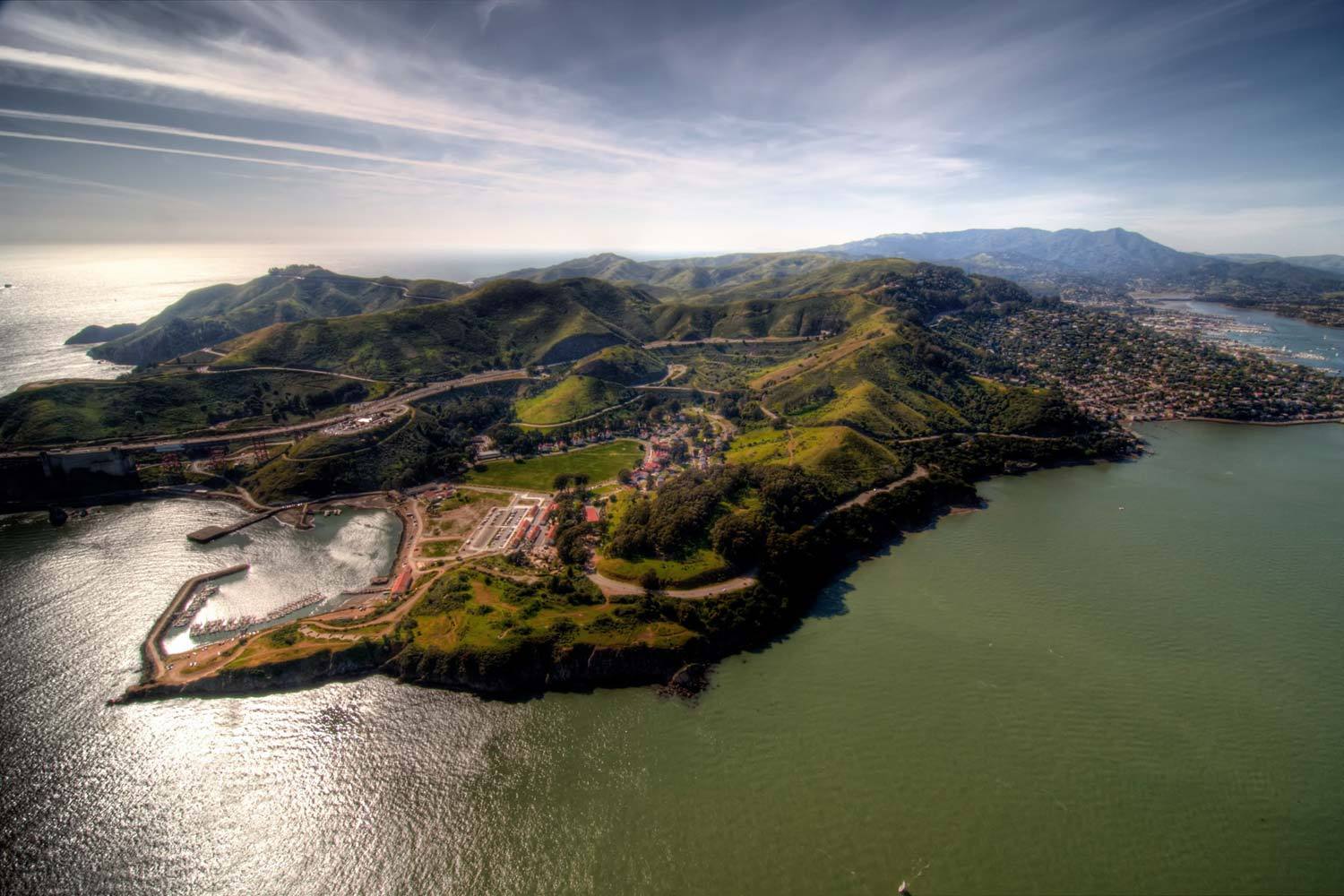
As we huddled together as a group, Eric taught Colette and I about convection currents as the fog rolled in from the vast blue Pacific and over the surrounding hills. The wind made the native plants around us dance, while the trees gently swayed above us. As Eric finished his explanation, Colette and I excitedly dashed up the hill to our teaching spot, and waited for our classmates to come by. It was our last day in the Marin Headlands, and after five days of being immersed in learning about the geology of the area, the scraggly cliffs and rolling hills had become our playground. Today we were given a very important task: it was our job to teach our classmates about convection currents that were happening as we spoke, right under the Earth’s crust.
This was my first experience with place-based education, although I didn’t know it at the time. My 5th grade class went on a five-day trip to the Golden Gate National Recreation Area, right across the bridge from my home in San Francisco but worlds away in terms of the surrounding environment. My classmates and I were led by a field science educator who taught us all about the surrounding area as we hiked through the forests, climbed the mountains, cleaned up the beach, and observed the animals, both in their natural environment and under a microscope (if they fit). It was one of the highlights of elementary school for me, and to this day I haven’t forgotten what Colette and I taught our fellow classmates about.
Little did I know that I would be back in the Marin Headlands as a senior in high school, teaching school groups science-based activities. As part of the same program, my colleagues and I attended a youth summit with the organization Outdoor Nation. We listened to a presentation about the decline in the time children spend outdoors. Apparently the average child in the United States spends about seven minutes outside doing unorganized activity each day. We were then charged with the task of finding a way to get kids outside, and decided that the people who would have the most influence over the greatest amount of children were teachers. We believed teachers could begin to change students’ perceptions of the outdoors at an early age, so that hopefully they would grow up with a deeper respect for it. From there, we decided to hold a series of teacher professional development workshops that gave teachers the ability to utilize the natural environment in their lesson plans, not just in science but also English, math, history, art; essentially every subject could be incorporated. I think this is where my really big interest in place-based education began.
I also had some place-based education in my high school environmental science class. We took a fieldtrip one day to walk around the lake near my school to collect water samples and invertebrates, and observe the surrounding foliage. We did water quality tests each year and contributed to a data archive. This experience was similar to my experience in Bio 141, where we went out to Tryon Natural Area weekly throughout the semester to carry out a biology project.
While I was in Guatemala during spring break, I worked with an organization that utilized sustainable design and materials to build a school. Their end goal is to leave that school with a self-sustaining building and administration. They plan to implement a place-based curriculum based off their observations of the community’s needs that they have been documenting for the past thirteen years. From their observations and interviews, community members expressed a need for homes, schools, water catchment systems, stoves, and retaining walls. They have been experimenting with building these things with the trash produced by the city, since there is also a problem with waste disposal. They plan to have a project-based curriculum each year that addresses the structures that the town needs. For example, in seventh grade, the students will learn all about stoves – in math and science they’ll learn the physics of building it, they’ll write and perform a play informing their families about how to use them for English, and learn about the proper ventilation and health effects for Health class. By the end of the year, their final project would be to build a stove.
This organization said besides the structures the community members requested, the number one need was jobs. This curriculum addresses so many of the community’s needs: the students leave with a skill that they can use once they graduate, and what they are learning is relevant to their community’s needs. They also build partnerships with the community to get supplies and other help. I was really excited when I learned about this project, since it’s such an engaging and useful thing to learn about.
Featured Image:
http://www.garyyost.com/index.php#mi=2&pt=1&pi=10000&s=3&p=2&a=0&at=0