by Jess Kostka
This reflection was inspired by the activities in the place-based education manual “Learning to Make Choices for the Future” by Delia Clark. I wrote this reflection because I wanted to reconnect to my hometown and begin thinking about how I view where I come from. Establishing myself there helped me think both about how I perceive place and how others might relate to place. I think this helped me understand how important our homes are to us, yet how hard it is to capture that importance in words. I know I captured what equates to around one percent of what I feel for my home, even though it doesn’t look like much to anyone else. If I become a teacher, I will keep this in mind to try to grasp how my students might relate to their surroundings and what aspects of their community might be important to them.
Let me tell you the story of Gordy Ainsleigh. Back in the sixties, right before the start of the 100 mile horse race called the Tevis Cup, Gordy’s horse went lame. But Gordy didn’t let that slow him down. He decided to run from the snowy slopes above Lake Tahoe all the way to the foothills of Auburn, my hometown, on foot. Not only did he finish, but he even made it in under the 24 hour time limit. The next year, he did it again. Slowly, more runners began to join him, and the sport of trail ultramarathoning was born. A whole new race was created using the same course as the horses – a race called the Western States 100 that today draws runners from all over America and abroad. It climbs nearly 18,000 feet and descends 23,000 feet. The finish line is on the track at my brother’s high school. I’ve volunteered at the race twice. My cross country coach won it two times back in the eighties. I’ve even met old Gordy himself out on my runs. He’s well over sixty now, and still jogging around in nothing but a pair of faded shorts. He runs the Western States every year. The Western States, the Tevis Cup, and a dozen other shorter races accumulate to make my hometown the Endurance Capital of the World.
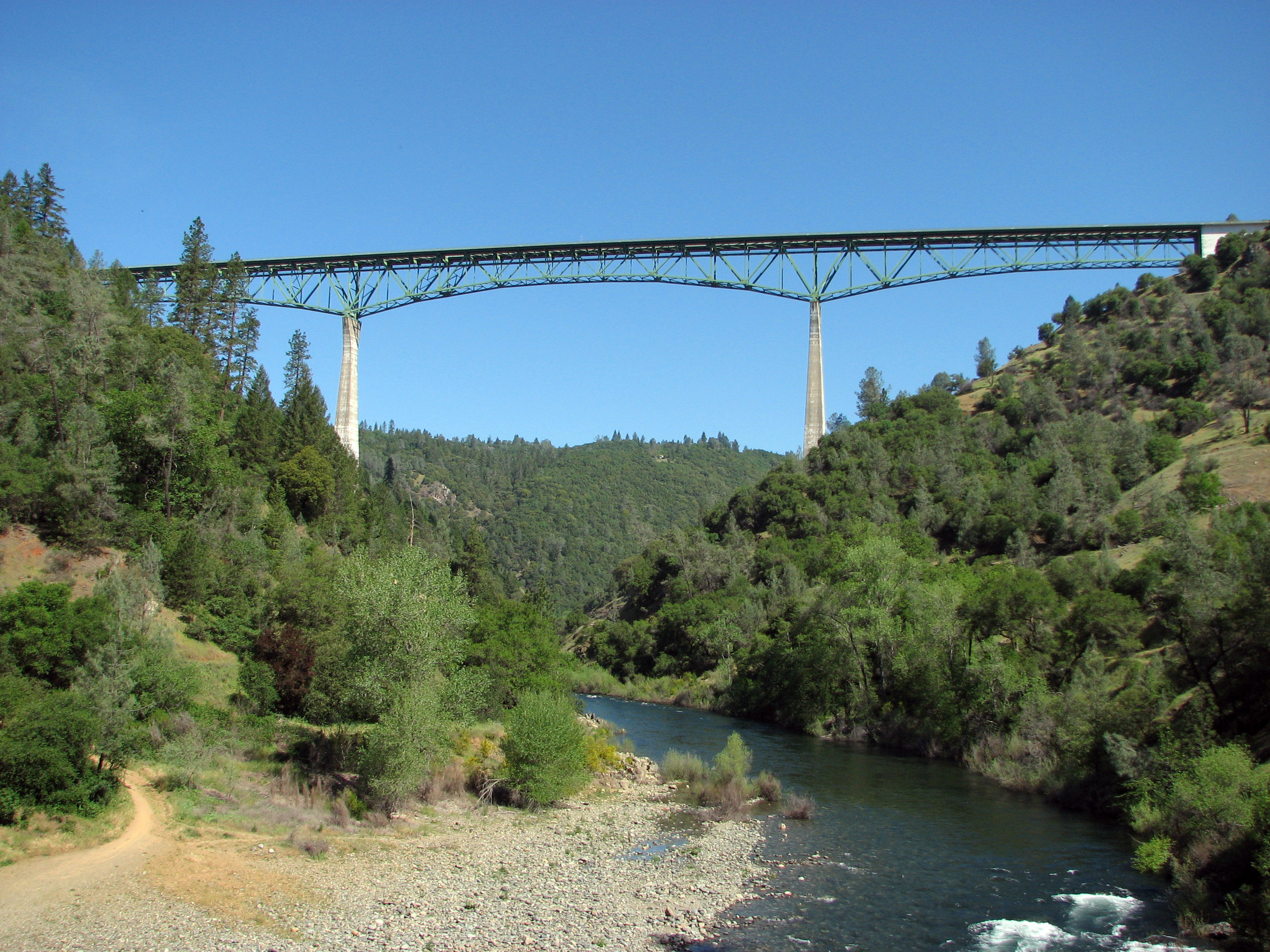
Gordy’s story is famous in my community. Because of a collective relationship to nature through running, maybe it’s fitting that I consider the landscape of my home to be its most important aspect. Although I grew up in Auburn, I consider my home to encompass a lot more than just the city limits. My home is wherever the hiking and running trails go. It stretches from Lake Tahoe and its surrounding snowy peaks to the winding foothill roads lined with old oaks and farms and wineries. When I think of home, I think of a landscape that reaches all the way out across the canyon as far as the eye can see – along the curves of the highway, past the farm with the hundreds of old boots stuck on the fence posts, and the turnoff to the reservoir with the rope swing, and the old red barns, all the way to the place where the apple orchards are, almost as far south as Yosemite, as far as the eye can see. I think of the running trails crisscrossing that forest, and the bridges, and the old mines, and the ice-cold river with the old rednecks panning for gold. Of course, it’s not just the landscape. Being a runner means seeing in the image of my landscape all the people I’ve experienced it with. I see memories carved into the physical world. I think of little diners along winding roads where my cross country team used to stop for food after a race. I think of the trails we trained on every day that wound down to the river. When I feel homesick, I often delude myself into the idea that revisiting those landscapes will make me feel what I once did. That sense of family, of friendship, of belonging.
I should note that this is written through a lens of nostalgia and homesickness. I didn’t used to care about my home. I took it for granted. It only dawned on me that I belonged to my own home until leaving for good was on the horizon. And when I did leave for Portland, I began to truly love and take pride in where I came from. I didn’t realize I lived in a world of pale, dry, warm yellow and dark green and light blue until I moved somewhere that was bright kelly fern green and stormy steel iron gray. I didn’t realize I lived in a world that smelled like sunscreen, and the smoke of the forest fires that evacuate my friends from their homes, and the outdoor scent of my mother’s jacket after a day skiing in the mountains, and corn-on-the-cob drifting from a neighbor’s barbeque, and those sickly white flowers in springtime. Not until I moved to a place that smelled like rain on pavement, and mud, and crushed beetles on the windowsill, and street food from a hundred different cultures, and cigarette smoke. I try to belong wherever I am, to take it all in, to be present in my immediate surroundings. I try to notice the world around me. I believe strongly in the power of being mindful and present for my own well-being. But at the same time, I find myself missing wherever I’m not. When I’m at home in Auburn, I miss Portland. When I’m in Portland, I miss Auburn.
If I could take one photo of my hometown, I would stand on the cement barrier of the railway that wraps around the mountain and take a panorama shot. Standing on that ledge makes me feel powerful. I’m not supposed to be there – the journey involves hiking along an access road covered with No Trespassing signs, walking underneath an interstate highway through a tunnel coated with layers of graffiti, through a field where the ground is strewn with shotgun shells – yet I feel like I belong there. Like I’ve ascended an unconquerable peak. Like I’m on the edge of seeing everything. If I could, I would fit the railroad tracks into the photograph too. Just as the ski tracks on the snow-covered mountains do, the parallel nature of railroad tracks has always conveyed to me a sense of evenness, of sameness, of unchanging-ness that feels like the essence of my home to me. It’s a small town, after all. Most families have been there for generations. When I lived there, I hated how even, how same, how unchanging everything was. Now, it’s comforting. Now, and only now, it’s home.
Featured Image: http://en.wikipedia.org/wiki/Foresthill_Bridge