I had the opportunity to meet and work with a variety of organizations while in New Zealand, all of which were working towards a similar goal of sustainability but in a different manner. One of the organizations, the Enviroschools program, gave me an interesting perspective on what is important to learn about “place.”
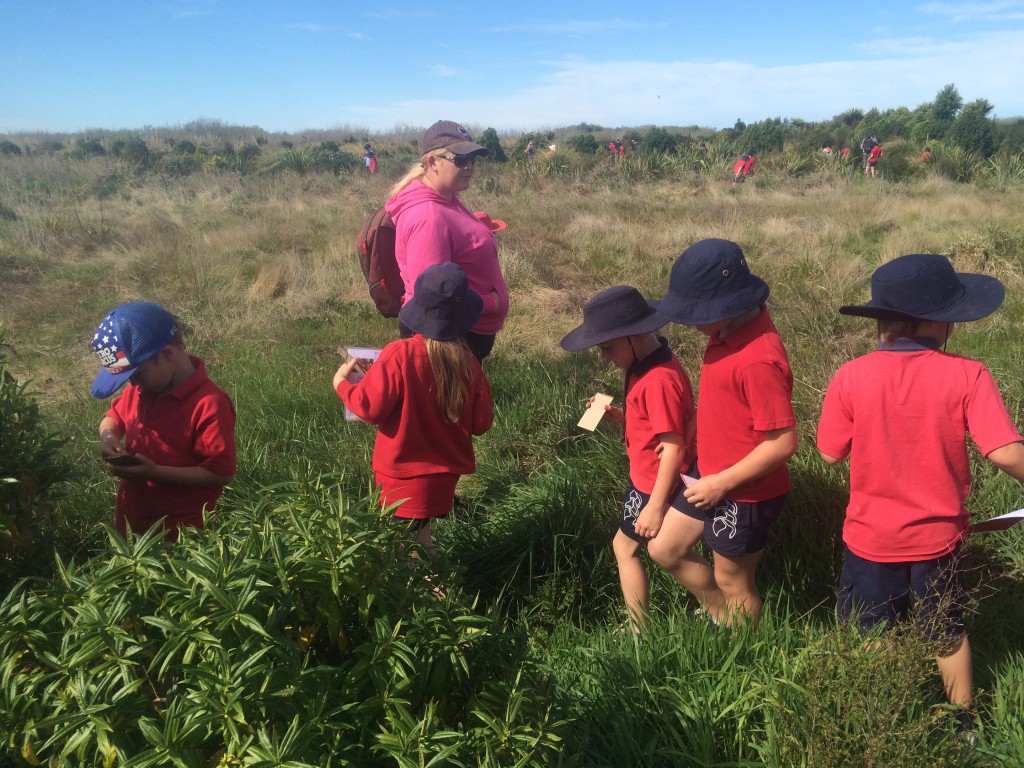
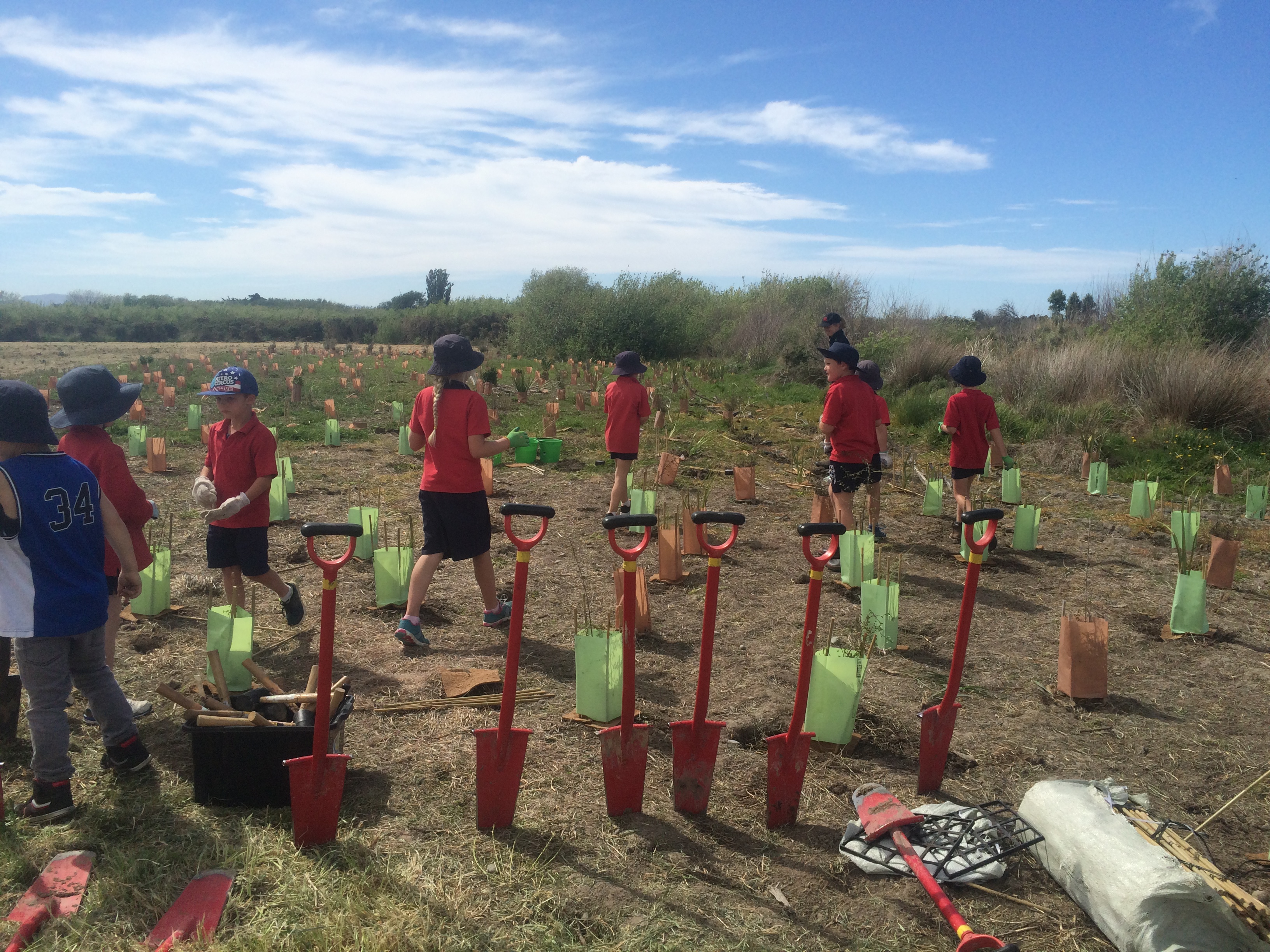
One sunny morning I had the privilege of accompanying Matthew Stanford, Enviroschools Canterbury facilitator, on a field day plantout for Leeston school. He had coordinated a huge day of service in which about 150 elementary school students came out to a remote plot of land by one of New Zealand’s biggest lakes to learn about native species, plant a riparian zone to mitigate the effects of runoff from the cattle farms and bring back some native bird species, learn about some of the important bugs that live in the riparian zone, and learn about different cultural uses for some of the plants from a Maori elder. The students were split up into four different groups, and throughout the day had the opportunity to rotate through each of the activities. Matt’s field day almost perfectly encompassed all of the Enviroschool core values:
- Empowered Students are enabled to participate in a meaningful way in the life of their early childhood centre or school. Their unique perspectives are valued for the knowledge and insight that they bring, and they are supported to take action for real change.
- The principle of Learning for Sustainability recognises the types of teaching and learning that foster student empowerment, decision-making, action and sustainable outcomes.
- The principle of Māori Perspectives honours the status of tangata whenua in this land and the value of indigenous knowledge in enriching and guiding learning and action.
- Respect for the Diversity of People and Cultures acknowledges the unique gifts, contributions and perspectives of individuals and groups, reinforcing the need for participatory decision-making in Enviroschools.
- Sustainable Communitiesact in ways that nurture people and nature, now and in the future, to maintain the health and viability of our environment, society, culture and economy.
One of the things that surprised me most is the importance of different cultures and perspectives in becoming an Enviroschool. Because of the name, I initially assumed that Enviroschools would have a very ecological focus, when in fact they stress the importance of different cultures and the need to incorporate the surrounding community into the school community. This integration is what I see as place-based: it utilizes community and school assets to ground and enhance student learning. The fact that one of the stations focused on a Maori community member teaching students how to weave the flax that they were planting gave an even deeper cultural significance to the work they were doing. The year before, some of the same students had planted native vegetation in the same area, and were able to see how much it grew and changed over the course of the year.