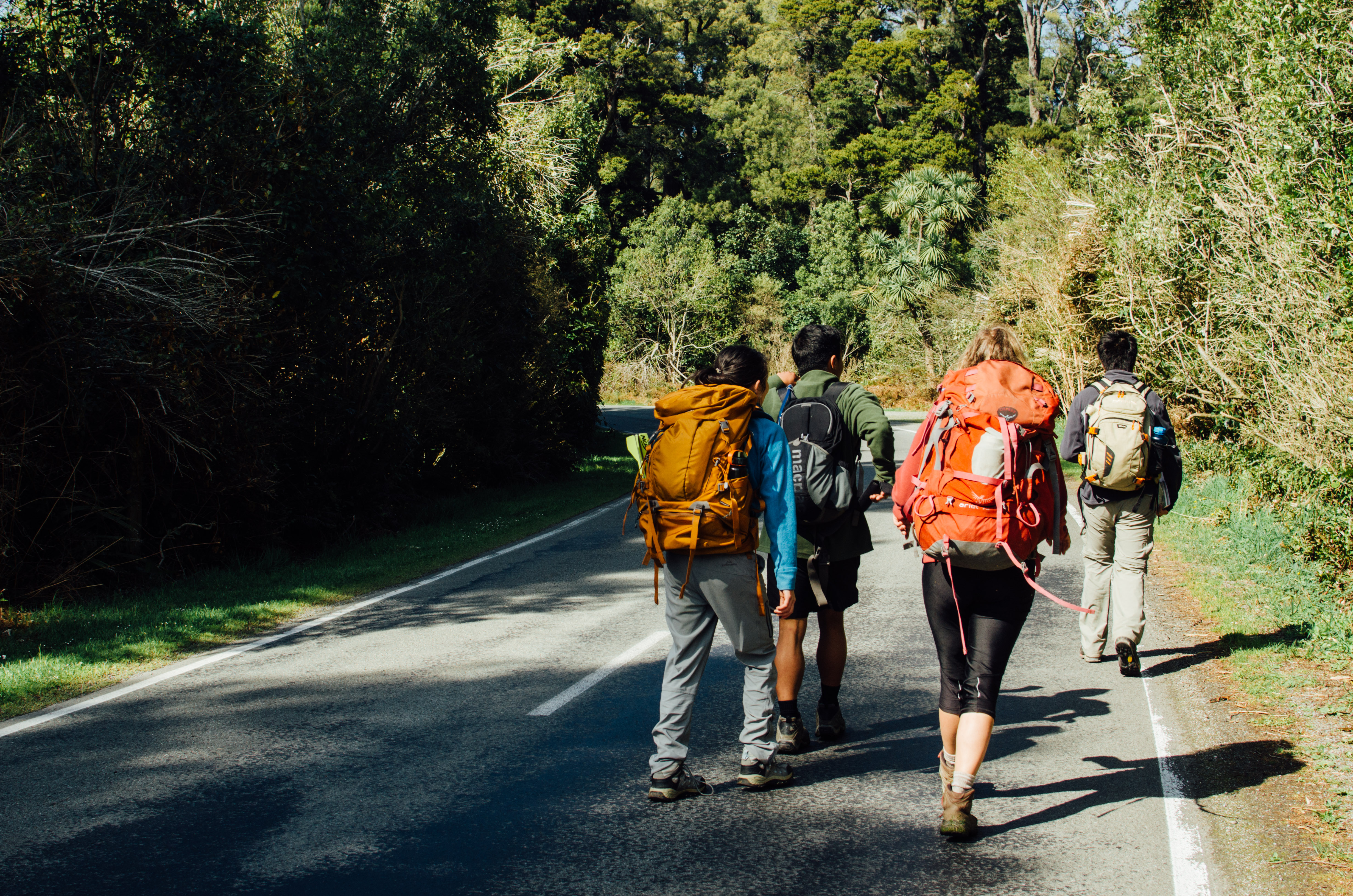
Thanks to the joys of networking and kiwi hospitality, I was invited on a field trip with Christchurch Polytechnic Institute of Technology’s (CPIT) Sustainability and Outdoor Education degree students. The trip was to Peel Forest, on the south eastern Canterbury plains just before the Southern Alps. The field trip spanned three days and two nights, which were spent at the Peel Forest EcoLodge, an off-the-grid facility that utilizes all kinds of conservation efforts such as solar-electric energy, composting toilets, and grey water wetlands. Having bunks available was a luxury to the students, as they just came back from a five day tramping (backpacking) trip last week. As a matter of fact, they told me that this is the tenth overnight field trip this year including numerous skills clinics in rock climbing, avalanche safety, kayaking, etc. According to the students, the degree they receive, which also includes theory-based classes, will allow them to either teach in a classroom or become an adventure tour guide at the end of three years. There were fourteen students on this trip, including two students from the U.S., and one each from Hong Kong, Australia, the Philippines, and Malaysia.
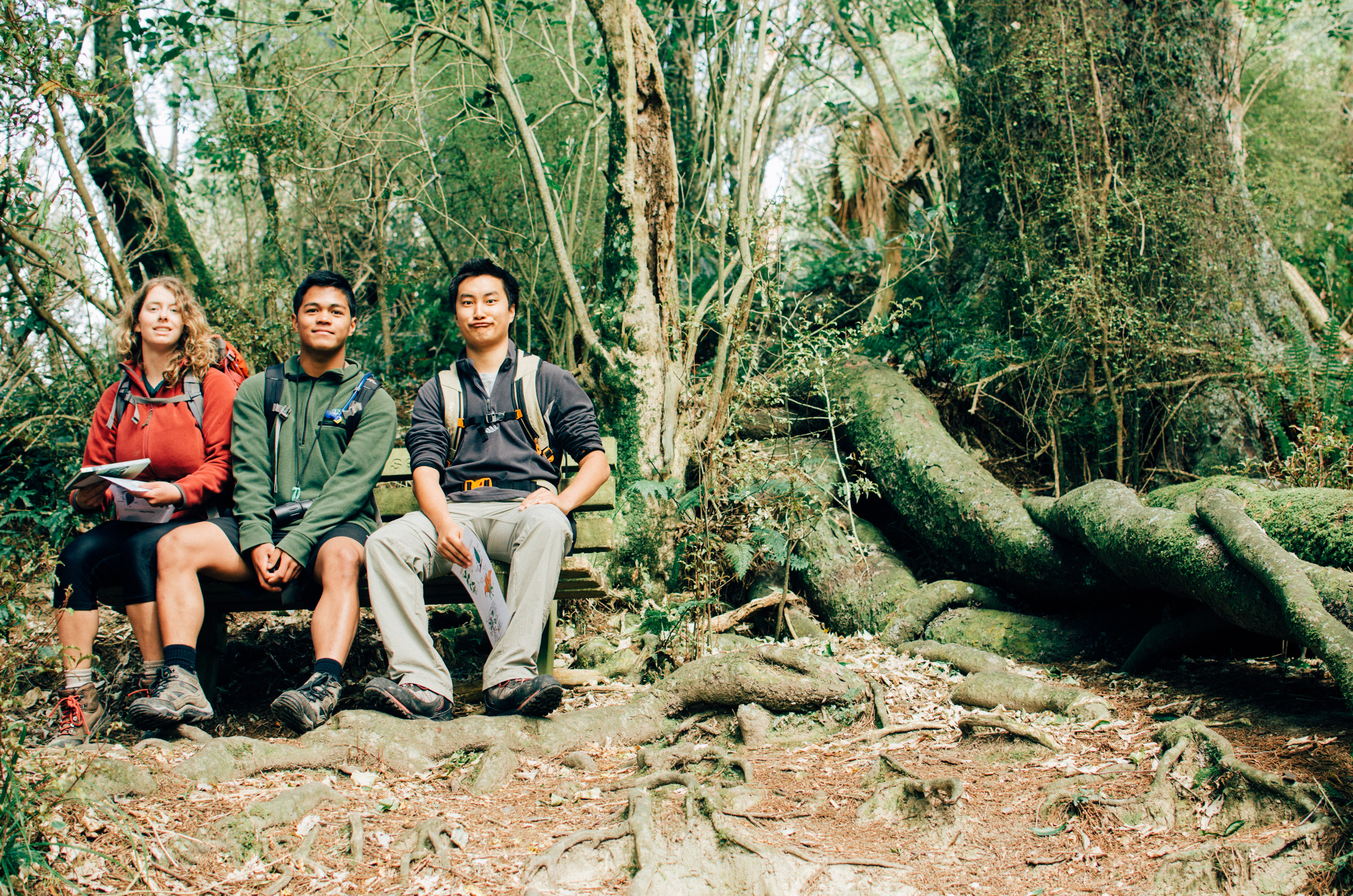
The first day we packed ourselves into two vans and made our way through the Canterbury plains, making stops along the way for student presentations. The first day, we had presentations on the volcanic history of the Banks peninsula, eutrophication in in one of New Zealand’s largest lakes caused by the recent increase in dairy farming, formation of the South Island’s beautiful braided rivers, and the unique biota of Aotearoa. Each presentation was given at a site relevant to what the students were talking about, and they each included a short group activity. For example, the volcanic history of the Banks peninsula was presented on a beach with a view of the surrounding volcanoes, and we created a diagram in the sand with volcanoes made up of baking soda and vinegar. While talking about eutrophication, we stood on the banks of Lake Ellesmere/Te Waihora and could see first hand the discoloration of the lake. There, we took out nets and did a quick macro-invertebrate analysis. From a place-based education point of view, you couldn’t get more place-based than that.
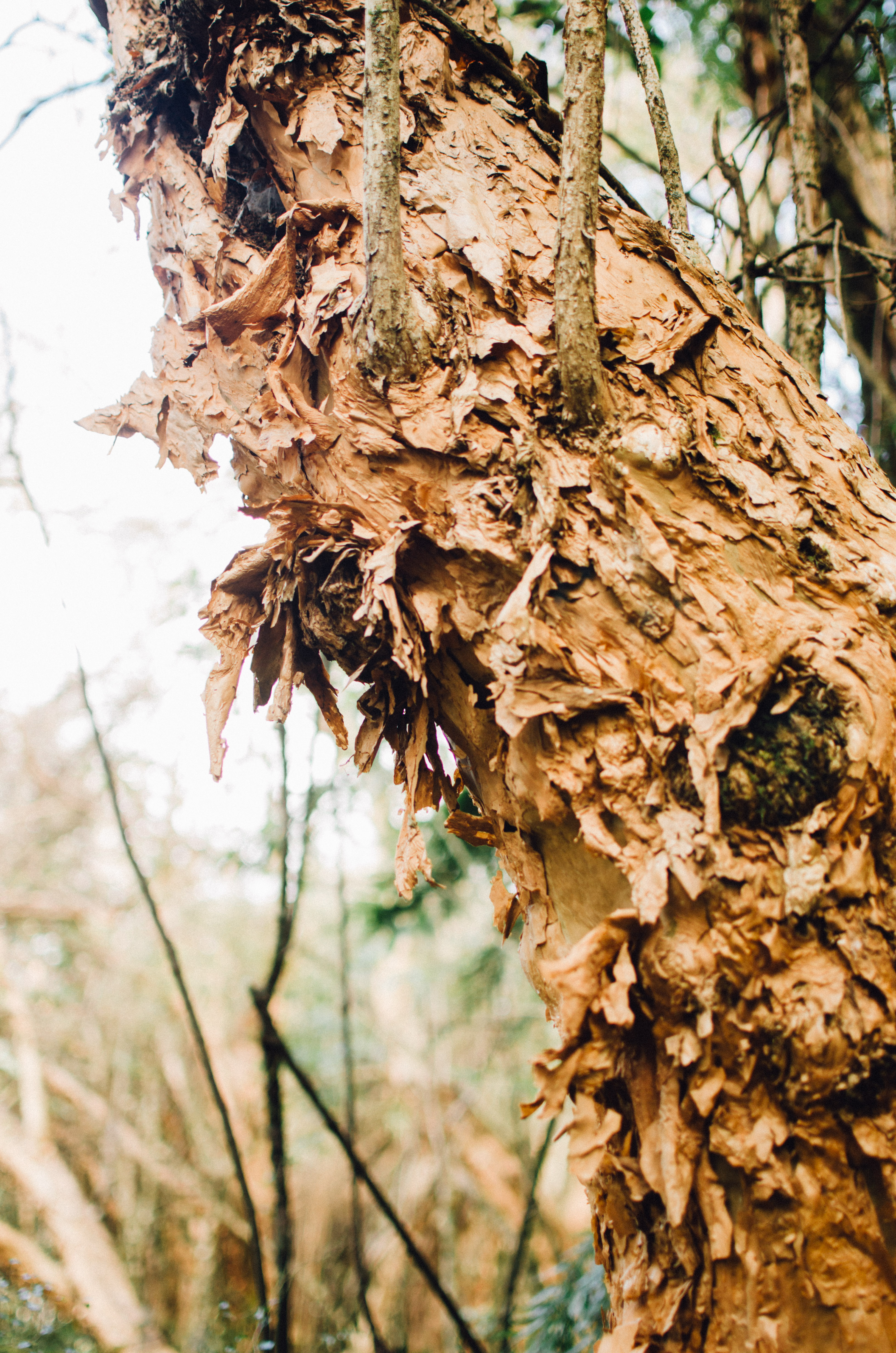
The next day, we went on three “short” walks and racked up 10 miles by the end of the day. We saw what’s estimated to be the largest tree on the Canterbury plains, learned about the surrounding Podocarp forest, and climbed to the top of “little” Mt. Peel to get a good view of the Southern Alps to learn about their geological formation. On our way back to Christchurch, we visited a beech forest to learn about its unique ecology, then we stopped at the epicenter of the September 2011 earthquake to learn about plate tectonics. Since this was a first year class, I had already been exposed to most of the concepts in biology and geology classes at Lewis & Clark, but it was such a great way to solidify that knowledge with concrete examples that were right in front of me. I couldn’t have asked for a better way to see and learn about the area.