My time on the North Island was quite a whirlwind. In Wellington, I caught up with some family friends who moved to New Zealand almost 15 years ago. Their daughter was one of my friends in elementary school, and we did a bit of a flip flop – she is now in college in the United States, and I got to stay in her room while I was in New Zealand.
They recommended a few schools in the neighborhood to check out, and I managed to get in contact with one and arrange a visit even though it was short notice.
Te Aro School
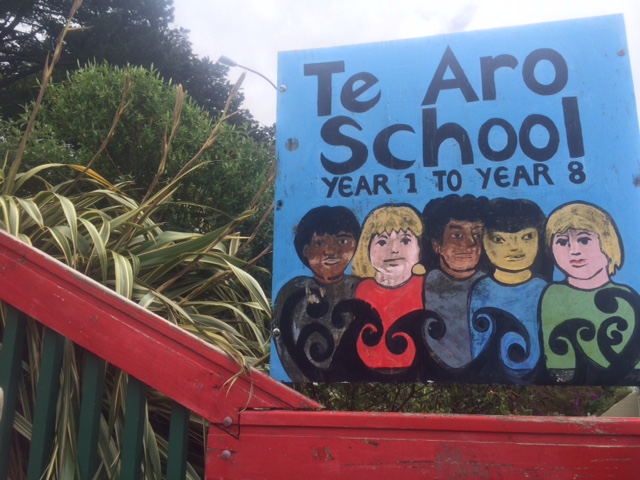
Te Aro was a breath of fresh air. The principal, Sue, welcomed me enthusiastically into the school. It was in a locally proclaimed “hippy” neighborhood with plenty of small coffee shops and bakeries, a park and a farmer’s market. Although the school was tucked away on one of Wellington’s many hills, it was within walking distance of the city center (like most of Wellington) giving it a very urban feel. When I arrived, Sue took the time to meet with me and answer any questions I had about the school. I was especially interested in Te Aro’s focus on sustainability and multi-cultural inclusion. I learned that Te Aro has a substantial number of international, refugee, and minority students, and I saw this reflected in the classrooms I visited. It was refreshing compared to schools I visited in Christchurch, which were much less diverse. Consequently, Te Aro focuses much of its curriculum on honoring various cultures – they have weekly lessons with a Maori culture expert, and each class has Mandarin language lessons with a native speaker. There were student made posters and international art work on the walls of the school as well, adding to the feel of inclusivity. They also recently had a moon festival to celebrate the school’s Asian population.
Although they aren’t an official Enviroschool, Te Aro has a multitude of environmentally related projects. Among the typical school gardens scattered around campus, the year 3 and 4 students also recently developed a “skink” garden to encourage local wildlife to come back into the area. One of Te Aro’s most unique projects is probably their bee project. Year 4 and 5 students are able to help the lead teacher manage a colony of bees throughout the year, including harvesting the honey in full out bee suits. I got a student led tour of all of these projects, and subsequently got to visit two classrooms.
In a short discussion with two of the year 3 students, I asked them what they thought the most important places in Wellington were. They ended up mentioning many of Wellington’s bays, and subsequently told me a Maori creation myth about the formation of those bays. I thought that was interesting indication of how predominant Maori education was in this school.
Since I’m interested in how place affects learning, it was a great experience going to visit Te Aro in Wellington.I was impressed with how involved the principal was, and how many different projects the school had going to engage students in ways that were relevant to their lives and families. It was the only school I visited on the North Island, and it was probably the most urban of all the schools I visited, but it gave me a good sense of another part of the spectrum of New Zealand schools.