
Today I had the pleasure of joining Jocelyn, Environment Canterbury’s Youth Engagement Educator, on a visit to a local Marae, or Maori meeting place. This specific Marae, Koukourārata, is located about 45 minutes from Lyttelton, just over the hill and along the coast. We arrived just after 9am, and the sun was shining, creating a little paradise in the bay. We met with Manaia, an old co-worker of Jocelyn, who currently runs the education programs at the Marae. Koukourārata has plans to build a new classroom for groups to use while they visit the Marae, as they currently only have one room to sleep and meet as a class by pushing mattresses up against the sides of the room. Manaia, who is of Maori descent, explained the importance of bringing groups out to Koukourārata to learn — by being in that specific place, groups gain a more significant attachment and understanding of what they are studying. Since the Marae is located on a peninsula, many times the educators ask Manaia to prepare lessons related to the marine environment of the area, which was historically a significant focus for the iwi, or tribe, that lived there previously (and to this day). These lessons would range from testing the water quality of the local streams and tributaries to catching mussels off the dock and examining their health. In my opinion, weaving the tribal significance into these lessons strengthens them because they make them relevant to survival — they’re not just trivial facts to memorize, but important bits of knowledge that determined the wellbeing of one’s community.
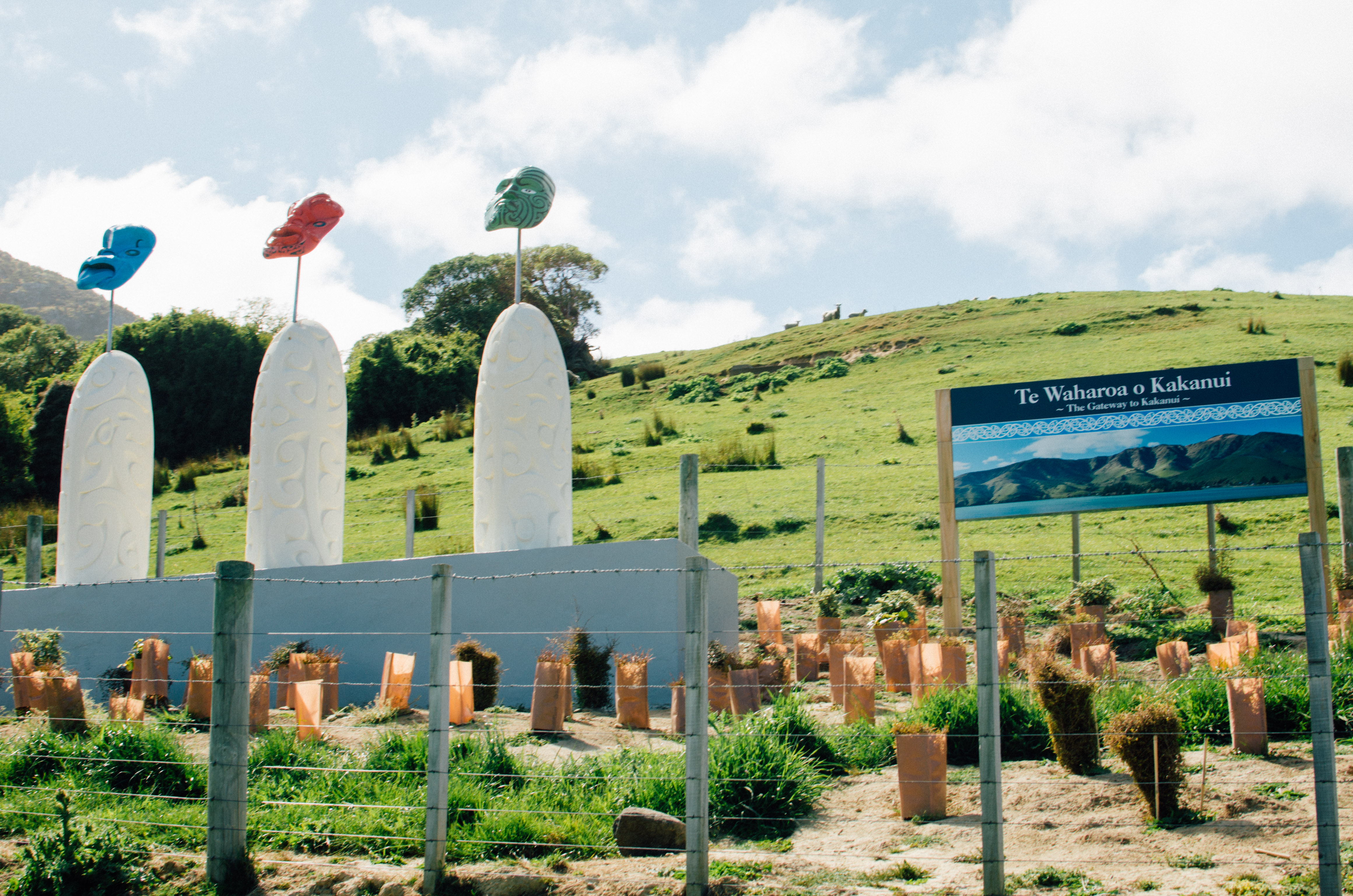 Manaia then took Jocelyn and I to some important places near the Marae. His favorite place was a new site that had been recently set aside, with young native plants peppering the ground and three carved statues representing the Maori peoples’ whakapapa, or genealogy. Seeing that spot solidified the idea that a sense of place doesn’t necessarily exist solely in physical aspects, it’s also about interpersonal connections and allegiances. Taking care of and honoring the whanau, or family, is an important part of the culture which, in my experience, leads to a more “sustainable” lifestyle because their practices have to be able to support the future generations.
Finally, Manaia showed us some farm land that he’s managing. He planted some native riparian vegetation around a stream that runs through the land, which I’ve noticed has been happening increasingly in the Canterbury region, especially after the dramatic rise in dairy farming in the recent years. His plans for the future include getting prison inmates involved with the land, giving them the ability to learn how to use important farming machinery that will help them once they’ve served their time.
The trip to Koukourārata was a lovely exploration of possible applications of place-based education in non-school settings. Ideally schools would be able to visit places like this, and continue to learn about them even back at school.