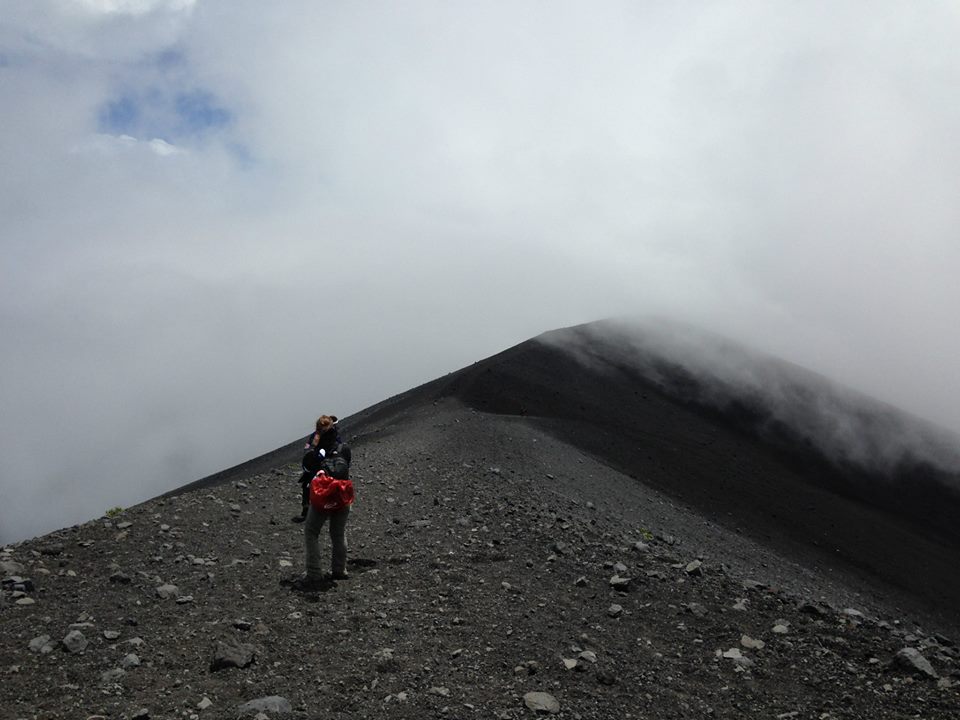

Soils that have lots of large pores allow water to pass through them faster, and therefore are poor retainers of surface water. Geologists use the term “infiltration rate” to describe the rate at which water seeps into the ground. Mt. Fuji, being mostly composed of permeable rock, has a very high infiltration rate. Once the water is in the ground it can take 10-15 years to flow to one of the many springs at the base of the mountain. Communities surrounding Mt. Fuji formed around such springs (and in some cases lakes), where water was readily available. Geological conditions have shaped the local cultures by influencing where communities form at the base of the mountain, which I see as a direct connection to the nature/culture dyad. After the water seeps into the soil on the top of Mt. Fuji, its uses diverge, and range from purification to toilet paper production. For local industries – inns, rice paddies, sake breweries and paper factories – the water supply from Mt. Fuji is essential.
Before we embarked on our trek up Mt. Fuji we stayed at a traditional oshi inn called Daikokuya in Fujiyoshida. Oshi are innkeepers that have a lineage that can date back many generations. They lead religious ceremonies for those who stay at their inns. In order to accommodate pilgrims, like the members of the Fusokyo Fuji-worshipping sect, oshi built their inns near sources of spring water. Spring water is important for purification before climbing Fuji and is traditionally found somewhere between the oshi inn and the road. For many generations, proximity to the mountain and access to spring water have facilitated oshi functions.
Within the oshi houses, travelers were nourished with rice and sake that was produced in the Fuji area. The production of rice on the southern side of Fuji depended on spring water for cultivation. In 1898, during the Meiji period, there were large rice plantations to the east of Fujinomiya. These plantations would have fed the area and were an important part of the local economy that relied heavily on the geology of Mt. Fuji and the spring water that resulted. Rice from these areas would have enriched local economies through trade with the surrounding communities. As a secondary effect of rice production, sake breweries, like the Takasago brewery that we visited, were built in the area.
During the mid-nineteenth century, people living in villages near Fujinomiya began to look for new sources of income. “Suruga” traditional paper production, which was historically situated on the west side of the Fuji River, moved east of the river near Fujinomiya. With the spring water from Mt. Fuji, paper production thrived in the area.
Today we had the opportunity to visit the Marutomi company’s Fujine toilet paper factory. While this factory uses modern machinery that was not always present in Fujinomya, it still relies heavily on Fuji spring water. It was fascinating to see how the industry of the area could possibly be traced from the top of Mt. Fuji to the toilet paper in my hotel room. Without the unique geology of Fuji, and the presence of spring water in Fujinomiya, the industry and culture of the area would be unrecognizable to the people of this prefecture.