On one of our first days in New Zealand we packed up for the day and headed over to the Waitangi treaty grounds to learn about the treaty between the Maori and the British and to see this historic area. For me, this was a good place to start because from what I have seen most attitudes towards Maori and British relations are based off of the outcome of this treaty.
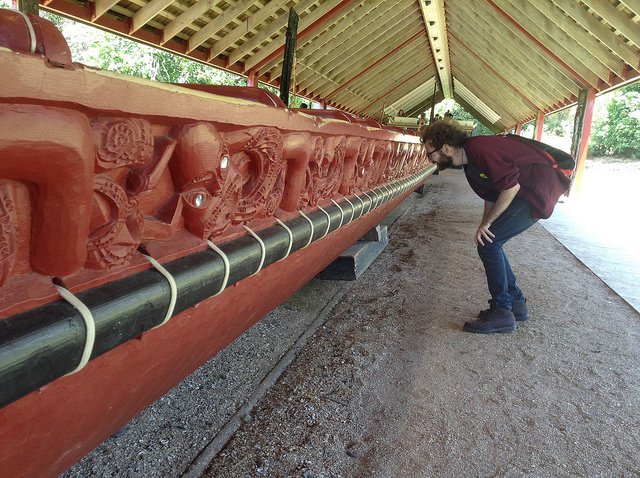
We started our lovely tour by getting a little briefing about the area and about the giant waka (canoes) that we saw right when we entered the grounds! The giant waka we saw was made from three large kauri trees and it had beautiful carvings all over it. In 1990 there was a revival of the waka, and the one we saw on our tour is actually still used today. Placing the waka at the Waitangi treaty grounds was seen as a symbol of connections between tribes and the British who were a part of the treaty. A fun fact about the designs at the front of the waka is that they are actually different maps of the stars! After our talk near the wakas we got into the nitty-gritty of the treaty itself!
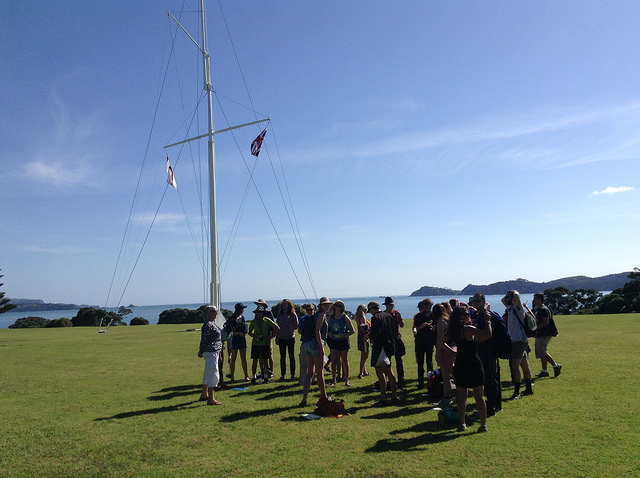
The Maori had asserted their desire for independence long before the treaty had been put in place. In 1834 there was a big discussion that ended with New Zealand developing their first flag. Shortly after they actually wrote their own declaration of independence in 1835, but it wasn’t until February 1840 when the Waitangi Treaty was made between the Maori and the British. About 540 Maori chiefs signed the Maori version of the treaty. While not all of the chiefs had signed the treaty the British crown decided that 540 people was representative enough and that the treaty would apply to even those who had not signed it. But there was a discrepancy between the English and Maori versions of the treaty. The way that the word sovereignty was translated gave it somewhat of a different meaning in Maori. This led the Maori to believe that they had full authority over their “treasures” whereas the English version stated that the Maori would have undisturbed possession over their properties. The debate over the true meaning still goes on today in modern New Zealand.
Our tour guide explained the situation of different interpretations of the treaty perfectly when she said that it is an ever going conversation between the government and the Maori tribes. Busby and Hobson (two men who played a big role in the treaty) were in constant conversation with the Maori tribes about the coming of the treaty. The Maori actually built a traditional meeting house facing Busby’s house to signify the joining of two nations and their ongoing dialogue.
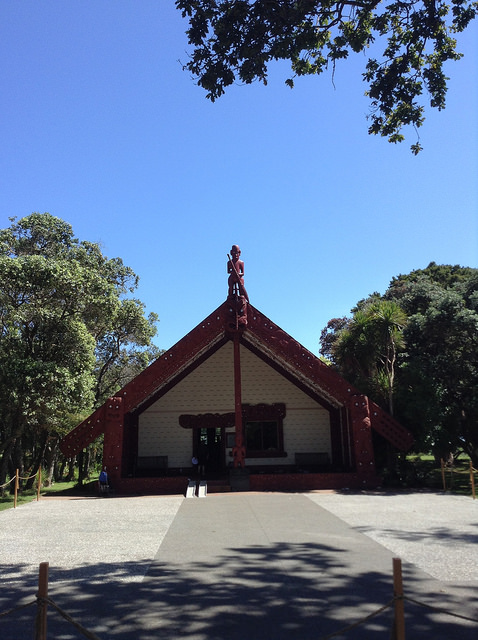
And this concept of a “conversation” has been carried on in many aspects of governing in New Zealand. When talking with a DOC (Department of Conservation) member he talked about how they are always in contact with local iwi (tribes) about different conservation acts. They make sure there is an open dialogue between the government, iwi, and themselves. I think this is indicative of the way things should be when there are multiple cultures coming together.