SASHA BISHOP KOHL KINNING
Over the past few weeks, we have begun exploring themes of isolation and colonization in New Zealand. From a biological standpoint, understanding this overarching idea involves biogeographical investigations – studies regarding the patterns of species distributions across New Zealand, and phylogenetic analysis. As an island that was once part of the super continent Gondwana, New Zealand forms a unique location for biogeographical study. Relative isolation has resulted in a high level of endemic forms, yet New Zealand remains close enough to the diverse continental source of Australia to entertain the possibility of a dynamic migration-based exchange of species.
Our project focuses on using phylogenetics to understand the distribution of arachnid species in relation to the geographical history of the area and relative dispersal abilities of a select few focal taxa. We hope to determine modes of arachnid distribution across New Zealand by addressing questions regarding the genetic depth of New Zealand arachnid populations as well as examining possible relationships between regions by looking at the degree of endemism and similarities or differences of the biota present at various locations. Thus far, we have collected arachnids from three different locations across the North Island using a variety of techniques to collect both ground and aerial specimens. Due to strict constraints in public areas, we have collected solely on privately owned lands. Each of these landholders has been deeply invested in furthering conservation goals, and eager to allow us access in exchange for sharing our results to enhance ecosystem understanding and future conservation efforts.
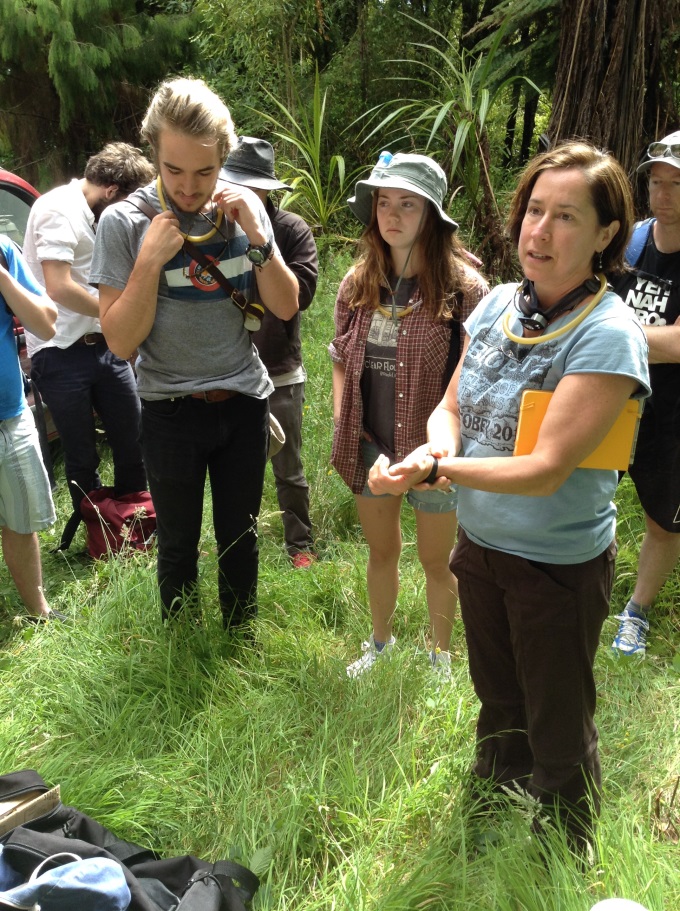
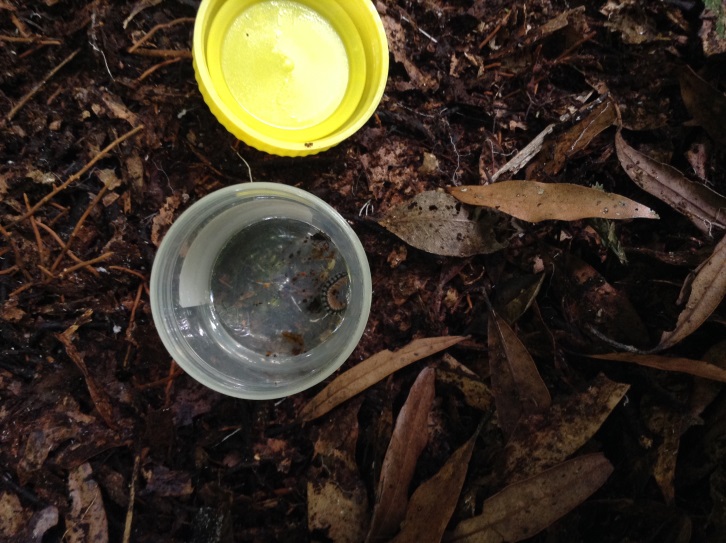
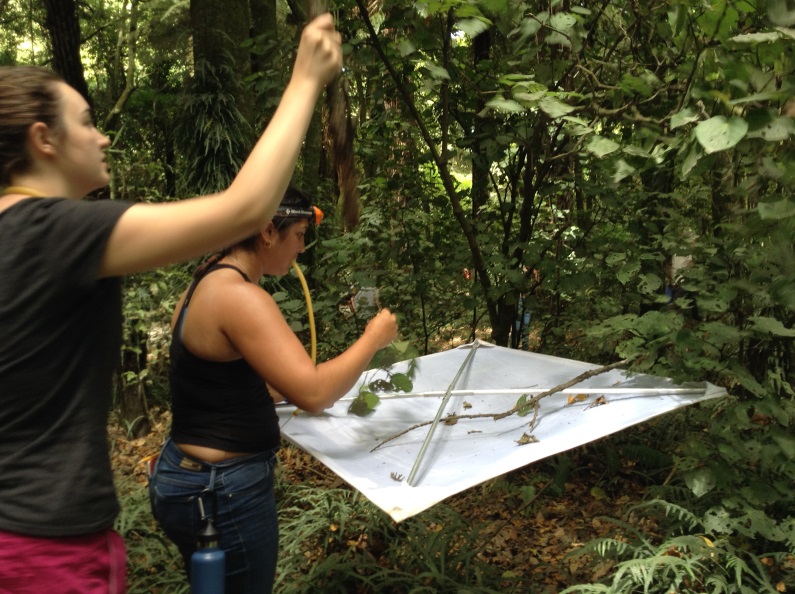
The first collecting site was located on Aroha Island, a privately owned reserve established only 30 years ago on what was once farmland. The region is now dedicated to eradication of pests and re-establishment of native flora and fauna. After being received by the administration and introduced to the site we prepared for collection. We collect invertebrates utilizing three methods–pooting, using a beat stick and sheet, and gathering leaf litter for later manual sorting. For many of us this was our first experience collecting invertebrates. After much preparation we split up in to two groups, searching aerially and terrestrially. At this site we found mostly arachnids, isopods, and an arthropods in the order of Amphipoda. The latter were especially annoying while sifting through the leaf litter.
The second site we visited was a private bit of land established as a conservation area by Rosemary and her family. We were again received graciously and carted down the mountain in the back of two farm trucks. The drill was the same, we split up to cover more area and used the different methods, both aerially and terrestrially to collect the critters. At this site we found what seemed to me to be a wider variety of arachnids.
Our third site was a pit stop on our coach ride from Ohakune down to Wellington called the Putai Ngahere Reserve. This site is generally used as a picnic area or a campsite. Though there was some rubbish littered about this forest felt hauntingly untouched. We had no trouble finding invertebrates for collection. We found three organisms from the phylum Onycophora about which very little is known. Theses little critters, also known as velvet worms, are a rare find.