“How are you going?”
“Sweet as mate! I am quite kean for you to rattle your dags…. but it’s mission critical that this situation not go pear shaped”
“No worries, can do bro”
Does this conversation bring about memories of meat pies, rare birds, and breathtaking landscapes? Well… it should. For the past two and a half weeks we have been immersed in the kiwi ways and have noticed some fun differences between New Zealand culture and that of our own. The first several that came to our attention when we arrived were the language differences. Aside from all the slang in the above dialogue, there are also numerous phrases which embody the kiwi mentality. For example, “rattle your dags” is a command one might use to hurry along someone or a group of someones. This reflects the importance of sheep farming in kiwi culture (dags is a lock of matted wool which hangs from the hindquarters of a sheep). Another phrase that exemplifies the importance of hard work, and in particular manual labor, is “number eight wire mentality”. This refers to the wire used for fencing around sheep and other livestock farms. The phrase is used to describe the DIY attitude of many Kiwis. Back in the States the acronym DIY (Do It Yourself) usually refers to crafting and other art projects. Here in New Zealand, this phrase is indicative of a prevailing motivation to solve any and all problem with your own two hands. Most kiwis will avoid hiring someone to do work around their home if they can do it themselves.
The second major difference which we recognized was the way Kiwi’s often relate to their environment. New Zealanders have a unifying respect for the environment. In the States it is not uncommon to witness someone tossing trash on the ground even when there is a trash can nearby. This is true even in protected natural areas, such as national parks. Here we have noticed that it is quite rare to see this type of disrespect for the land. One contributing factor behind this phenomenon may be that national parks are seen as more than a natural spectacle, and are in addition thought to be sacred. Most of the protected areas we have been to bear significance in Maori culture and history.
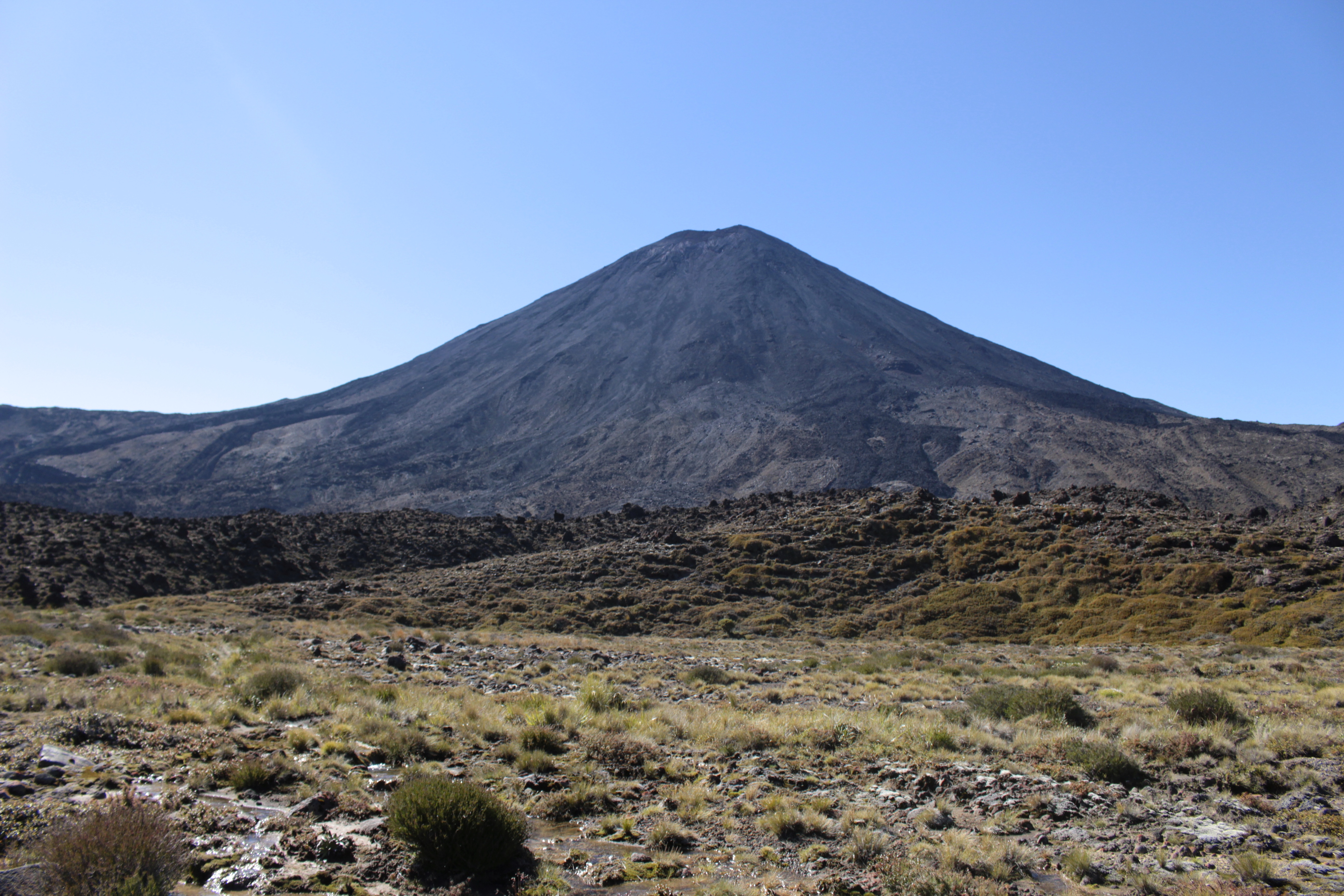
The above photo was taken at the beginning of the Tongariro crossing in the Tongariro National Park.
New Zealand society is very unique in that the indigenous peoples and their history is greatly respected. The non-native population makes an impressive effort to incorporate and understand the Maori culture here. The Department of Conservation consults with local iwi (most closely translated as ‘tribe’) in regards to national parks which often contain volcanoes or other natural features that are recognized by the Maori as living and integral to their history. This type of dialogue is somewhat different in the United States, where indigenous peoples continue to struggle for recognition of their land.
– Emma Roark & Grace Shaw