I vaguely remember our group being told a story about the creation of the South Island while we were all back in Portland, excitedly anticipating what this place would be like. The story explained how the South Island was given beautiful beaches, tall mountains, and plentiful sea life. However, this place could not be perfect, or else no one would ever leave. And so, the South Island was given sand flies.
I found this story to be extremely accurate. The South Island is in many ways perfect. Lake Rotoiti was one of the more majestic sites I have ever been to, with steep tree covered hills that lead directly down to clear, turquoise water. However, as I stood admiring this view, I felt a sharp prick on my ankle, looking down to find a tiny black fly there. Bite one of too many to count. By day four we were unbelievably itchy and full of a deep hatred of these little flies.
Now, do not mistake this for me having a bad time at Rotoiti. This place was truly one of my favorite places we have seen thus far, and the flies were merely a downside that kept us grounded in reality.
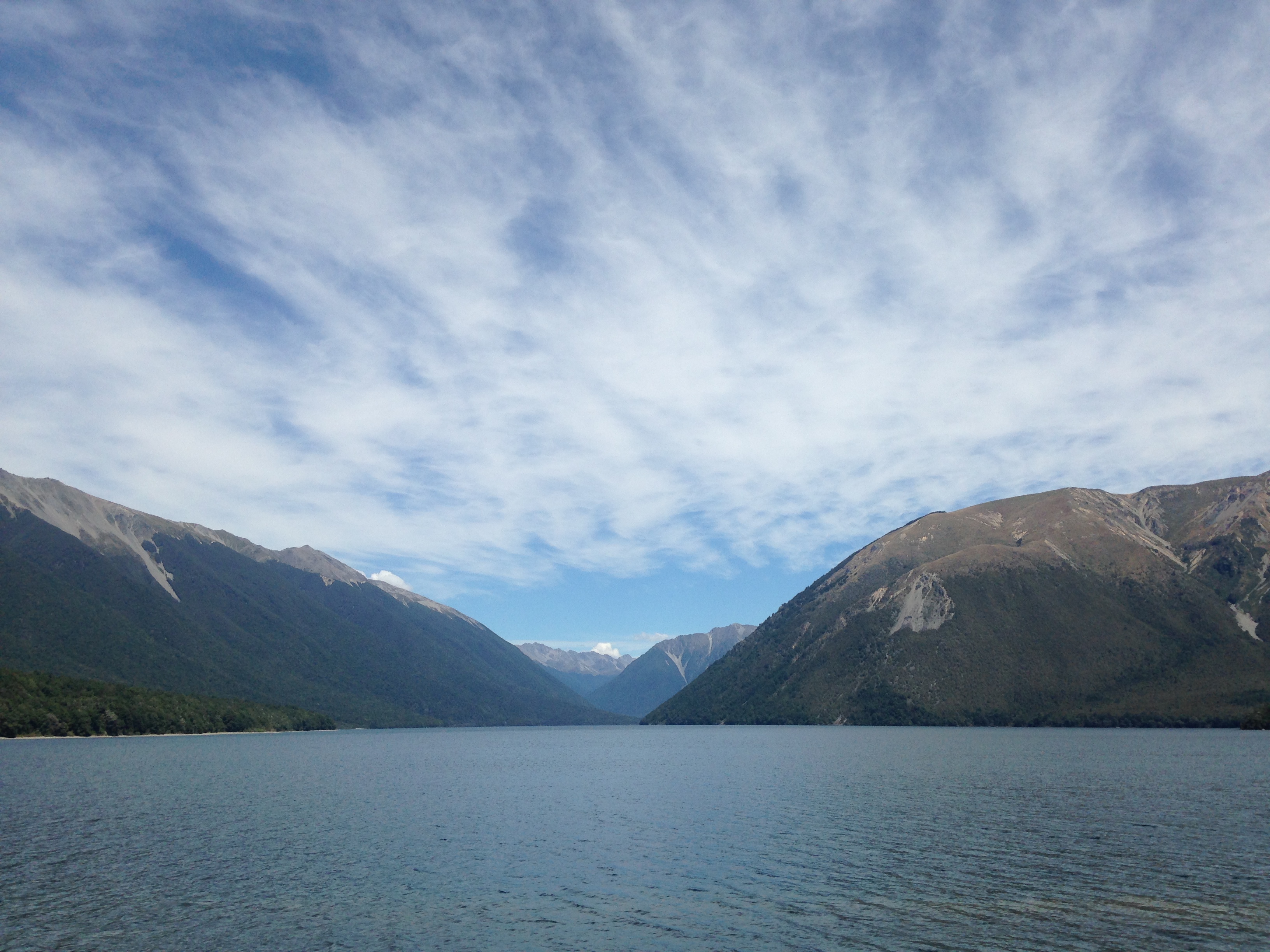
Ahh Rotoiti what a beaut
Lake Rotoiti was the site for our ‘Science Challenge,’ a three day adventure in which we gathered data, analyzed our samples, and presented our hypotheses and findings to the group. My partner, Kohl Kinning, and I wanted to examine the relationship between elevation and the dye color of a species of lichen called Pseudocyphellaria coronata. P. coronata is known colloquially as the ‘wool dyers lichen,’ from the purple to red dye color it produces when boiled in water. Lichen contain carotenoids, which are organic pigments, that protect against photodamage. These carotenoids are the main cause of pigment that can be extracted from lichen species and used as dye. So from this, we hypothesized that due to the role of carotenoids in protection against photo damage, the color of dye extract of P. coronata would differ among populations at different elevations.
To study this, we focused first on species identification. P. coronata is identifiable through its orange to brown apothecia, yellow medulla, and less finger-like structure compared to its visually similar relatives. We also worked on species identification of beech trees, as this is the main surface this particular species grows on. We familiarized ourselves with the leaves of black, silver, and red beech before entering the field.
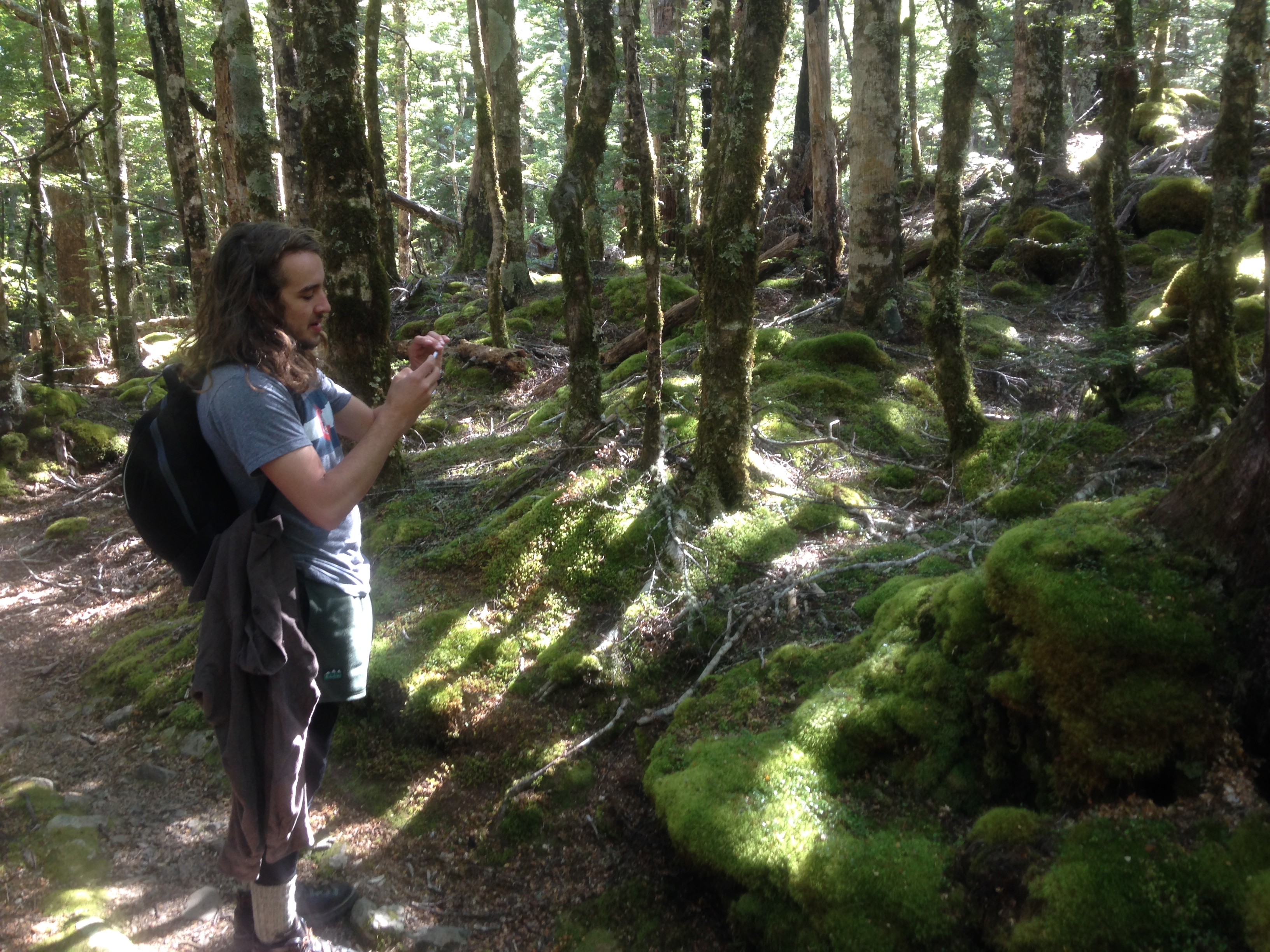
Collection day!
On collection day, we gathered 3 samples from an elevation of 2100 feet before hiking up to 4000 feet and collecting another 3 samples. The type of tree, diameter of tree, elevation, time of day, and latitude and longitude were recorded. These samples were used the next day to brew the dye. Each sample was weighed out to 8 grams, placed in titanium pot with 500mL of water, and boiled for 40 minutes. We used a titanium pot since it is non-reactive and would not have an effect on the color of the dye. These dyes were strained through a coffee press and stored in sample jars overnight to let the larger particles settle to the bottom. Our last day, we extracted a sample of each dye and analyzed the absorption wavelength using a spectrophotometer.
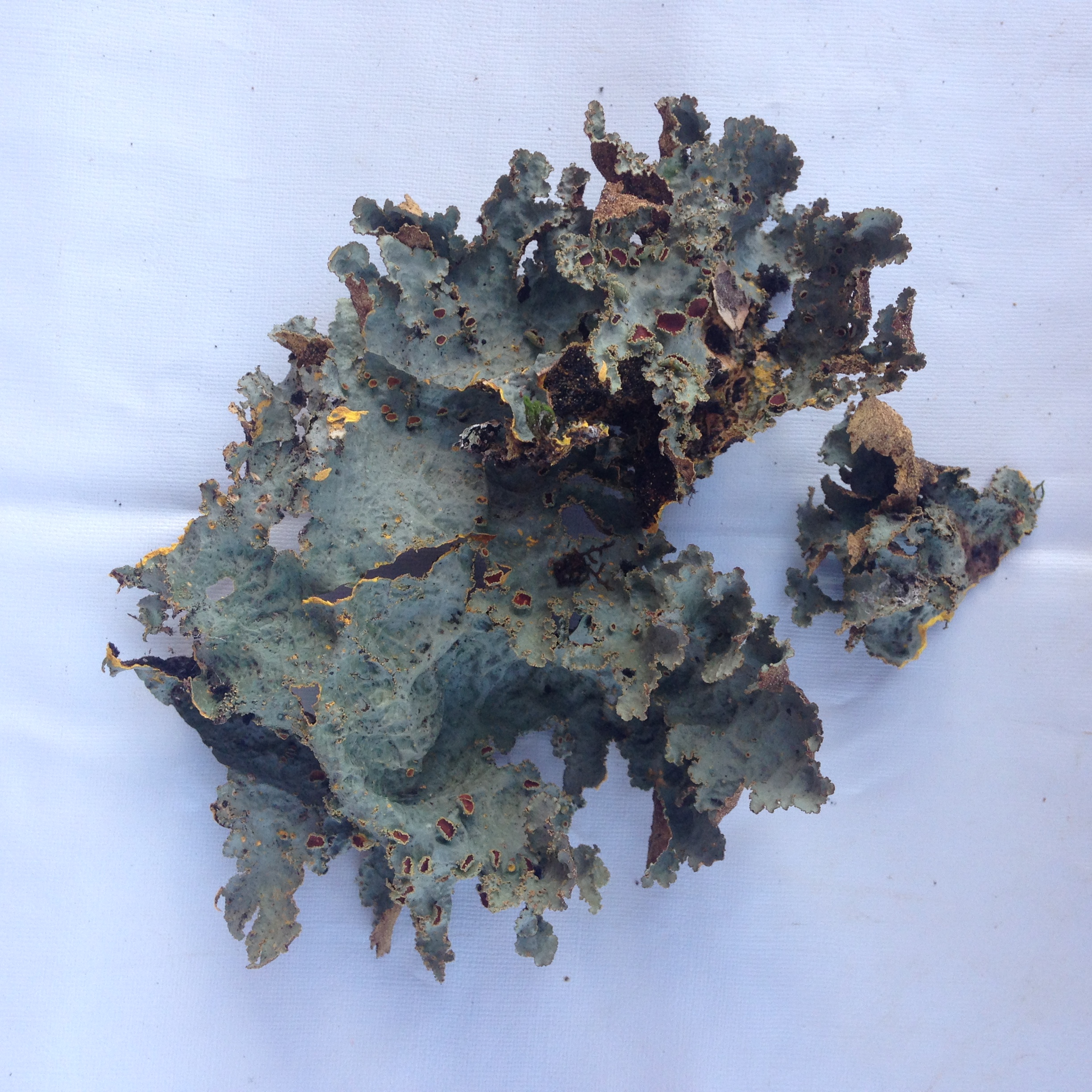
Sample beauty
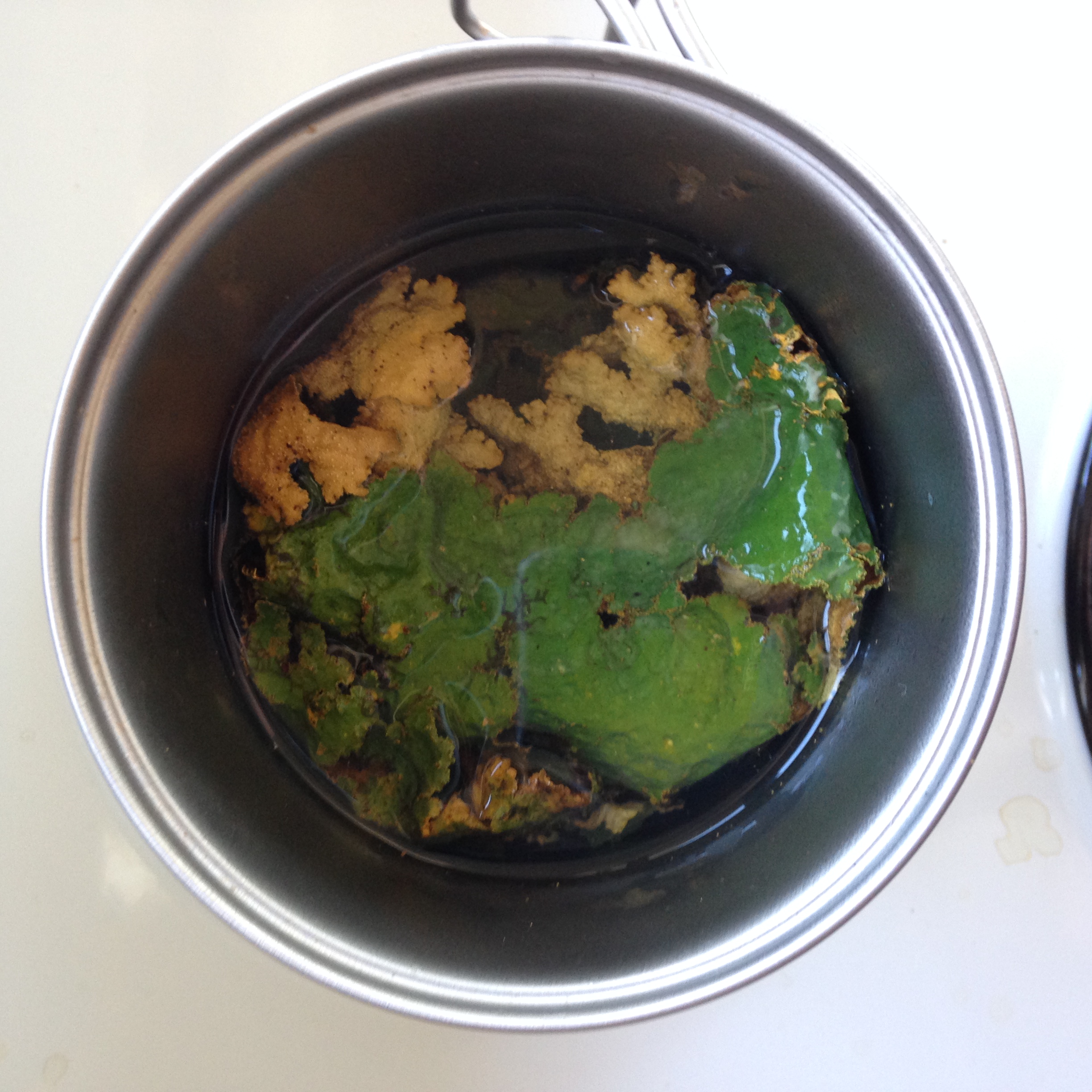
Brewing for dye
In our results, we discovered a slight but noticeable difference in absorption wavelengths between 2100 ft and 4000 ft. Woohoo! Each sample fell into the UV spectrum of absorption, 100nm to 400nm, which made sense as the lichen is absorbing light for energy and would thus take in the highest energy wavelengths. The reflection wavelengths then fell into the red, orange, and yellow wavelengths, consistent with the colors of our dyes. In the end, we would love to repeat this experiment with higher differences in elevation and with more samples.