
For our Science Challenge the Worm and Fuzzy Team (Kamylli, Lisa and Jake) decided to explore worm densities, a topic not yet fully explored in New Zealand. Worms were a point of interest for us because they improve soil properties and help increase plant production.
We were interested in seeing if worm density could be correlated to areas where pesticides and traps have been introduced. We hypothesized that in places where trapping and poisonings occurred there would be much less worms as the bird population would be in much higher abundance due to lower amounts of prey.
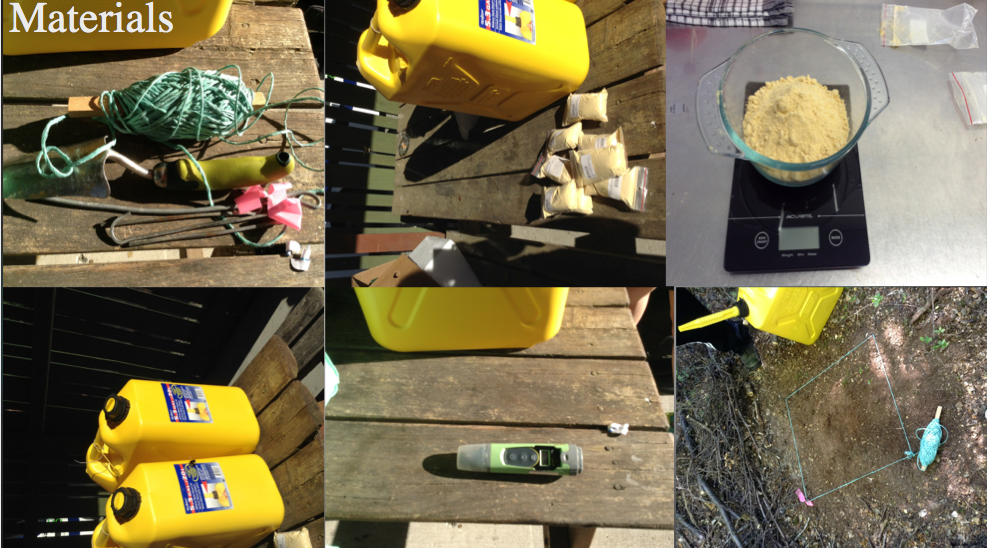
To conduct this experiment we needed two 24 liter carboys full of 12 liters of water and 120 grams of mustard powder. Once these two were mixed together and poured over the soil (marked by a half a meter by half a meter quadrant) it would cause irritations resulting in the worms crawling towards the surface.
On our first day we felt quite confident that this experiment would work; however, to our dismay, we were only able to count up to 4 worms in one of the plots, and the rest had absolutely none. After realizing this we decided to change our question and examine the potential relationship between earthworm densities, soil pH and beech seedling recruitment on our second day.We decided to change our topic knowing that worms significantly affect resource allocation patterns for beech seedlings over a wide range of soils.
Luckily our second day was much more successful and wormier. We were ecstatic to find 11 worms in one of our plots and interestingly 13 beech seedlings in the same plot.
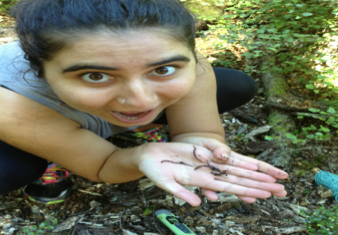
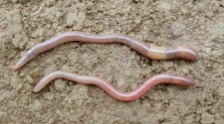
After collecting all of our data from the second day we decided to analyze to see if we could make any inferences. These were our results:
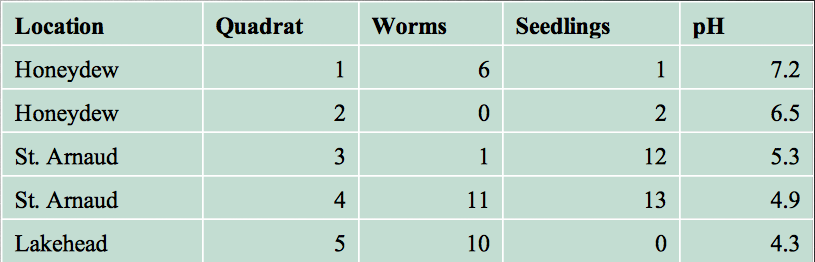
When graphed we were a little disappointed to see that there is absolutely no correlation that can be made. Although our data left less to be desired there are many things we can do in the future to make this experiment much more successful. If replicated it would be important to look at a season in which worms are much more abundant, as the summer is a time when they are in a drought. It is also important to pick areas that have the same environment as many were in different aspects towards the sun, had various amounts of foliage as well as different exposures in rain.