The gifts of Aotearoa ask very little from the passive observer; the ones who gaze with a complete loss of words through no fault of their own but from the simple fact that there exists no language, no combination of words, nor any string of adjectives that can truly capture the beauty of the land.
Our second stay on our first field trip to the South Island was the beautiful town of Rotoiti. Quietly nestled between the beech-covered mountains that provide a breathtaking backdrop to the placid waters, the quaint little town of Rotoiti was unwittingly about to act as host for a large group of curious biology students. With a year-round population of 85, the arrival of our group likely resulted in a temporary 50 percent increase in the sleepy town’s close-knit community. We unloaded our bags at the Traverse-Sabine Lodge, a relatively large establishment that covered several grassy lots between the main road and the lake shore. A five minute walk along a stream and you were plopped right out at Kerr Bay, with an immense view of the networks of valleys that winded south and blanketed the lake on the east-west sides. Inside the lodge half-ancient relics of the golden age of mountaineering decorated the walls and filled the common rooms with a sense of perennial adventure.
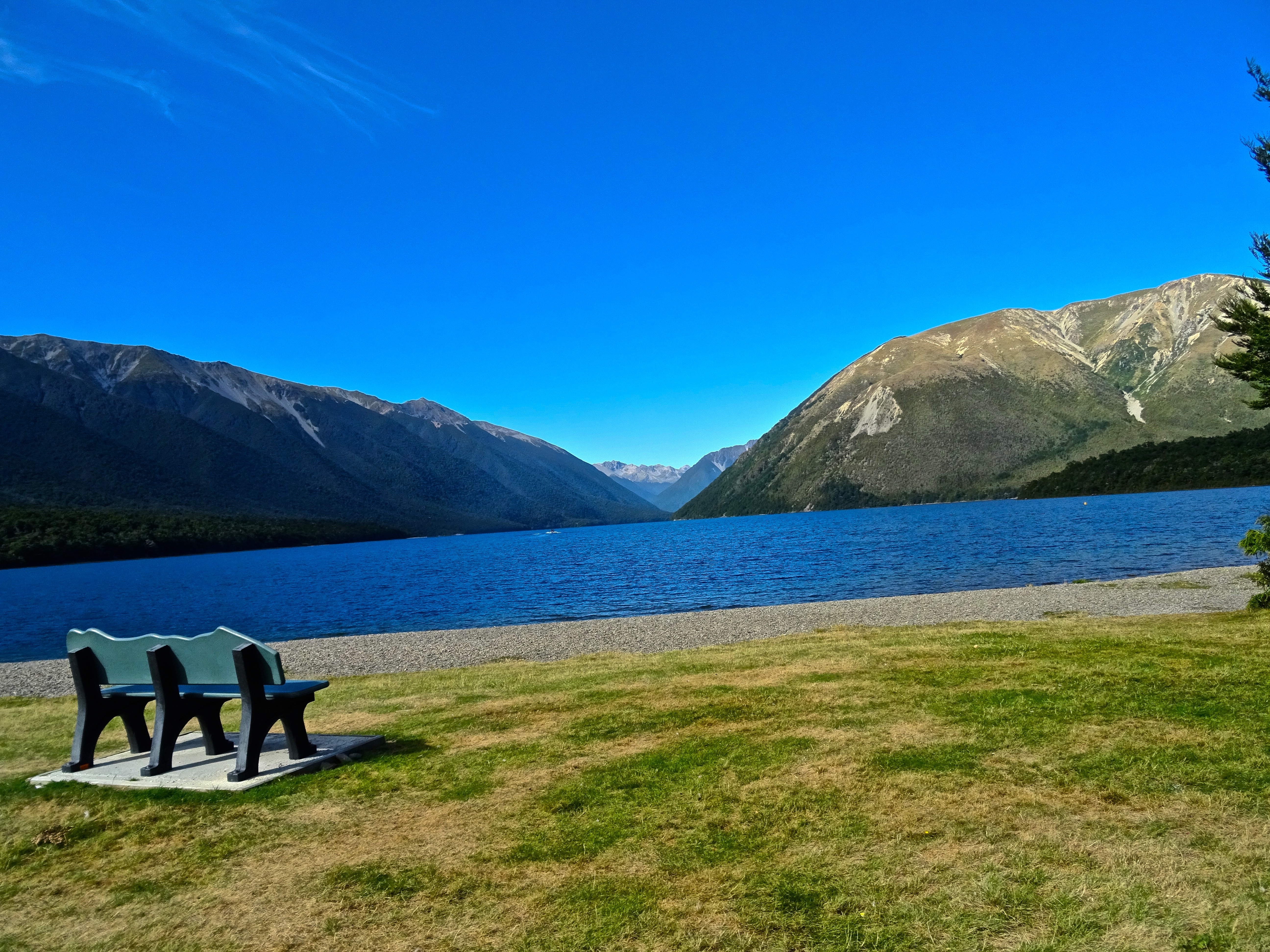
One side of the lake is referred to as a mainland island sanctuary with intensive pest controlling and endemic animal transplantation by DoC (department of conservation). The other side is less intensively controlled by a community group, Friends of Rotoiti. Conservation here in New Zealand has a different mindset than in many other countries. That mindset being: kill anything that doesn’t belong, especially if it has fur, four legs and eats our endemic birds. The only native mammals to NZ are two species of bats, the long and short tail bats.
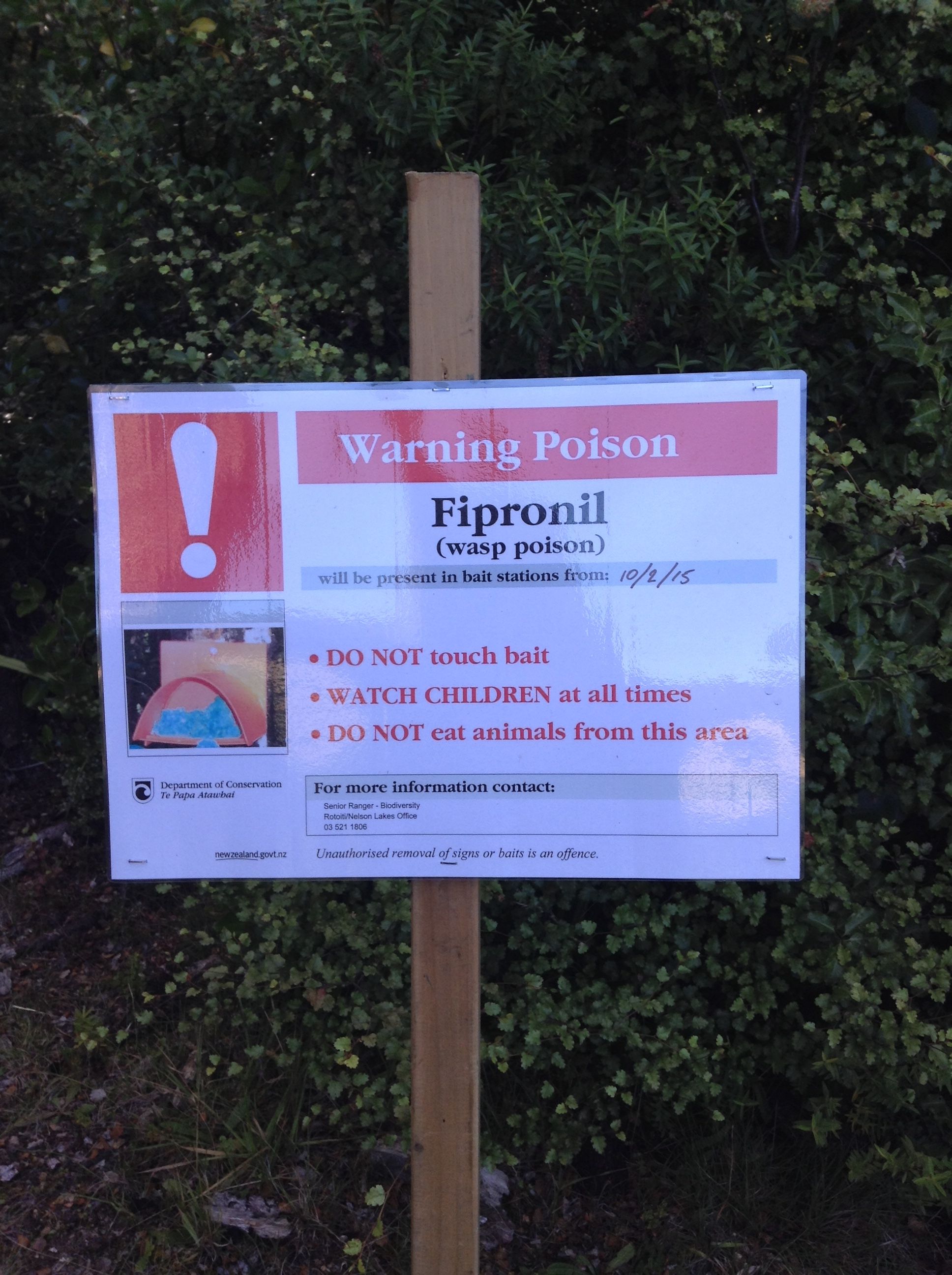
Beside mammals, other invasive pests include all wasps and other social stinging insects (like bees). DoC targets wasps specifically using a fluorescent green poison called Fipronil that they place in chicken. In chicken, the poison targets solely wasps and not bees – a confusing conservation protocol given that bees are invasive as well! Perhaps this is simply a vestige of NZ’s British roots reflected in a reluctance to lose the honey produced from these invasive bees. Worker wasps then bring the poisoned meat back to the nest for pupae to eat. Adult wasps don’t actually eat anything but the excrement that the larva produce. This way, an entire nest is poisoned with a small amount of icky green chicken! Cool right?
We split our 25 student whanau into seven groups ranging from 2 to 6 people. Our group included five people: Sasha, Trisha, Katie-Lauren, Jeremy and Ian M. We called ourselves the Beech Partay. Our preliminary research found a relationship with beech scalar insect’s honeydew. Basically, the scalar insects use their proboscis to remove and eat the phloem that beech trees produce. Their long, silky anal filaments are all that’s seen poking out of trees. Their excrement can be seen on the end of these filaments and that is what we call honeydew. We all tried it – it’s delicious.
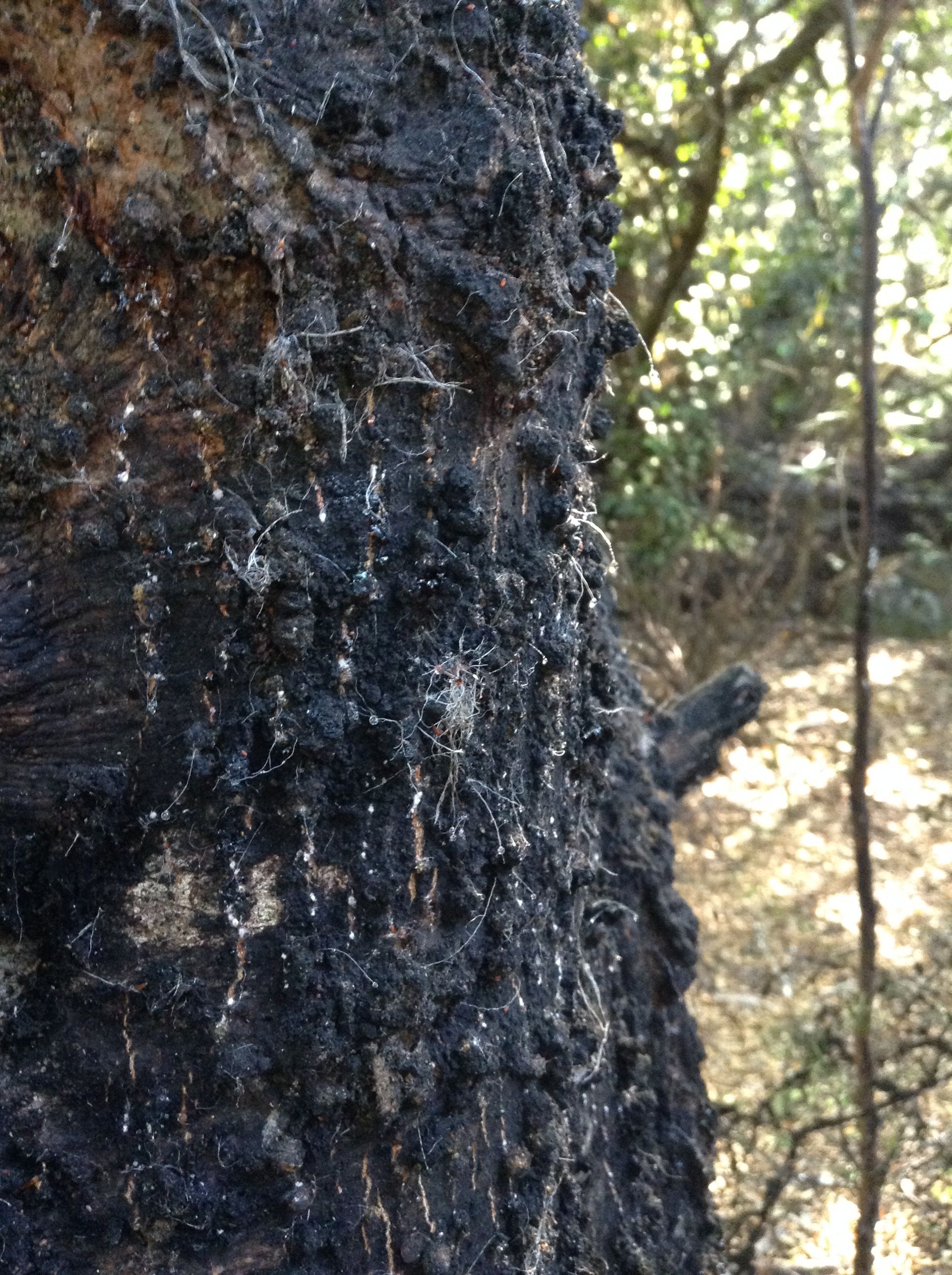
This honeydew is food to many things within its environment. Most obviously, the sooty mould that is seen covering black beech trees (it is also on red beech trees) and native NZ birds. The endemic bell bird in particular goes nuts for the stuff! Research has shown the bell birds use the honeydew as a consistent energy source and that insects they consume on trees with honeydew contain 65% more energy than insects on trees without honeydew! Thus the scale insects are able to impact multiple tropic echelons and are posited to be a keystone species of the beech forest: huge impact in proportion to their small collective biomass.
BUT
The invasive wasps feed on the very same honeydew!!!
Our group decided to investigate this relationship.
On day 1, Sasha and Ian went out with our resident botanist, Prof. Phil Garnock-Jones. He helped us to distinguish between the three beeches we’d come into contact with. They are the red, black and silver beeches.
On day 2, we began collecting data. We decided to do a comparative study, one day in the reserve where wasp control was happening and one day outside the reserve where there is minimal control. We got to six different sites in that first day. Within each site, we took a survey of the number of each beech tree within a 30 meter plot diameter. Then, we found one of each tree within this plot and counted the number of honeydew droplets we found at a 5ft height within a square foot plot. After that, we did a 3 minute bee/wasp count surrounding the tree. We also took a soil sample from the base of each of our sample trees. This was because we wanted to do a nitrogen level test to see if there is a relationship with honeydew and possible nitrogen fixing bacteria in the soil. More on that later.
On day 3, we set out to find a plot where there were both beech forests and minimal wasp control. We hiked around for about two hours to do this and couldn’t find much. We eventually settled on an area with reduced control performed by Friends of Rotoiti rather than by DoC and sampled another six plots on that day.
Jeremy went back to camp halfway through the day to begin the soil analysis. Unfortunately, the kit we had didn’t seem to give us effective results. What’s more is if we had results, they would be purely qualitative comparisons and not quantitative like the rest of our data. Then, upon more research with the possibility of nitrogen fixing bacteria, we found more conflicting information and less of a solid basis for the existence of such bacteria. This idea had to be set aside for when we’re all back in Wellington.
Day 4 was our data analysis day. All day was spent on data analysis, statistics and building our 12 minute presentation for that evening. Though we had to huck the nitrogen idea aside, we were able to draw some preliminary conclusions. Initial data demonstrates a significantly dominant presence of black beech trees as well as a higher presence of honeydew on the black beech – an interesting result in the context of the importance of conserving beech trees. This preliminary result indicates the possibility that due to the strong correlation between honeydew and black beech, tree conservation efforts may have strong cascading ecosystem impacts. We also showed that, tentatively, where there is more honeydew, there is a stronger wasp and bee presence. This is not a statistically significant result with our sample size, but there’s something interesting there and still a lot more pondering to do!!
Our presentation that evening went really well and it was awesome to see the other groups present their preliminary research as well. We’re so immensely proud of the effort every team put in and we can’t wait to write our paper!
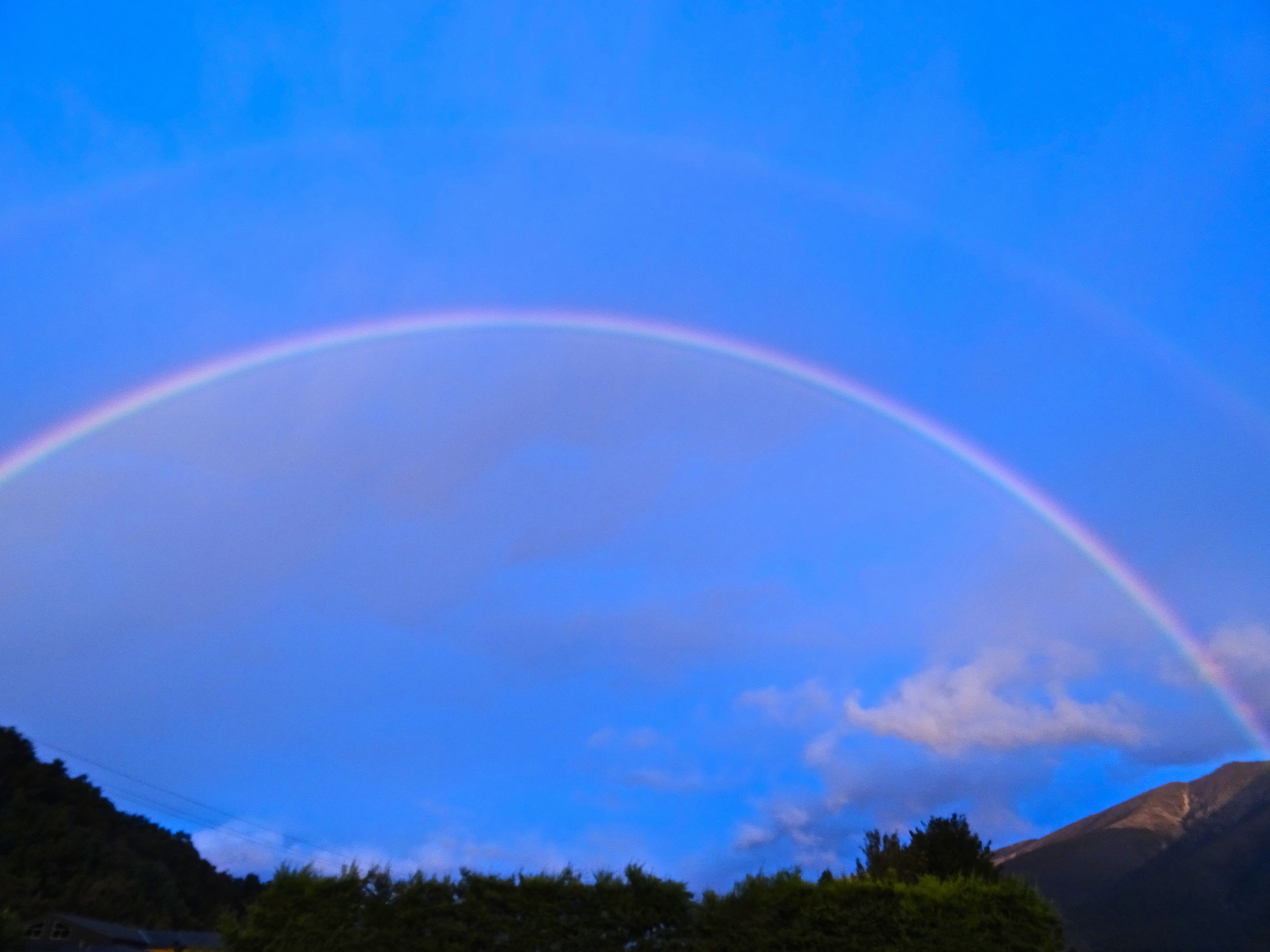
Here’s a picture of the double rainbow we saw on our second night in Rotoiti!
Ka kite,
Trisha, Sasha, Katie-Lauren, Jeremy and Ian M.