Dreaming of a time without papers, presentations, and exams; away from Brisbane and any thoughts of classes or my senior thesis…
I give you…
A baby Lorikeet.
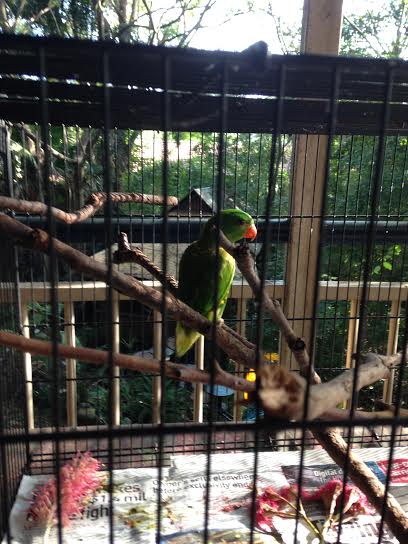
While this isn’t the clearest picture, he looks exactly like this:
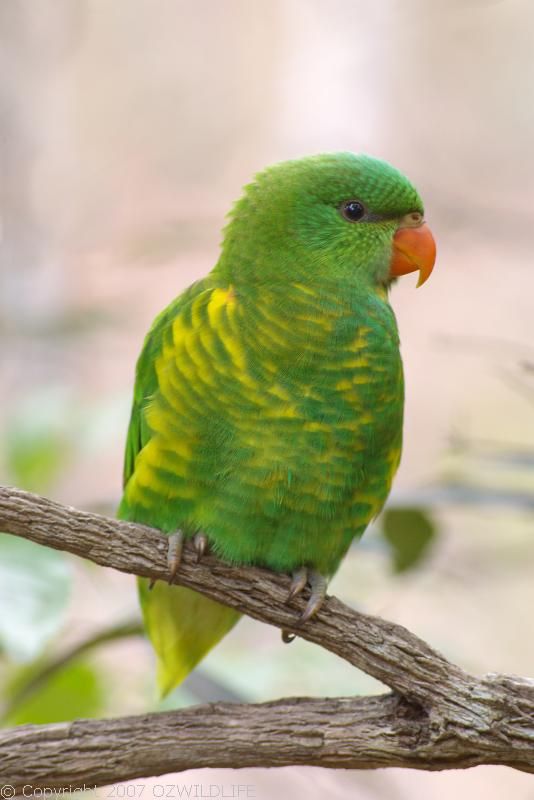
Thinking forward to our time at Lamington Plateau, where according to my calendar we will be participating in avian population studies, I find it fitting to tell the wider population more about my new little friend. My host dad, Scott, found him hopping through traffic a week ago after falling out of his nest. Unable to tell his gender without DNA testing, this fluffy and fat Scaly-Breasted Lorikeet has been officially given a male gender (much to the chagrin of my other host family members, who say he is a she).
The baby, unfortunately, cannot fly. According to a wildlife rehabilitation expert, when small baby birds like this are stressed and away from their parents, they lose their feathers. Their most crucial feathers to be exact, the flight feathers which are located on both wings and tail. It is not known why exactly these are the feathers to go, but hopefully they will grow back in six weeks. In the mean time he will be called a “runner,” a term for birds stuck on the ground.
Not found in the United States, or anywhere else for that matter, Scaly-Breasted are smaller than the more common Rainbow Lorikeet and much smaller than the foot high Cockatoos that fly around my host family’s house.
He currently has four favorite past-times:
- His parents come to visit most mornings, which is absolutely heartbreaking for us to watch, but he enjoys running back and forth and chatting with them. Usually found in flocks, it’s weird for him to be by himself.
- He loves hanging upside down. He does it all time.
- He talks to the other birds. With three cockatiels in the cage next door, he has no lack of before bed pillow talk.
- Eating pollen. And honey. And bread soaked in honey. And sugar. Lorikeets are technically parrots, but have a small brush-like appendage on their tongue which helps them ingest nectar, pollen, and fruits; so he absolutely loves sweet things.
However the relationship with the cockatiels and other birds the Baby has much change because as I learned today, Lorikeets have a common virus that infects other breeds of birds, called Circovirus. While it is is suppressed in Lorikeets, it affects other birds such as cockatoos. While not always life threatening, the virus attacks the immune system causing damages to feathers and beaks. Unfortunately, one of the cockatoos in our yard seems to have the virus, which has caused him terrible feather loss.
C’est la vie, that’s how it is in the animal kingdom.
But not to end on a completely sad note, when the wildlife expert stopped by to take a look at Baby Bird, she brought her own friend along too.
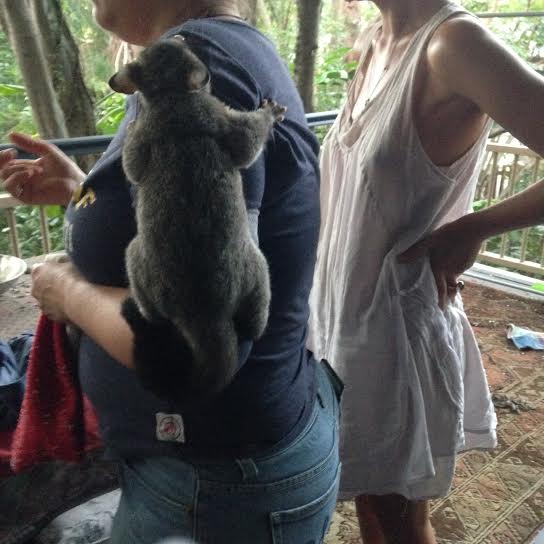
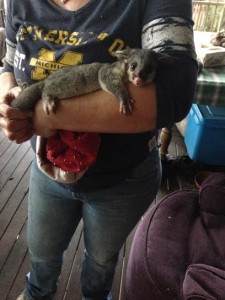
This little lady is a baby ringtail possum. Common Ringtail Possums are an Australian marsupial. They prefer eucalypt forests and rely heavily on their tails to move around. They live in communal nests called dreys and young live in the mother’s pouch for several months.
Her mother was hit by a car but she survived. Her adoptive mama says she acts just like a puppy when she’s active at night, and she’s the softest thing you’ll ever touch (but don’t touch in the wild!)