
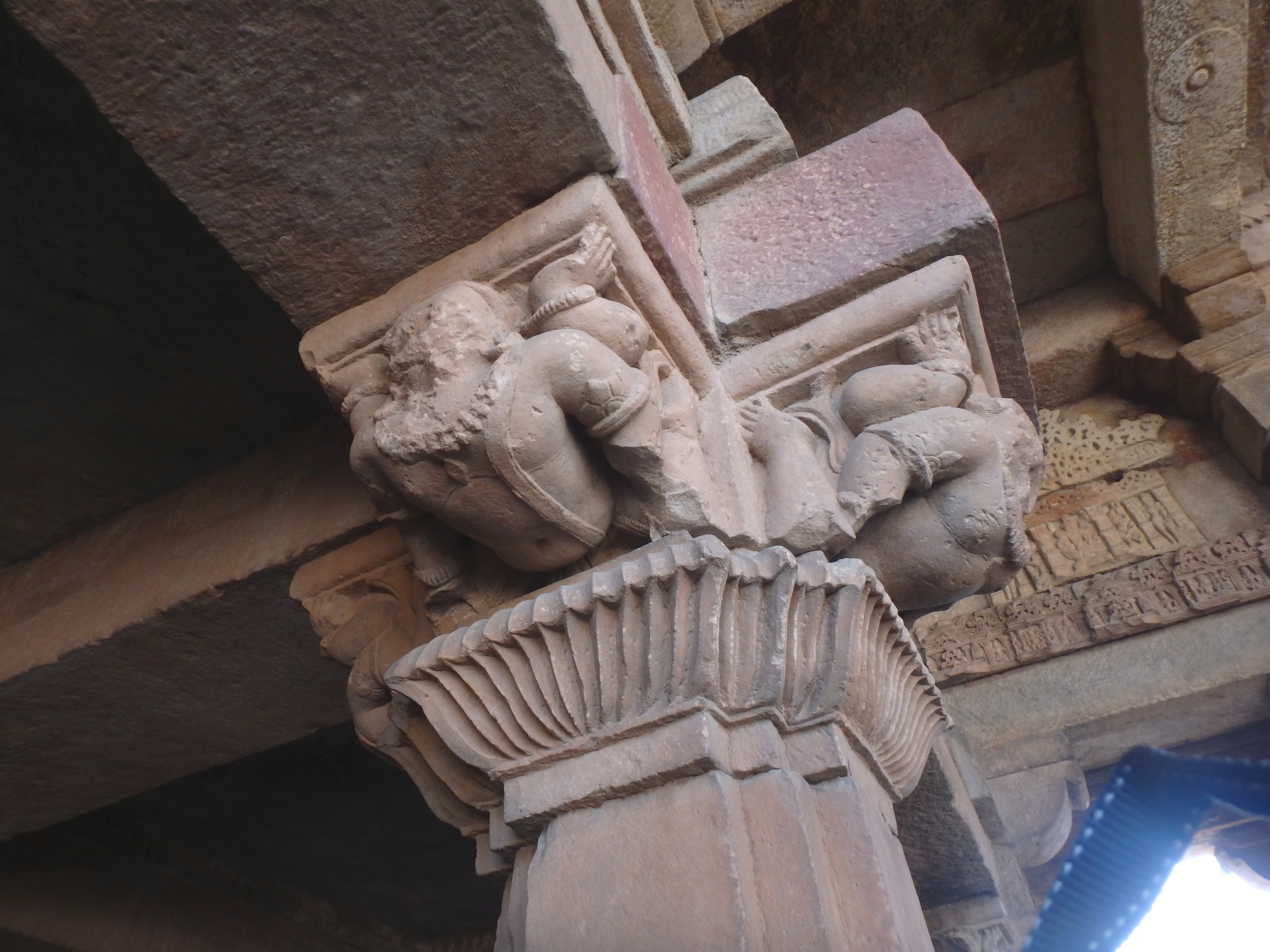
I was struck by the Hindu and Jain columns at the Qutb Minar. How rare and odd it must be for some people to enter into a space or mosque and see symbols and icons of an opposing or separate religion. What kind of historical narrative does it tell? Is this a symbol of Islam’s conquest over a land once ruled by Hindus, Buddhists, Jains and other religious identities?
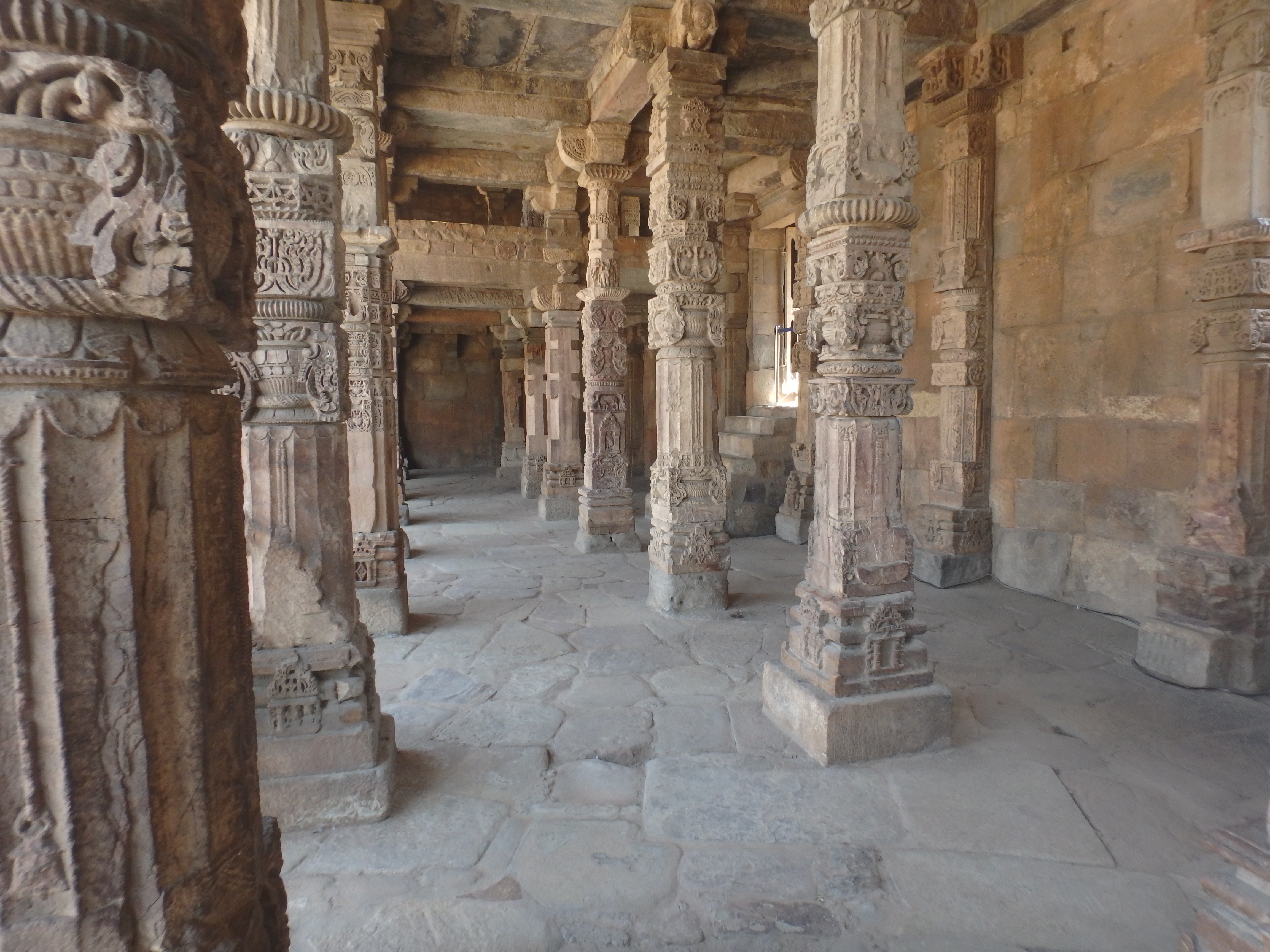 There is violence and conflict embedded in these structures, these temple columns. The intentions behind building the Qutb atop ruins of Hindu temples… that is profound. The literal defacing of the Hindu icons shows the pride or might within the Mughal emperors, of their conquest over the Indian subcontinent.
How does (did) this construction of the first Delhi mosque shape conflict between religious groups and identities in India? To what extent do clashes between Hindus and Muslims live in these historical monuments? I remember Sunil (our history professor) commenting on how the people of Delhi don’t know their own history. I wonder what he means by this, as I imagine the conflicts between Hindus and Muslims that are played out today are very much attached to historical memory. In Delhi, aren’t conflicts remembered or perhaps triggered by the past, alongside imagined hatred and difference? If the people of Delhi really do not know their own history, then what helps construct the modern day narrative of such conflicts? It could be imagined within monuments and spaces, such as the Qutb, or in neighborhoods that house shrines such as the one we visited today, of Bakhtiyar Kaki.
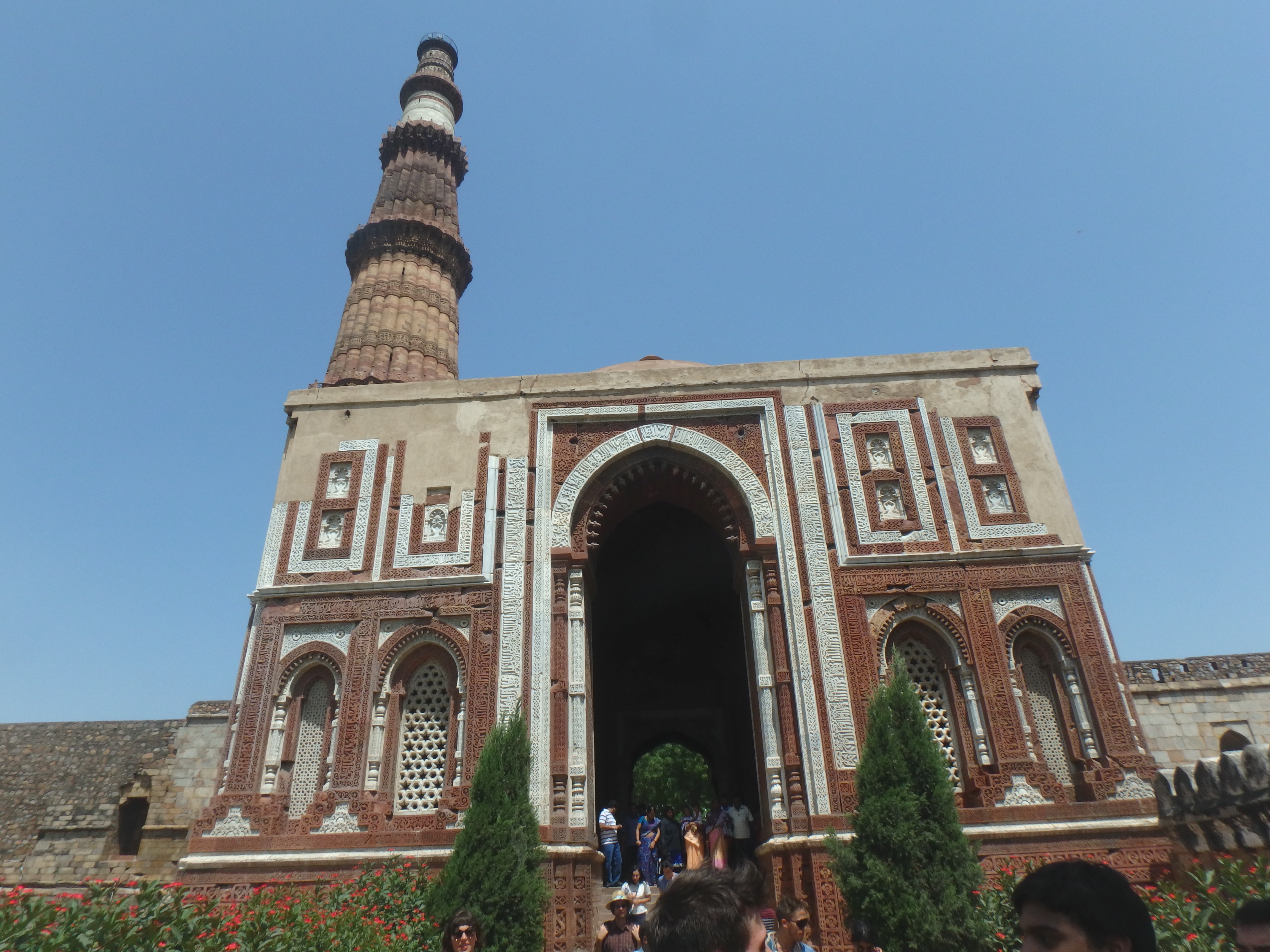
The Qutb Minar, Delhi’s oldest mosque
History, Sunil reminds us, is memory, and memory can be reconstructed, taught, and negotiated… in the home, in school, or in a place of worship.
I walked around the Qutb site with a student from the University named Dias (a Spanish name). He’s from the state of Kerala, in the south, and comes from a Christian family. He said the state of Kerala is thirty percent Christian, 30 percent Hindu, and 30 percent Muslim. He also said that the religious conflict was never (and is not) as bad as it was in northern India. I imagine the 1947 partition didn’t affect the south as much as it did the northern territories. He said it was a relatively peaceful (and beautiful) state, due to the communist undertones and current leftist party politics that govern and dominate the state. He said there is greater equality and and more profound egalitarian policies that you might not see in the rest of India. Whenever I asked him a question about India’s political or social issues, he continued reminding me that you must not (and simply cannot) generalize about this country. It is too different, wherever you go. Each state has its own language, personality, politics, culture, religious dynamics, etc. I wonder now what then binds all of India and keeps it together, as one nation. What is the conjoining factor of this country? It’s history, perhaps? Colonial independence? I wonder if India, as a colony of the British empire, was in a way brought closer as a nation due to being controlled by foreigners, but also divided (violently divided) due to the same reasons… Communalism made Hindu nationalism even stronger, and perhaps that is why India as one “nation” is strong. Then again, there are millions of Muslims and Sikhs who live and who make up this “Indian nation” and yet they don’t rebel or stir sectarian violence (on a large scale, as was seen before 1947). Perhaps they do rebel according to different regions, regimes and policies. It sounds like, from the students and professors I’ve spoken with, that Modi’s policies are creating greater religious intolerance. I still am stuck on this question of the “nation” and the commonalties. Without nationalism across different group lines, would India look like the European Union? Divided according to language and shared histories?
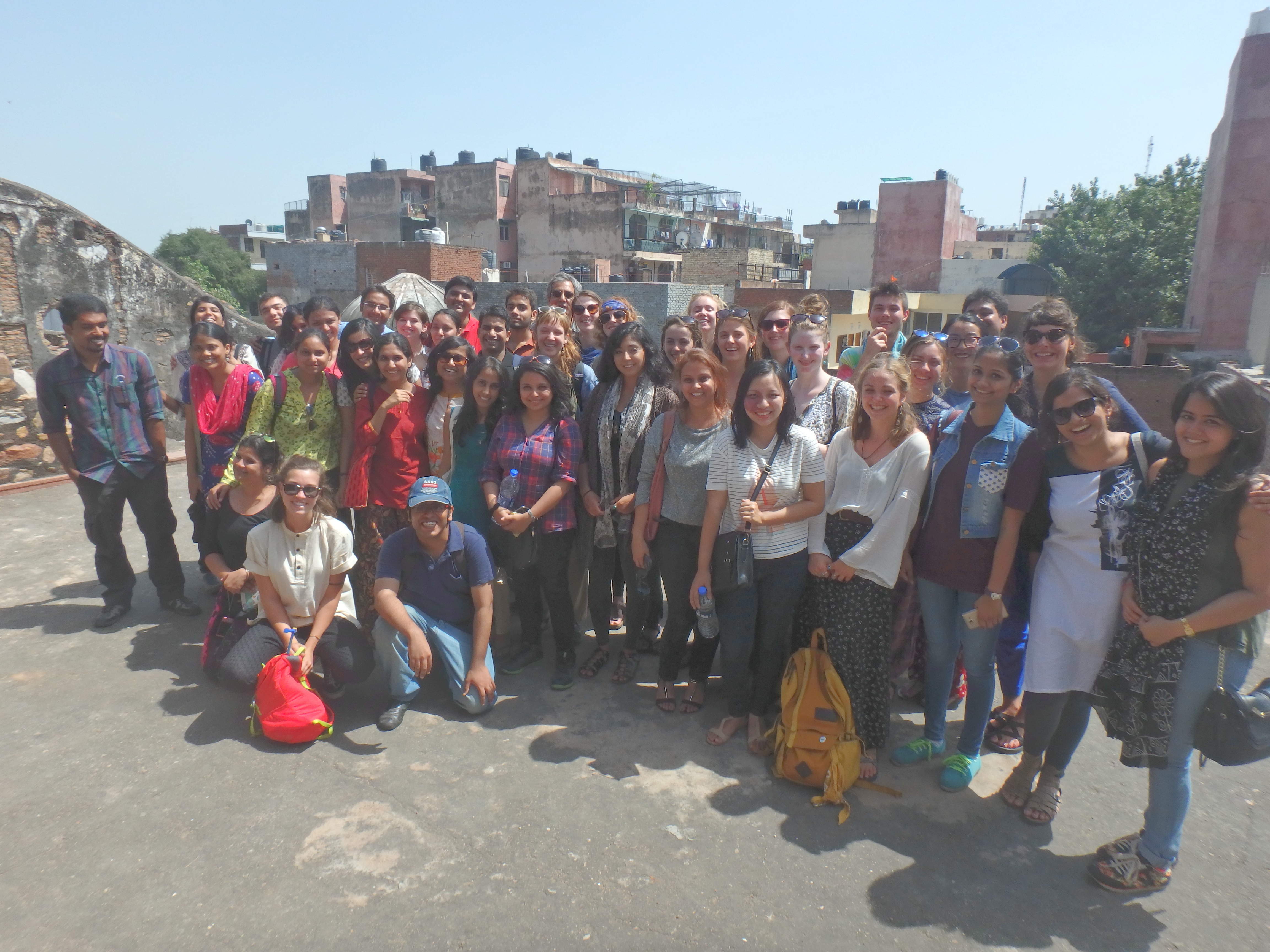
Our friends from Delhi University.
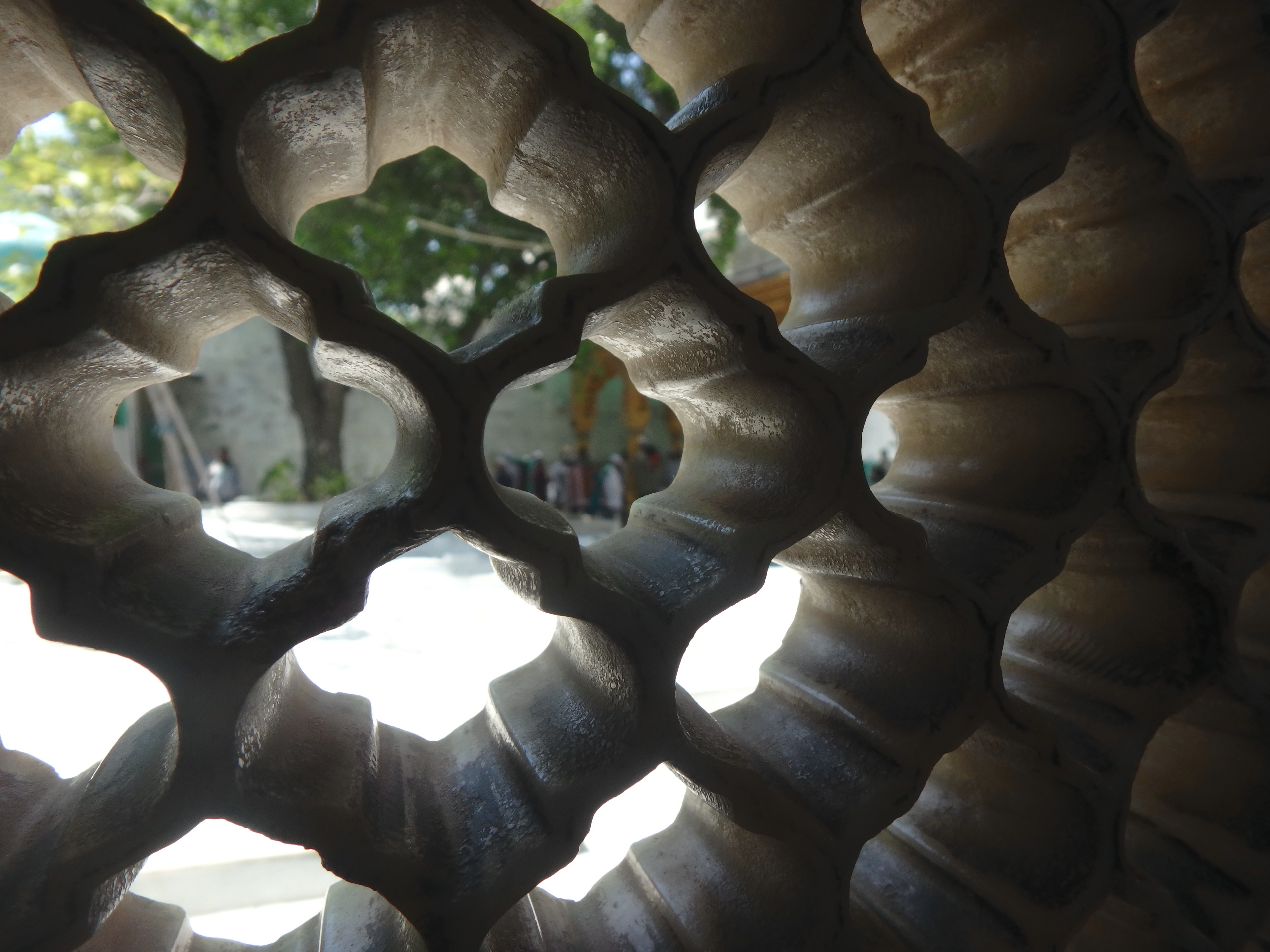
Women are not allowed inside the shrine, they pray from behind a screen. Bakhtiyar Kaki’s Shrine.