Namaste Y’all,
My time in Delhi has been simultaneously fun and difficult; I find myself constantly adjusting, reflecting, and engaging with my surroundings. All five of my senses have been fully stimulated.
On one of my first jet-lagged nights in Delhi, I found myself reflecting on a quote from Charlotte’s Web. The quote is about Wilbur, the pig, and it reads: “His stomach was empty and his mind was full. And when your stomach is empty and your mind is fully it’s always hard to sleep.” I find it bizarre that this quote returned to my thoughts after all these years. I haven’t read Charlotte’s Web since I was in 2nd grade and yet there I was at 4 am hungry and full of thoughts just like a miraculous pig.
Perhaps I was able to tap into my 2nd grade mind because being in Delhi has made me feel like a child. Traveling can have that effect. I am in complete awe of all that surrounds me, I find myself asking a million questions about how things are and how they work, my heart feels full of love for all those around me, I miss my mom, I’ve been going to bed at a reasonable hour, I’ve even felt myself falling asleep at the dinner table. Much like a child; this world is new to me full of a multiplicity of lessons of how to navigate within this space.
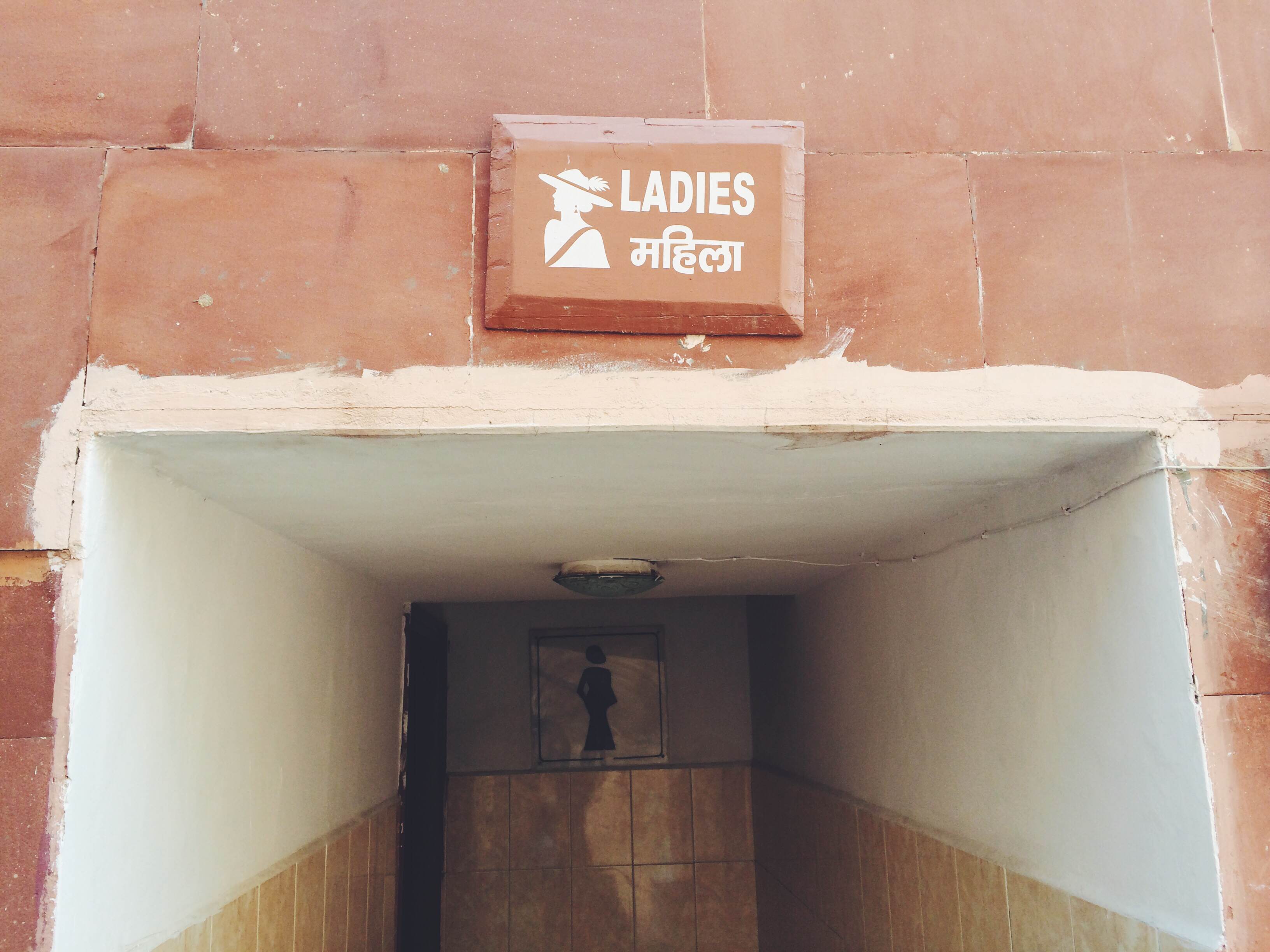
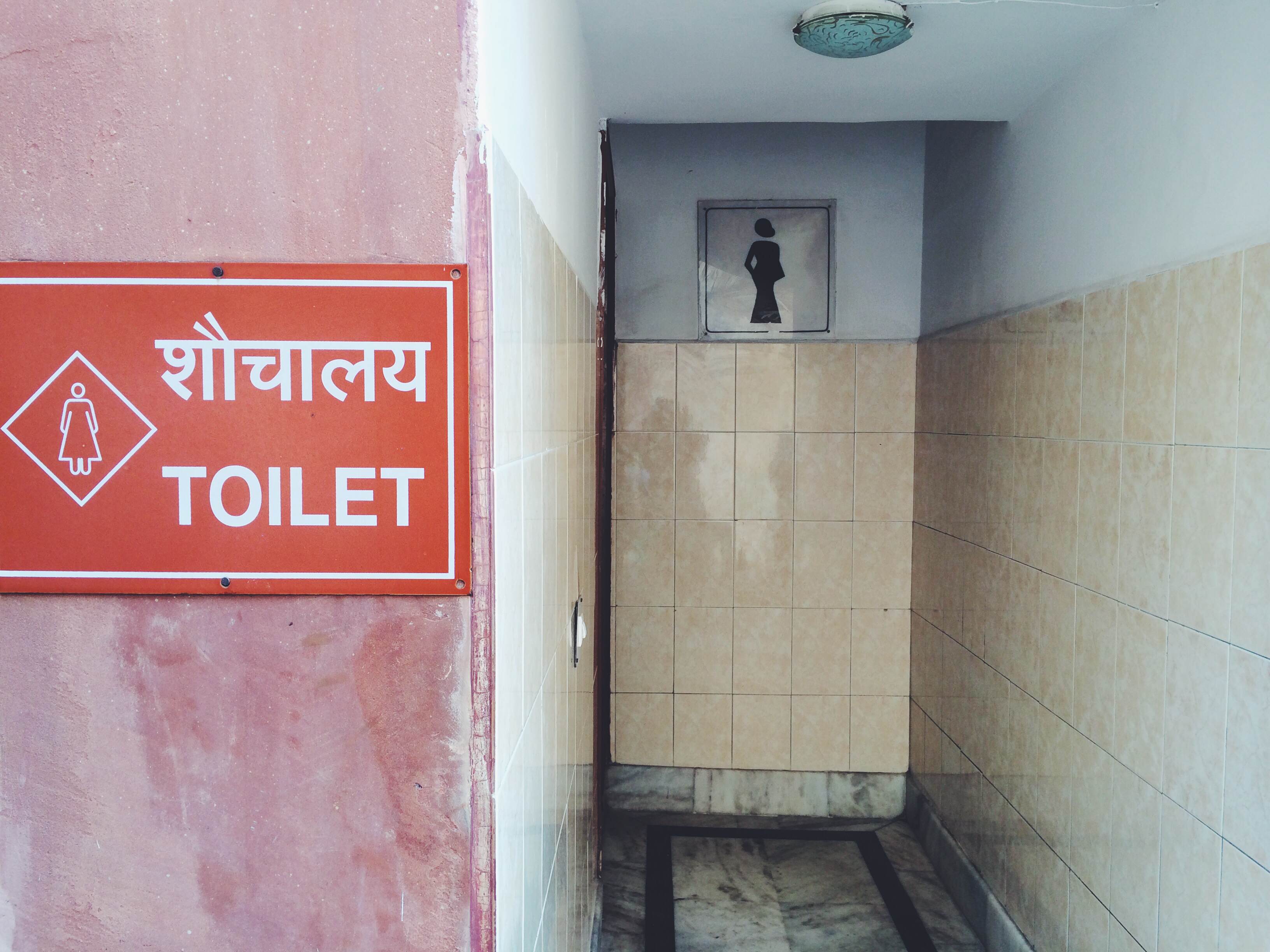
One of the hardest things to adapt to is fact that public spaces have been catered towards males. Sunil Kumar, our wonderful professor during our stay in Delhi, explained to our group that as a man in Delhi he feels like he is 10 feet tall and invincible: spaces in Delhi are catered for him and other men, it truly is a man’s city. As Sunil was explaining about how Delhi is a man’s city, he did so by prompting to think about what was available to men on the streets that was not available to women, and immediately I thought of bathrooms. I know that to an American reader this thought might come as a shock, but Delhi does have a skewed ratio of male to female restrooms. In Delhi there are 3,712 public toilets for men and only 269 for women; as a woman walking around I am reminded that public spaces are not designed with women in mind. And that is perhaps the point. This is more than me complaining about how I have no place to pee (although when drinking the recommended amount of water each day to combat dehydration it becomes an issue when there aren’t bathrooms around) it is about how physical spaces, i.e bathrooms, are cultural reminder of who is supposed to be occupying certain spaces. Prabu Mahapatra, a Professor of labor and working classes, explained in his lecture to us that “women are being punished for entering public spaces.” These acts of punishing take a spectrum of forms from punishing women with sexual and physical violence to the punishing of women by restricting them from participating in human bodily functions while out in the public sphere.
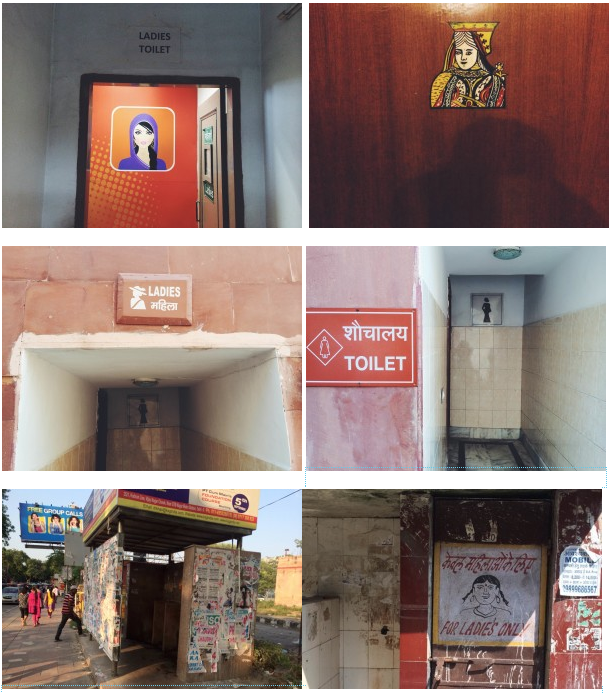
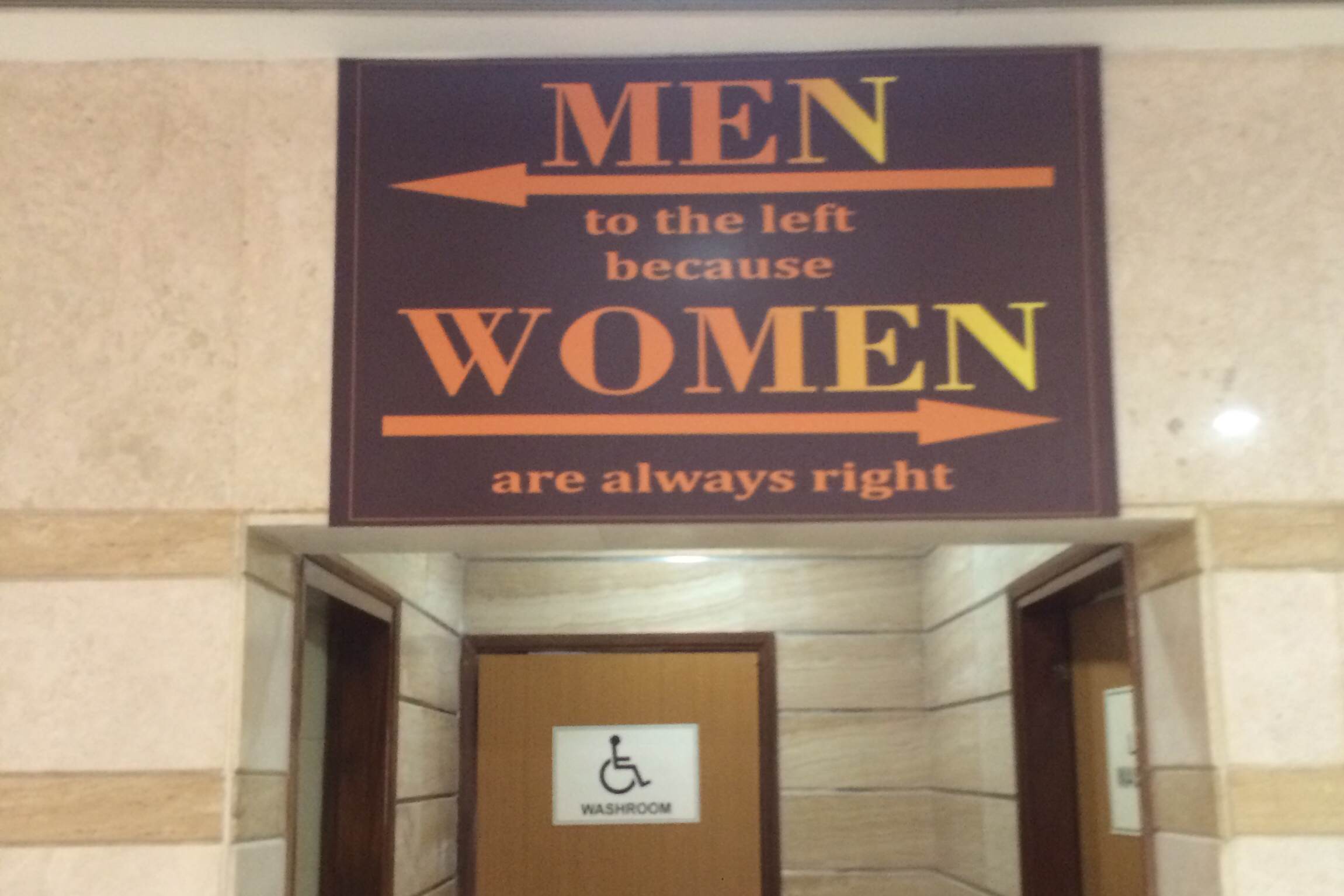
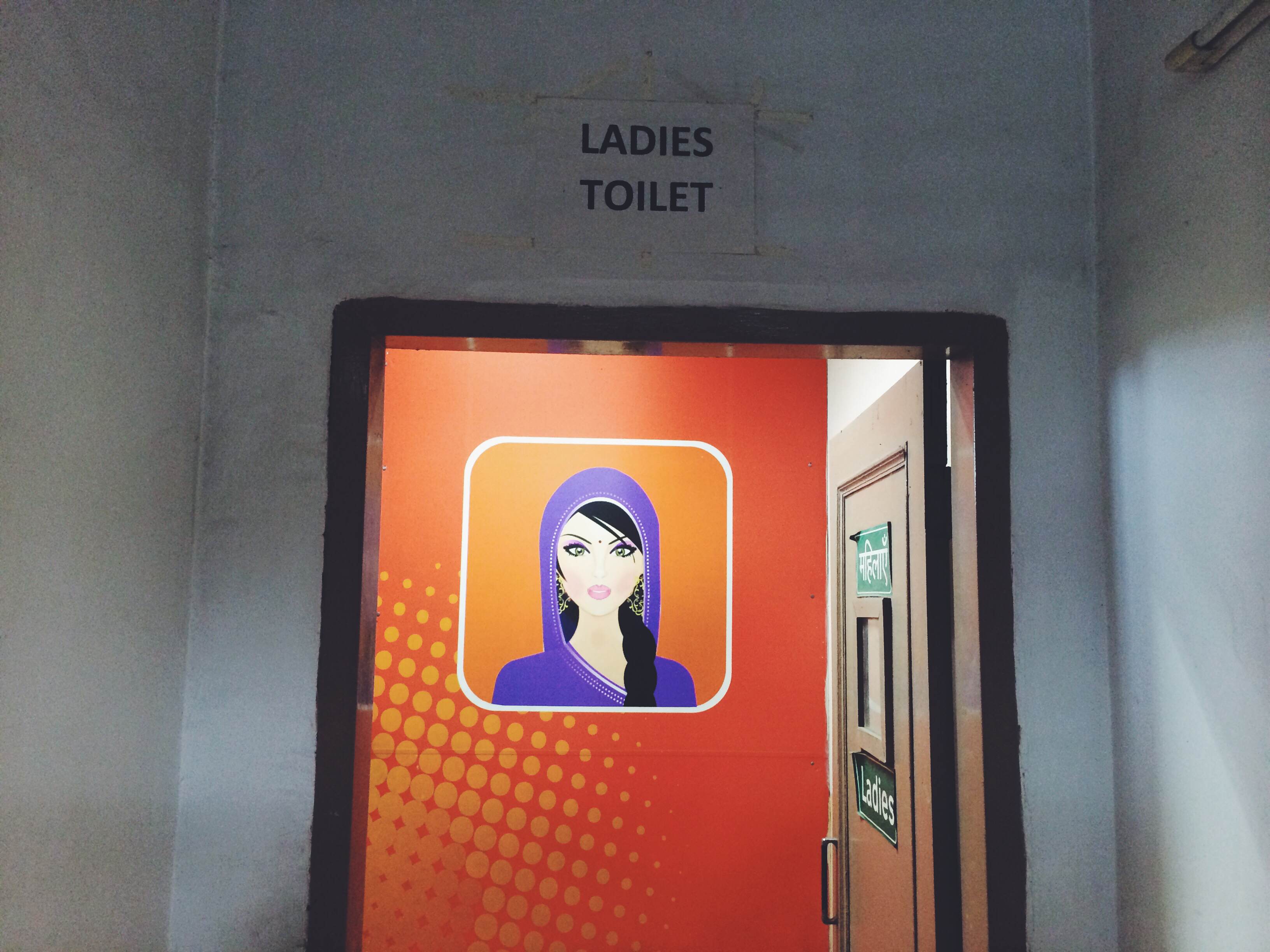
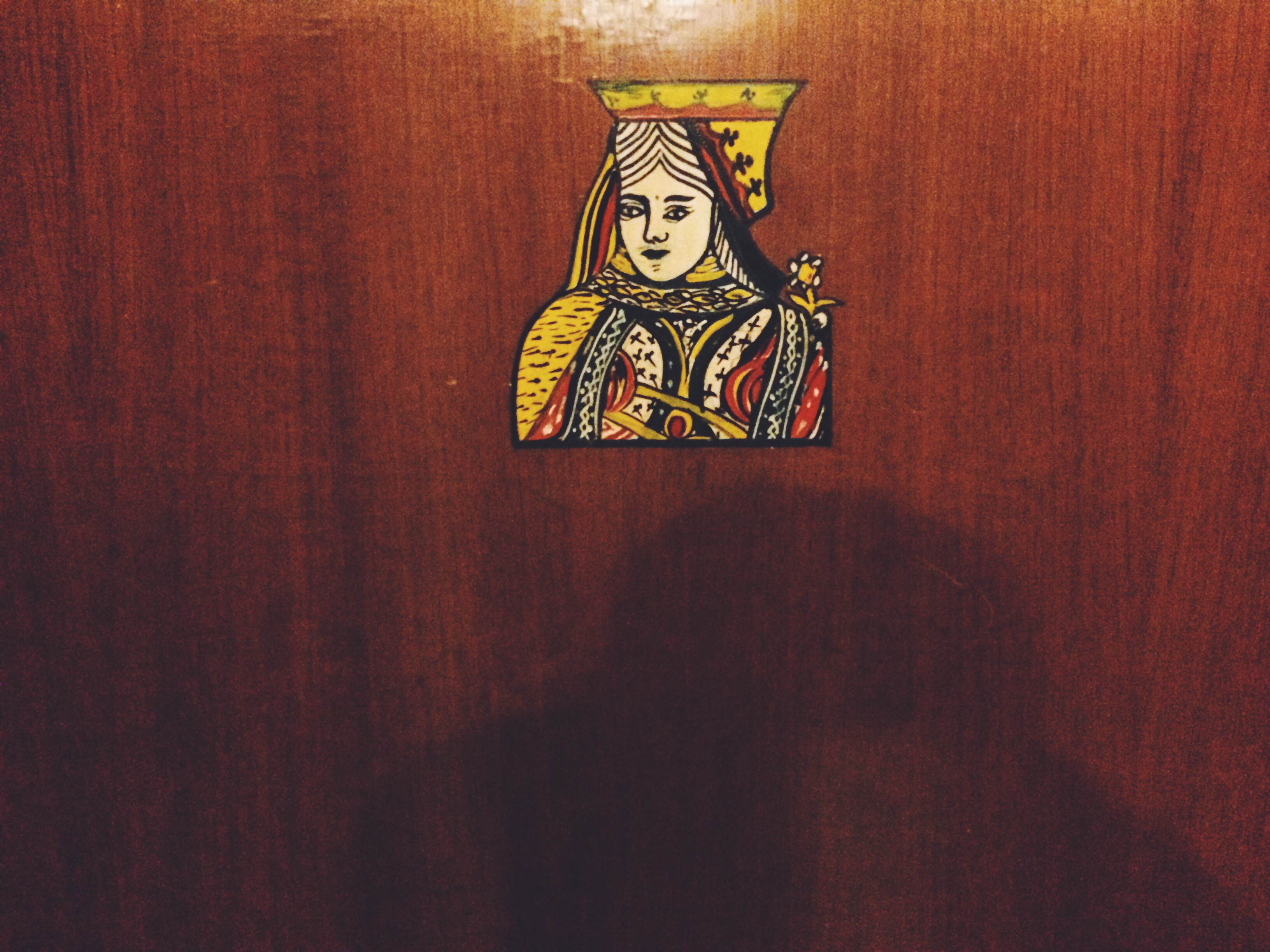
During my time I have been fascinated by the bathrooms. When we find a space where there are women’s bathrooms are available, the female identified participants of the program happily line up and use the facilities. Immediately I noticed how each bathroom we visited had different interpretations of what a female symbol was. As someone who studies how language and symbols inform culture and identity I have been deeply intrigued by the various symbols associated with “ladies rooms” as they are called here. The many diverse symbols that we have been exposed to reveal ideas and themes about social expectations about dress and beauty. Some also are meant to play with ideas of gender. But what the symbols all have in common is that they interact with the parts of our brain that are hard wired to signify gender: we know what symbols ultimately transfer to each respective gender. I will leave you readers with some photos of the ladies rooms I have come across in my travels. The last two are examples of public bathrooms in Delhi, males to the left, and the one female public restroom I found to the right. Feel free to comment with questions and/or thoughts so we can pursue this conversation further.
Abbey
PS. In case any of you are interested in reading further on these issues, I would highly recommend reading this blog post and this article about public bathrooms by Indian Women (also full url below), their voices are essential when looking at these issues and deserve to be a priority:
https://justiceforwomenindia.wordpress.com/tag/lack-of-public-toilets/
http://timesofindia.indiatimes.com/city/delhi/Lack-of-public-utilities-puts-women-in-Delhi-in-a-spot/articleshow/18963611.cms
and if you are interested further Shahana Sheikh wrote a comprehensive study that can be found here or in the link bellow
http://waterfund.go.ke/sanitation/Downloads/2.%20Public%20Toilets%20in%20Delhi.pdf