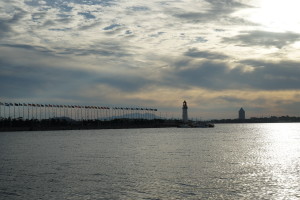
Qingdao coast
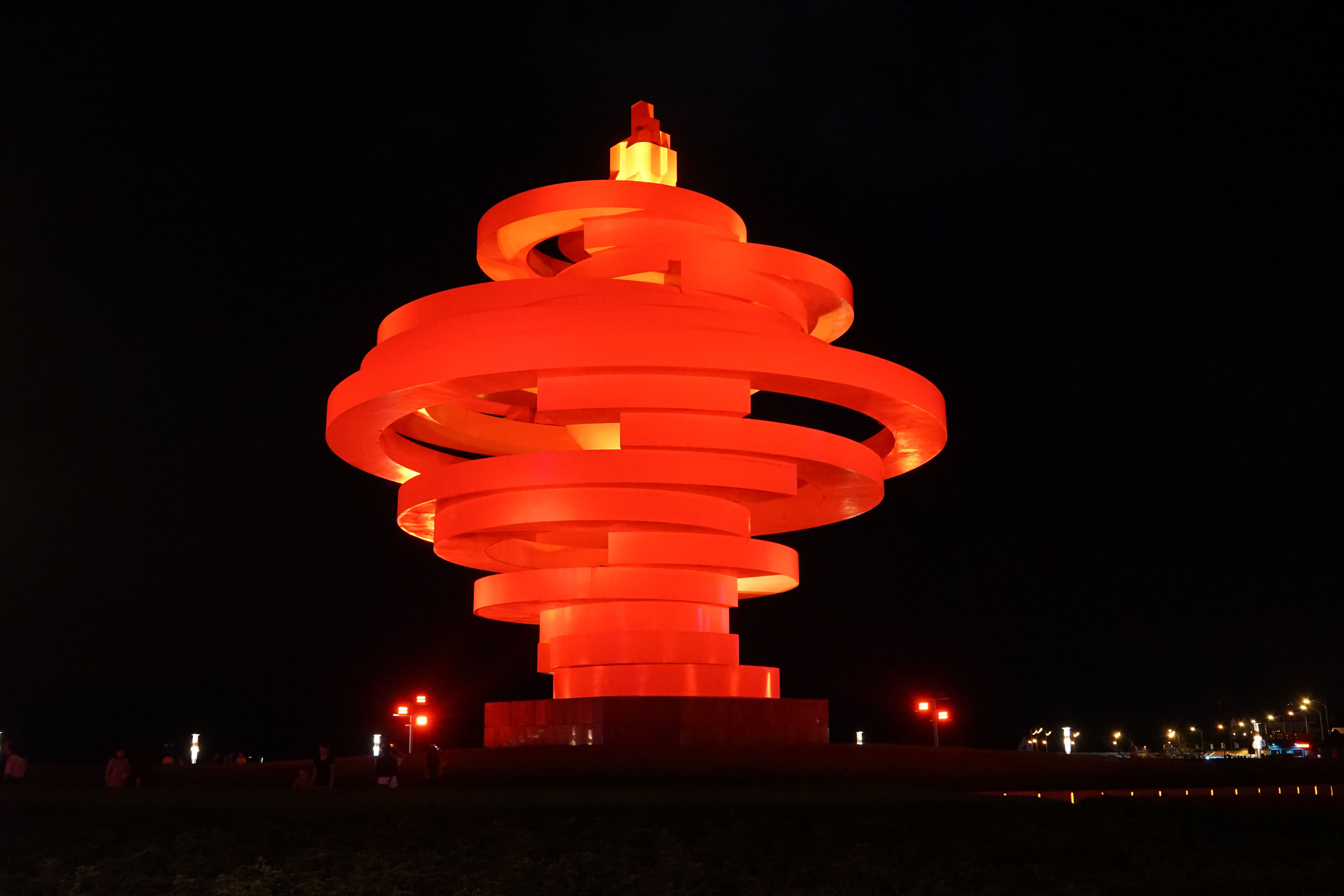
City emblem of Qingdao
Last week our little group of seven, accompanied by Professor Zhang and our Chinese language instructor/program coordinator travelled to Qingdao. Home to many avid sailors, delicious seafood, and beer lovers, the city of roughly eight million sits on the beautiful coast of the Yellow Sea. Qingdao was occupied by the German Navy for around thirty years at the turn of the 20th century, leading to wide roads and architectural styles that fooled me into thinking I was in Europe. Our trip to Qingdao was part of our ongoing study of Chinese culture. Recently we have had lectures on Taoism, both the philosophy and religion, and been reading The Tao of Pooh (an excellent book for anyone interested in Taoism). Aside from Taoism, Qingdao also has a recent and distinct tea culture, and it is nearly impossible to separate the culture of tea from the culture of China.
hard at work
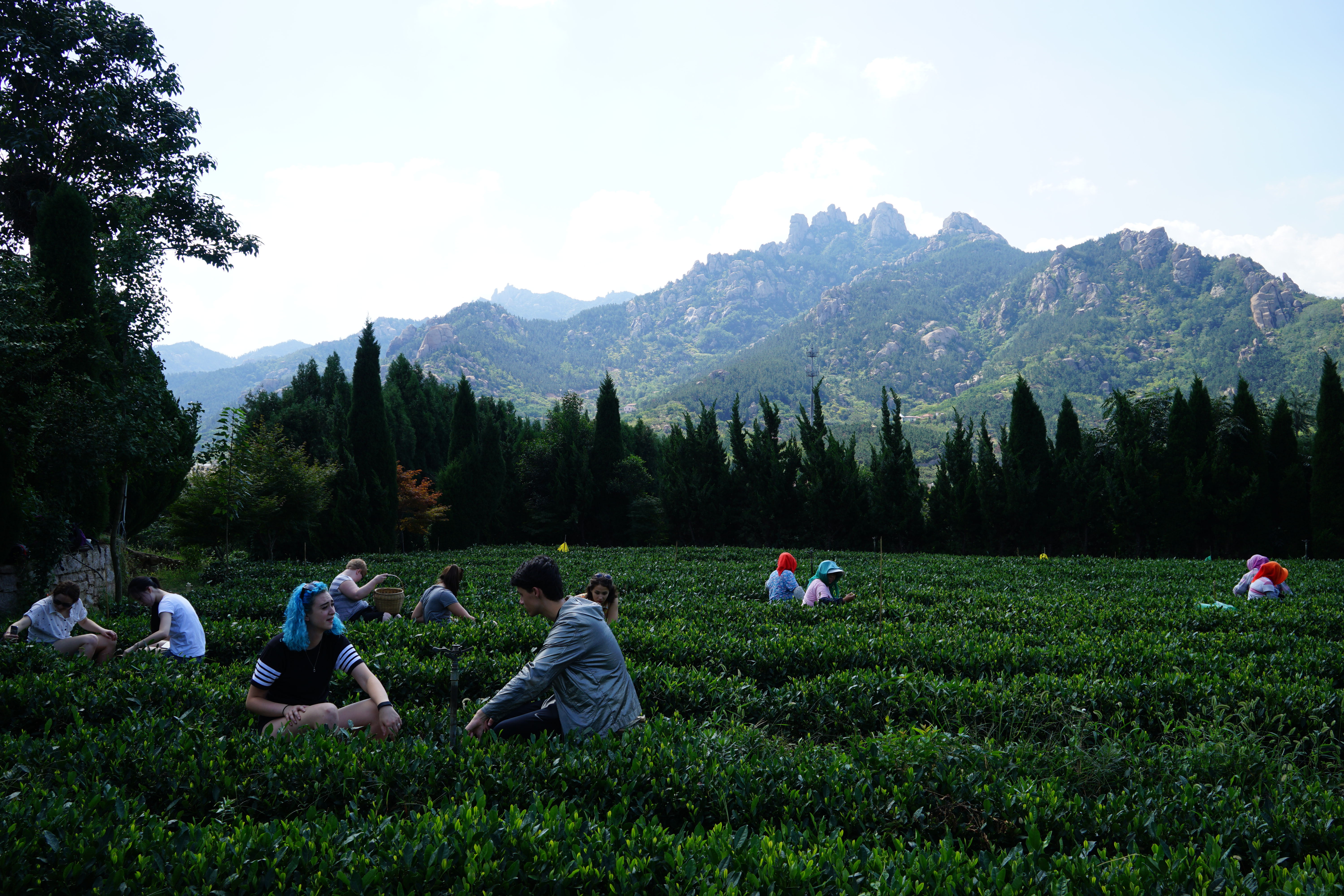
Laoshan region
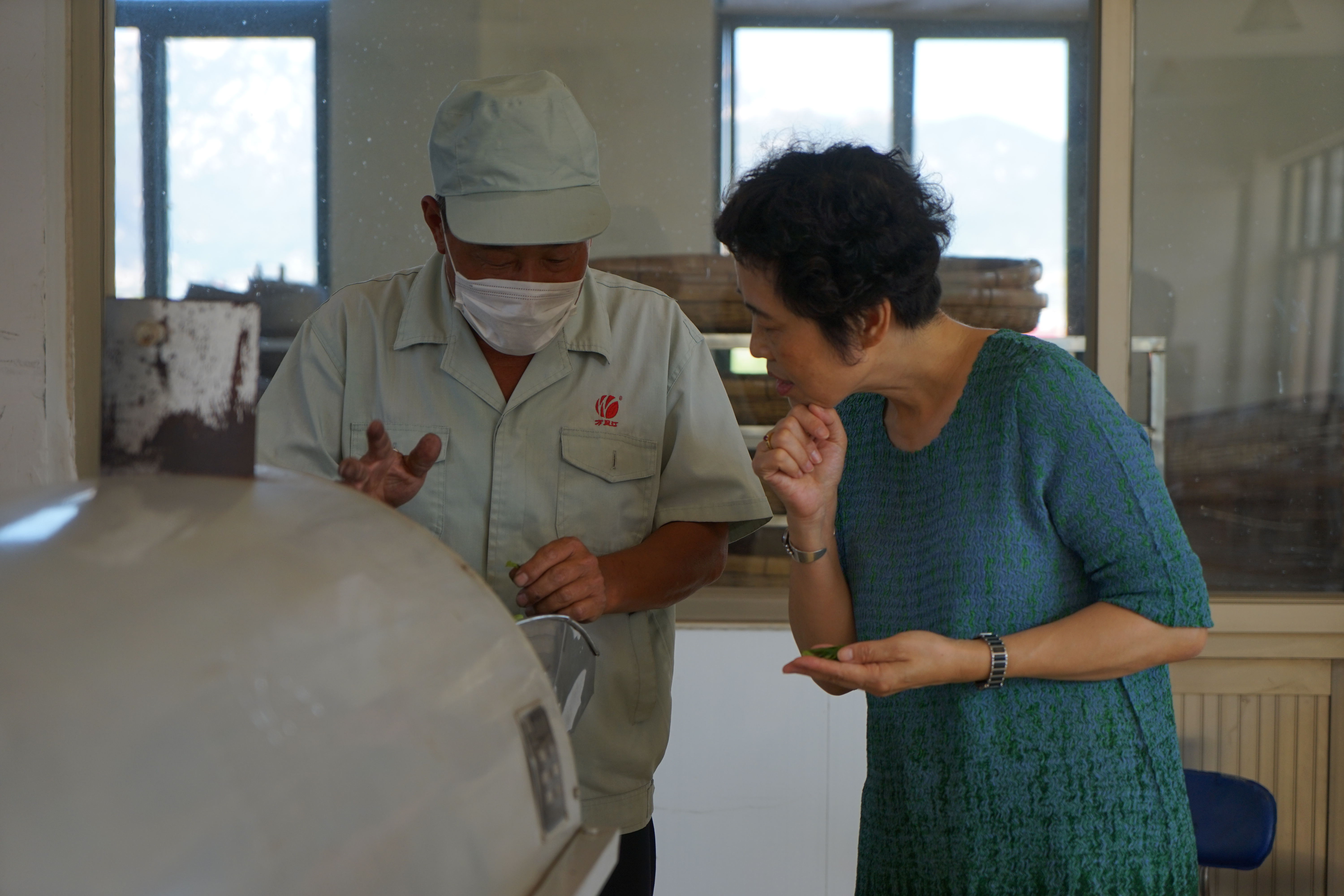
Zhang laoshi learns about oxidation
The majority of our trip to Qingdao was dedicated to tea. During the six days we were there, our group was able to see how tea is harvested and processed, along with learning a little bit about the Chinese tea ceremony. Professor Zhang was able to get in touch with a prominent tea company in Shandong province to give us a first hand look into tea. On our first day we went to the company’s tea museum to learn a bit about the history of tea. As I said earlier, it is impossible to separate tea from China. The two have had a deeply intertwined history that really spurred China’s international trade and development. After lunch of the first day, we headed to a lecture by the company’s lead tea researcher about the benefits of drinking tea. Our second morning was spent in the Laoshan district of Qingdao near the mountains. We were able to see first-hand how tea leaves are harvested. A group of very dedicated women spend roughly 11 hours a day hand-picking the leaves from the tea bushes. This task is especially hard if the quality of the tea is higher as only the smallest and freshest leaves can be used. The sheer quantity of fresh leaves needed to create one small package of tea was truly astounding. To see this crucial step in the process definitely has made me think a lot about the cost of consumption since we left. That afternoon we went to the processing area of the company where we watched the leaves go through the elaborate drying and oxidizing process needed to become ready for sale. It was especially interesting to learn that the only difference between the six types of tea (green, red, black, white, yellow, and oolong), is the way in which the original tea leaves are oxidized.
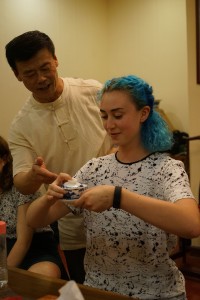
learning from the champion
Our final segment in the world of tea was learning about the Chinese tea ceremony. The ceremony itself has become somewhat of an industry as you can take classes and get a certificate, but it also holds a place of importance in Chinese history and culture. We were lucky enough to learn from a man who had won the competition for making the best cup of green tea and truly a champion of the tea world. The morning’s lecture was more about the benefits of tea, it can cure anything from a toothache to bug bites,as well as information on how to brew the best cup of tea possible. For those who are curious, the water should be 80 degrees Celsius and you should only let the first cup steep for 12 seconds with a 1 to 50 ratio of tea to water. In the afternoon we received a tea etiquette lesson which involved walking with books on our head and having the champion try and contort my gangly limbs into an elegant position, truly a difficult task. Watching the ceremony was very cool. There is so much meaning behind every movement and gesture that it’s as if the whole event is a language. I would have loved to have been able to spend more time learning about the history and importance of the ceremony, but just that glimpse was fascinating.
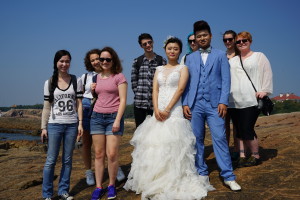
the most uncomfortable group photo
Aside from tea, we were also able to catch a look into Qingdao’s modern culture. Located on the coastline and with a history of European architecture and parks, Qingdao is an extremely popular location for wedding photos to be taken. On our short walk along the beach, we must have seen over 50 couples preparing to have their photos taken. It was pretty funny to see so many bride and grooms in the same area; I hope for their sakes that the photographers edit out the other couples in the background. After walking around, we went to the Tsingtao brewery where China’s most famous beer is produced. The brewery was originally opened by the Germans, but taken over by the Chinese when Germany left Qingdao. We were able to walk through the old brewery which had been renovated into a museum, and then into their bottling facility. There, we had the opportunity to taste the unfiltered beer before it was bottled and later, in the brew pub section, the final product. It was a pretty fun day and very nice to get a taste of Qingdao’s attractions.
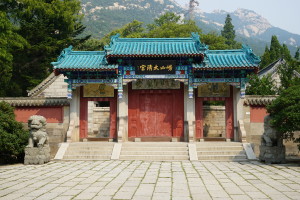
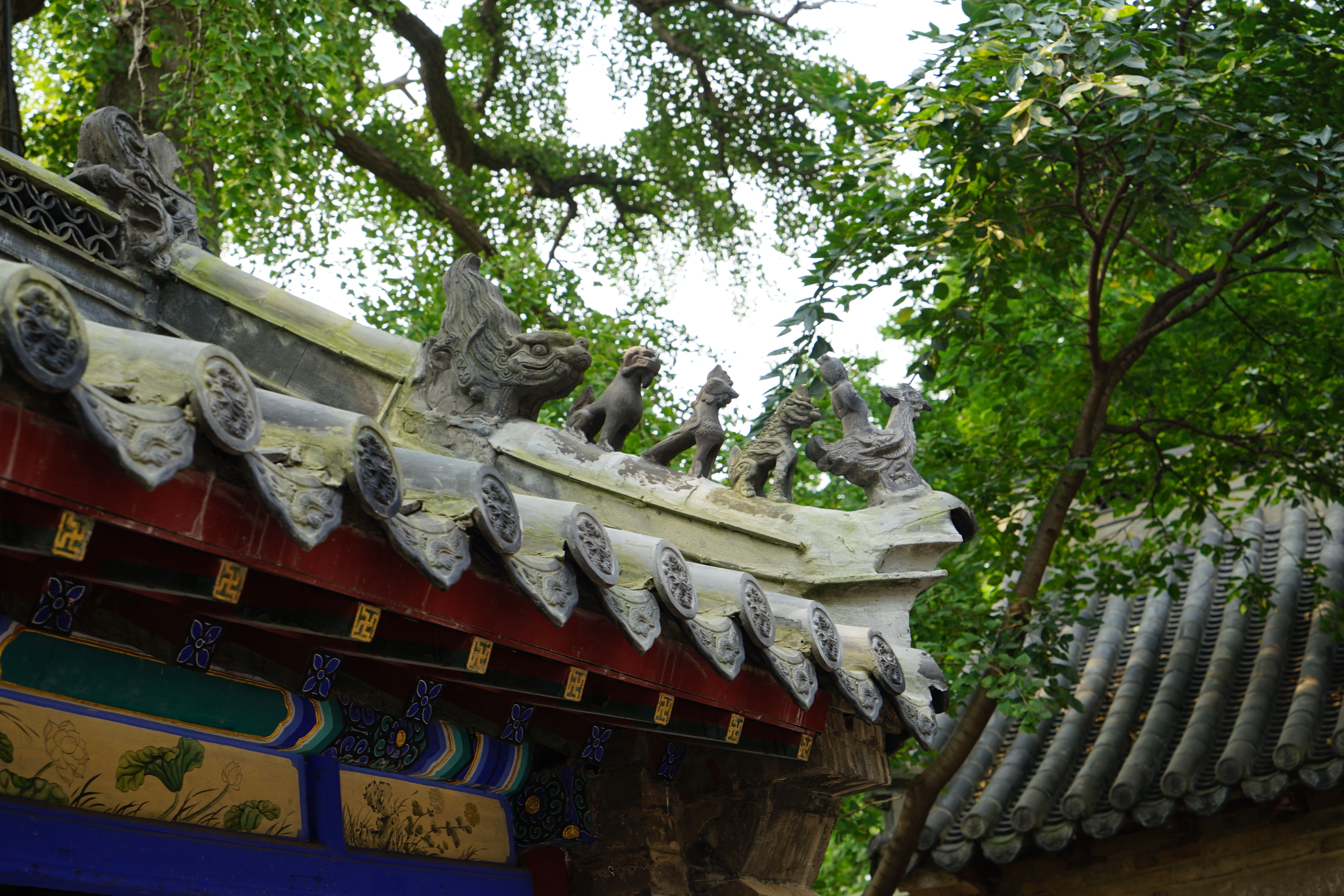
Our final day in Qingdao was spent at a Taoist temple in the Laoshan region. Taoism is considered to be one of China’s five great religions with elements of Chinese folk religion, many different deities, and the primary text and philosophy of Laozi, the accredited author of Tao Te Ching. The temple that we went to was Taiqing Gong, or the Temple of Supreme Purity. There were roughly 16 practicing Taoists living on the temple grounds and taking care of the site. In times that I’ve previously visited sacred sites like cathedrals and mosques, I’ve always found that there’s a certain type of solemnity and respect that the atmosphere breeds. At the temple, however, it was hard to find the same feeling as their were hundreds of tourists milling about, guides talking to their groups through loud microphones, and children climbing about everything. The grounds themselves were lovely. Beautiful brightly painted temple buildings with statues of deities inside were all about as well as ancient camellia and ginkgo trees. The smell of pomegranates and incense wafted through the air as we walked through the different levels. Near the end, we were very lucky and struck up a conversation with one of the practicing Taoists. He explained to us the legends and histories of many of the gods and goddesses, as well as of the trees that lined the temple. With the help of Professor Zhang, we were also able to ask him about his choice to live at the temple and how it felt to practice a religion of tranquility and simplicity in a massive tourist destination. The man left us with the answer that even though the temple may not have the same feel as traditional Taoist scenes of tranquility, it made finding inner peace all the more worthwhile.

Our trip to Qingdao was a refreshing break from Jinan. We were able to have a lot of very valuable experiences and glances into parts of Chinese culture that most tourists don’t get to see. It was very neat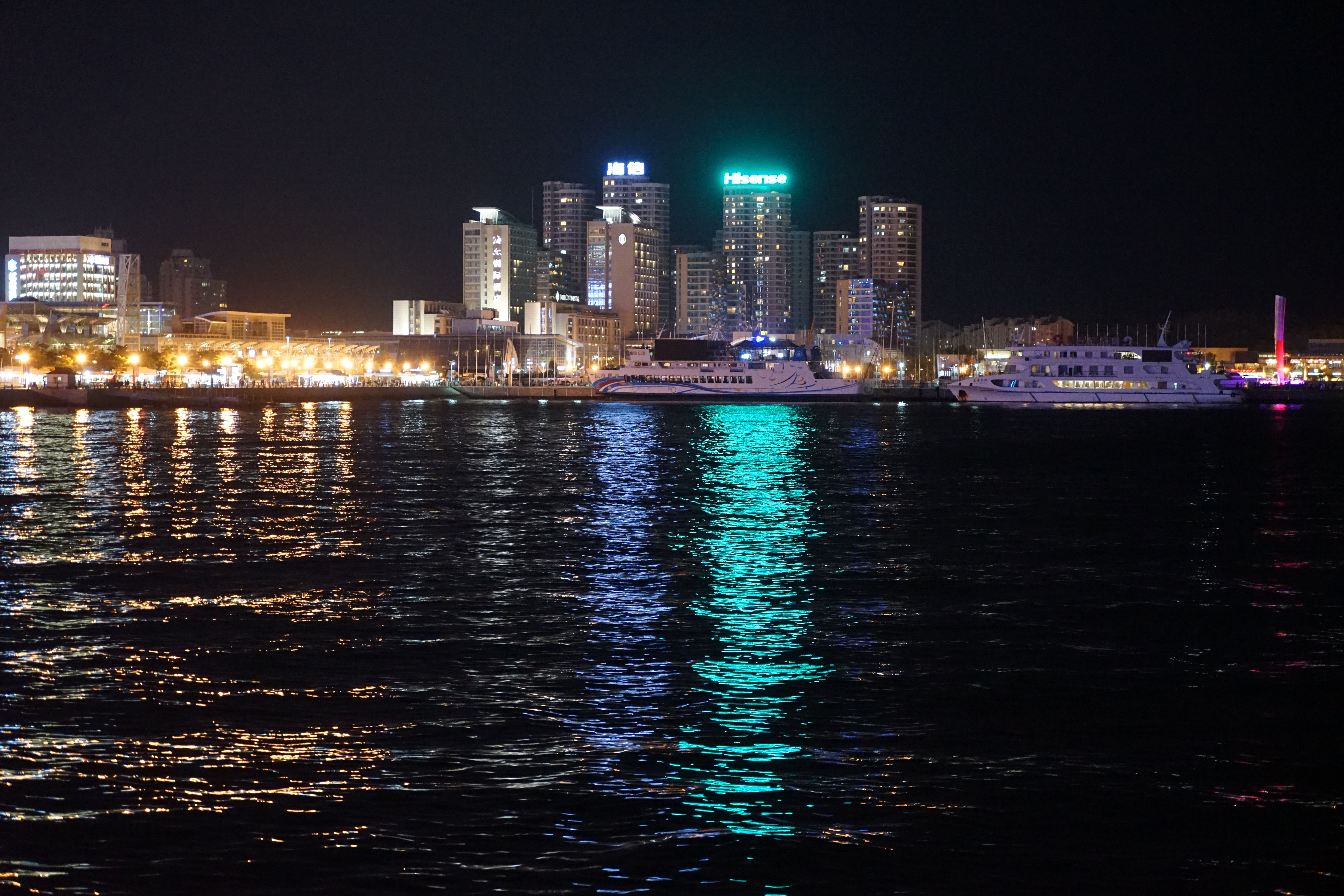 to get a taste of life in a different city, but also made me realize that I missed Jinan as well. Of course, I am still day-dreaming about the masses of fresh seafood and beach, but it feels good to be back on our campus and slipping back into our classes and returning to our favorite spots here in Jinan.