In Berlin along with longer pool lengths there is also a difference in swim etiquette. Etiquette as “a code of behavior that delineates expectations for social behavior according to contemporary conventional norms within a society, social class, or group.”(Wiki) In this case it refers to a set of unspoken rules that define how you swim during lap swim. There is a black line the bottom of the pool in a swim lane that divides it into two sides and a “T” at the end of the line that is to alert the swimmer that the wall is about a half of a yard away. In both the US and Berlin it is common courtesy to swim on the right side of the lane in which ever direction you are going and slide over to the left side as you get with in a meter or two of the wall in order to turn with out causing a collision. Were things differ dramatically between the US and Berlin is their rules involving passing someone who is going slower then you. In the US you tap some ones toes and when they get to the wall they will move over and let you pass if the lane is crowded, or if it is less crowded then one can go around the person on the left side then merge back in, in front of the person without running in to someone going the opposite direction. It is also polite to let some one go ahead of you if you are stopped at the wall and someone is trying to turn that is faster then you. In Berlin toe taping is not well tolerated, from my experiences, so if you wish to pass some one you must try to go around them which can be a tricky feat if the lane has more than three swimmer in it. Also it is not common courtesy to let some one go before you if you are stopped at the wall and you just go when you feel it is good to go. Some pools even lack lanes completely and lap swimming becomes a free for all
Lifeguards are not as present as in pools in Berlin as in the US. Often it is hard to find out who is the lifeguard, or the lifeguard is in charge of two pools, or more at a facility. This is due to the fact that people are not liable for accidents in Germany if they post signs and regulations warning people. In the US there are often multiple guards on one pool and heavy safety surveillance. Even with less surveillance in pools the German rate of downing was .47 per 100,000 people in 2012(WCDP), and in the same year the US had 2.07 per 100,000(MMWR) people, making German pools slightly safer.
Over all I have enjoyed learning about swimming in Germany and hope to visit more pools during my time here.
Works Cited
“Etiquette.” Wikipedia . N.p., 2015. Web. 11 Oct. 2015. <https://en.wikipedia.org/wiki/Etiquette>.
“Morbidity and Mortality Weekly Report (MMWR).” Center for Disease Control and Prevention. US Department of Health and Human Services, 18 May 2012. Web. 11 Sept. 2015. <http://www.cdc.gov/mmwr/preview/mmwrhtml/mm6119a4.htm>.
Thierry, G. Public Swimming pool etiquette . 2014. Flickr. Web. 11 Oct. 2015. <https://www.flickr.com/photos/t_gregorius/14319690923>.
World Conference on Drowning Prevention (WCDP). International life Saving , 15 Oct. 2013. Web. 11 Oct. 2015. <http://www.wcdp2013.org/fileadmin/Documentation/Presentations/wcdp_abstracts_web.pdf
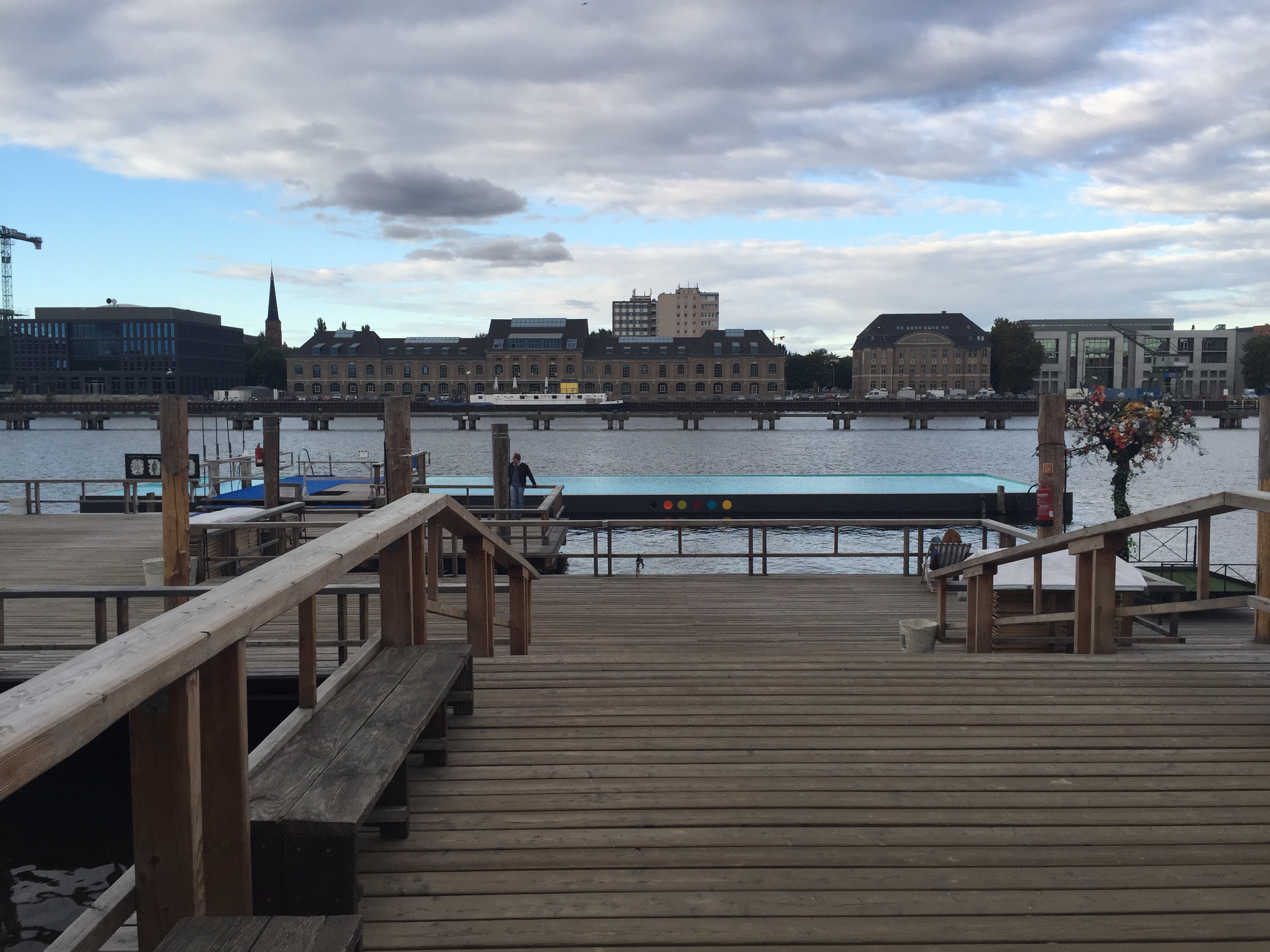
Badeschiff : Pool in the Spree
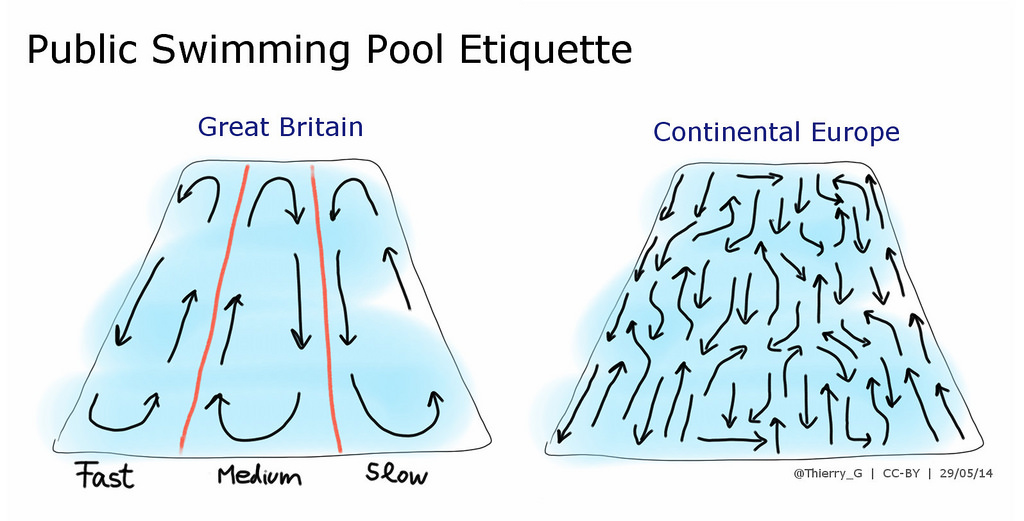
Swimming in Germany: Some times it a free for all.