One of my favorite things to do in Berlin is to visit a historical site and try to imagine what it must have been like in the decades or centuries past. Tempelhofer feld – earlier Tempelhof airport – is an example of the uniqueness of Berlin. It’s story you can find all over the city – an old site that was central in the major wars of the 20th century, and later had an existential crisis as city authorities struggled to decide what to do with it.
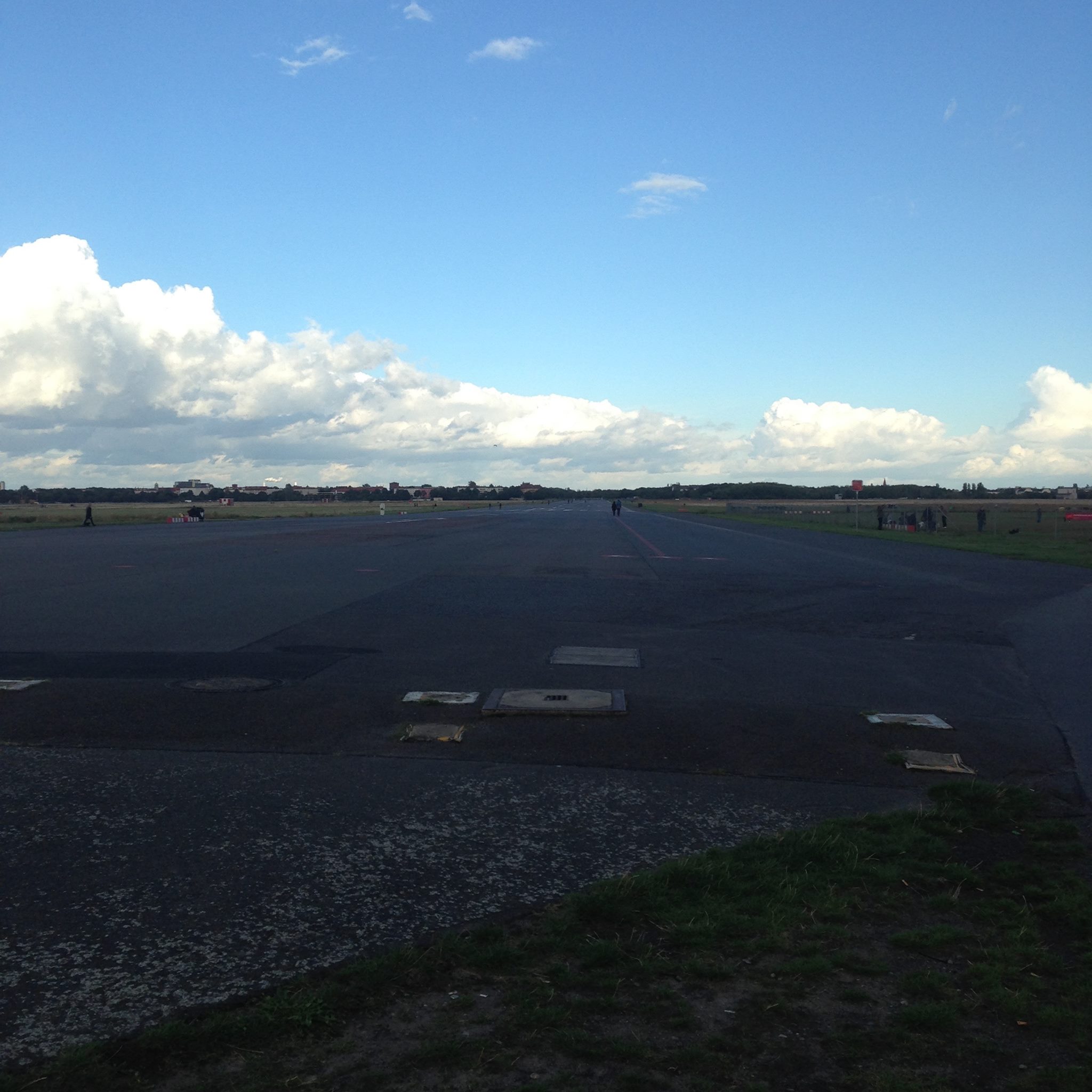
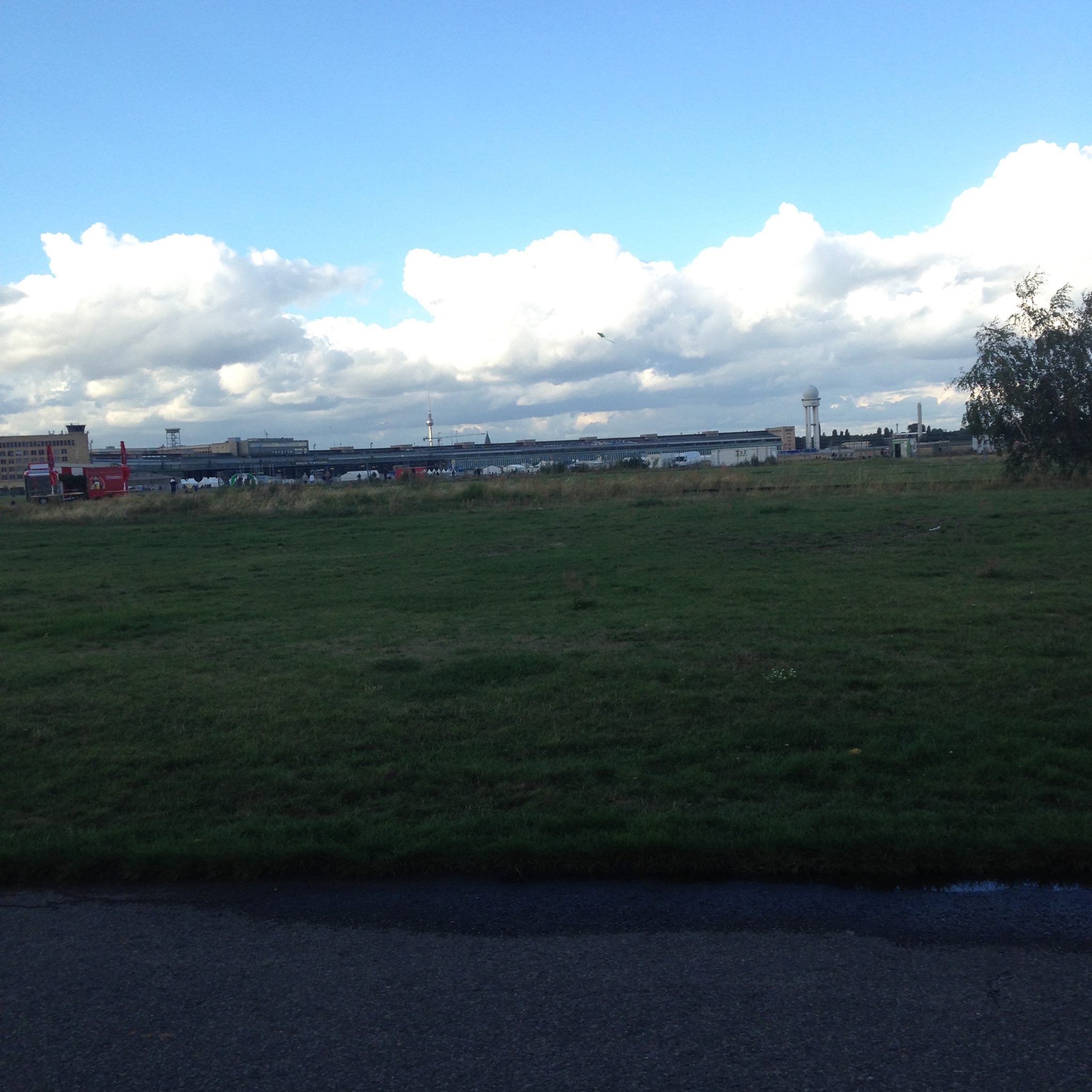
Today, the grounds of the abandoned airport are open as a public park (with free entrance), and parts of the airport building are leased out as office spaces or event venues. The grounds have many fields for picnicking, trails for cycling, skating or jogging, a 2.5 hectare BBQ area (plus a free pizza oven), and are frequently used for events such as Lollapalooza, kite festivals, and all other sorts of merriment. Last month I visited Tempelhof in the evening of one of the last days of summer. Berlin is known for it’s green spaces and parks, but despite that walking into the park feels like leaving the city and entering an oasis with an interesting marriage of gray concrete and green nature. The sheer size of the grounds is astounding. It’s 303 hectares of space, not including the building complexes. A friend and I walked on the runways, amidst joggers, families taking strolls, a Berliner testing out a remote control car, and one skateboarder unsuccessfully attempting to kiteboard. As we sat down in the middle of a quiet field, I tried to imagine this space through the ages. Originally belonging to the Knights Templar, the grounds later became a parade site to showcase Prussian (and after 1871, German) might. Even in those times, when the military would leave, families would use the space as a park. In the 1920s, Tempelhof airport was built, and in the 1930s the Nazi regime rebuilt the terminal to demonstrate the power of Hitler’s capital. The result was one of the world’s largest buildings at the time, an architectural marvel that served as one of the Europe’s busiest airports. Perhaps one of the things it’s most famous for is the 1948 Berlin Airlift, one of the first major stand-offs in the Cold War. As the Soviet Union cut off West Berlin from the Allies, Tempelhof was a lifeline that allowed Allied aircraft to drop off necessities like food and coal to the isolated city. Through the decades, the airport continued as a busy center for commercial airlines, but was shut down in 2007 to make way for the use of newer airports. After 2007, it was closed to the public but used for cultural events and fairs, before being opened as a park in 2010.
This autumn another interesting development occurred, one that I’m sure the Nazis designing the airport could never have imagined. Last month, it was announced that the airport would serve as temporary housing for refugees fleeing war in Syria and other countries. Tempelhof, much like Berlin, may have struggled to define itself in recent years but it is nonetheless a uniquely interesting place that has a capacity for reinventing itself to fulfill the demands of the times.

An image of Tempelhof when it was still in use as an airport.
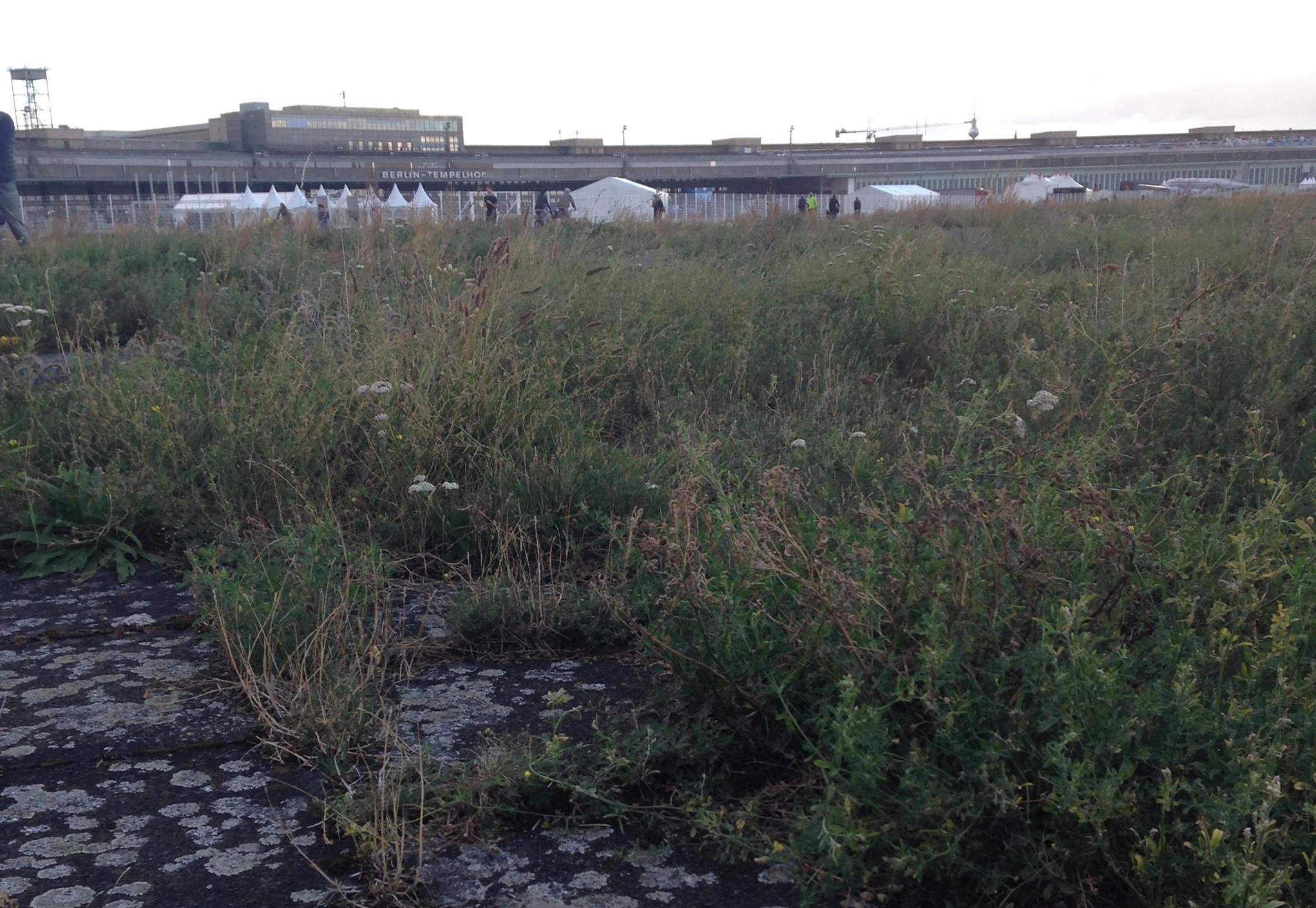
Tempelhof today, with the airport building in the distance.