After a for-the-most-part uneventful train ride — excepting a nearly-disastrous run in with an upset stomach and a squat toilet on a moving train — I managed to find the taxi queue and swiftly made my way to the old city. When I say old, I mean it; Suzhou’s history stretches back over 2,000 years, and the gardens that I visited were constructed hundreds of years ago. After dropping my bags off, I set out to explore the three classical Chinese gardens closest to my hotel.
And boy am I glad that my stomach didn’t act up again, because that afternoon was one of the most enjoyable in recent memory. These gardens are pockets of peace and tranquility tucked away in a city as Chinese as any other, bustling with the single-mindedly purposeful energy of 10 million Suzhou-ese. Most of these gardens used to be the living quarters of government officials and wealthy merchants from the Song, Yuan, Ming, and Qing dynasties. They served as places for reflection and escape from the duties of their political lives. Here government officials could moonlight as scholars, poets, and artists, as often as not in the moonlight itself. One of the gardens I visited has a special pagoda specially constructed to give the inhabitant an extraordinary view of the moon at night.
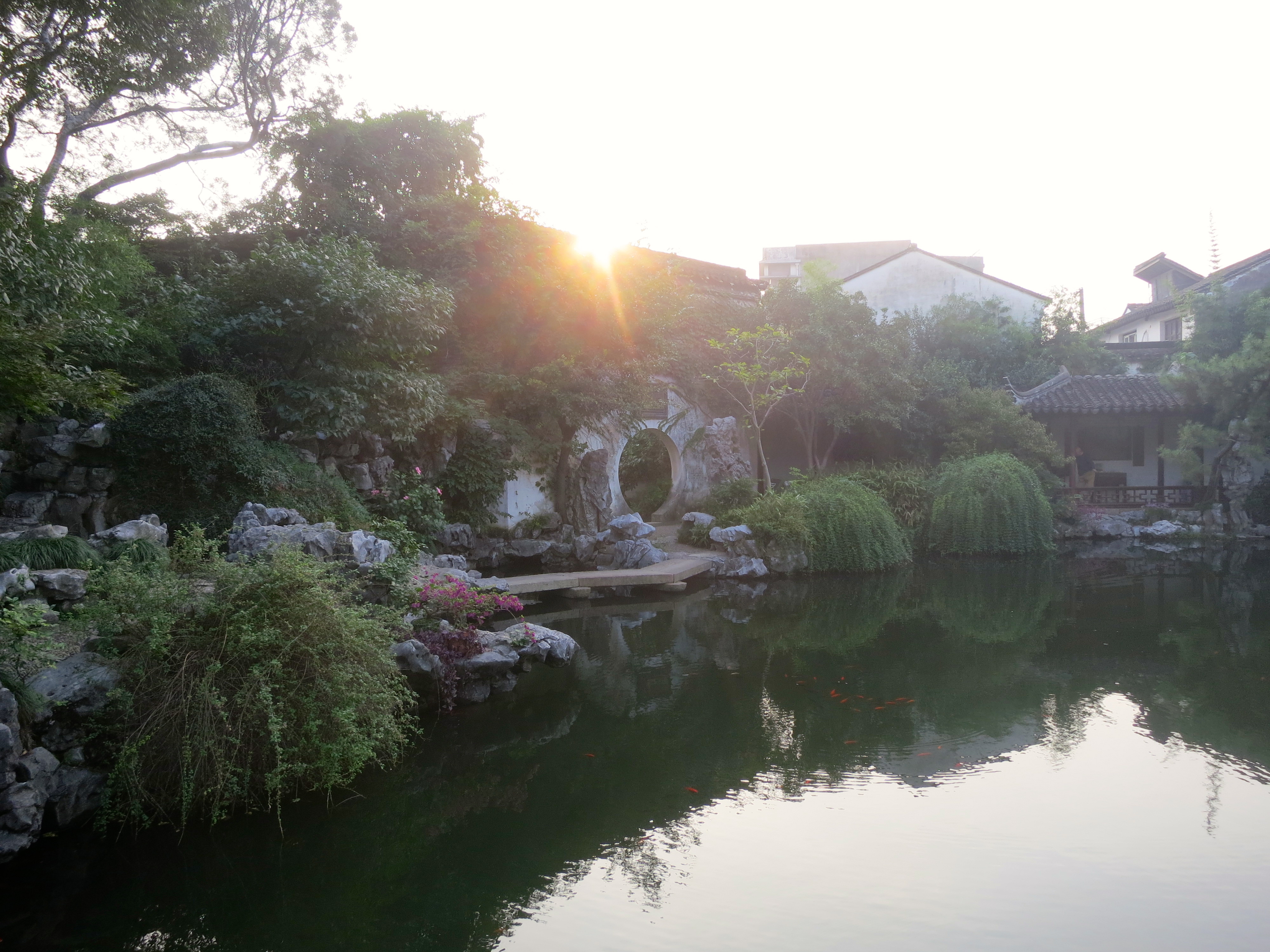
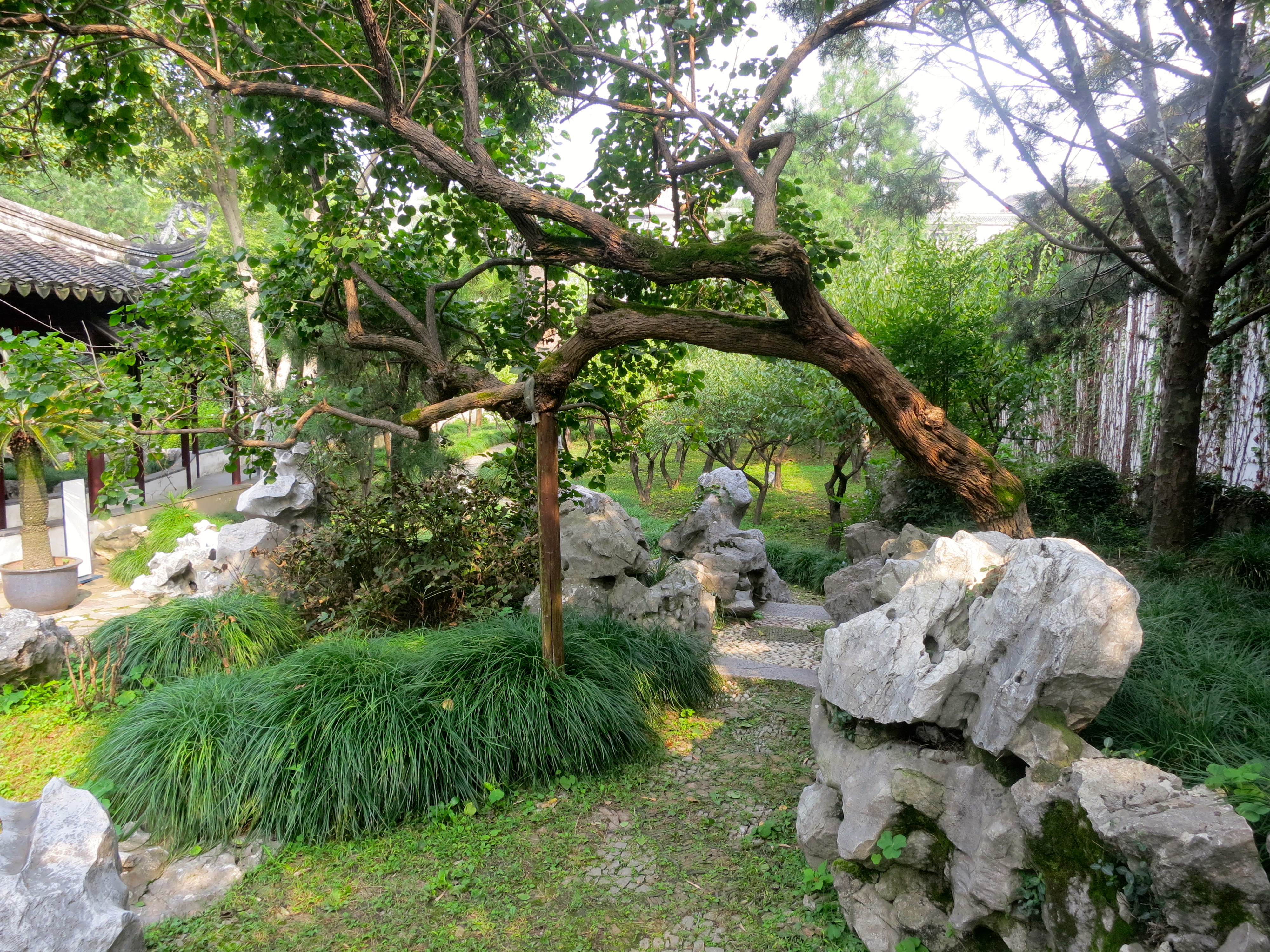
Many of the pagodas are filled with inscriptions of wonderful Chinese poetry, which was sometimes composed right where the viewer now stands, hundreds of years later, able to enjoy the same words and scenery as the original author. Others are named in reference to lines from poems both obscure and prominent. In one such temple, being the pretentious know-it-all that I am, I proceeded to recite the poem that the pagoda was named for. I was impressed by myself, if no one else was.
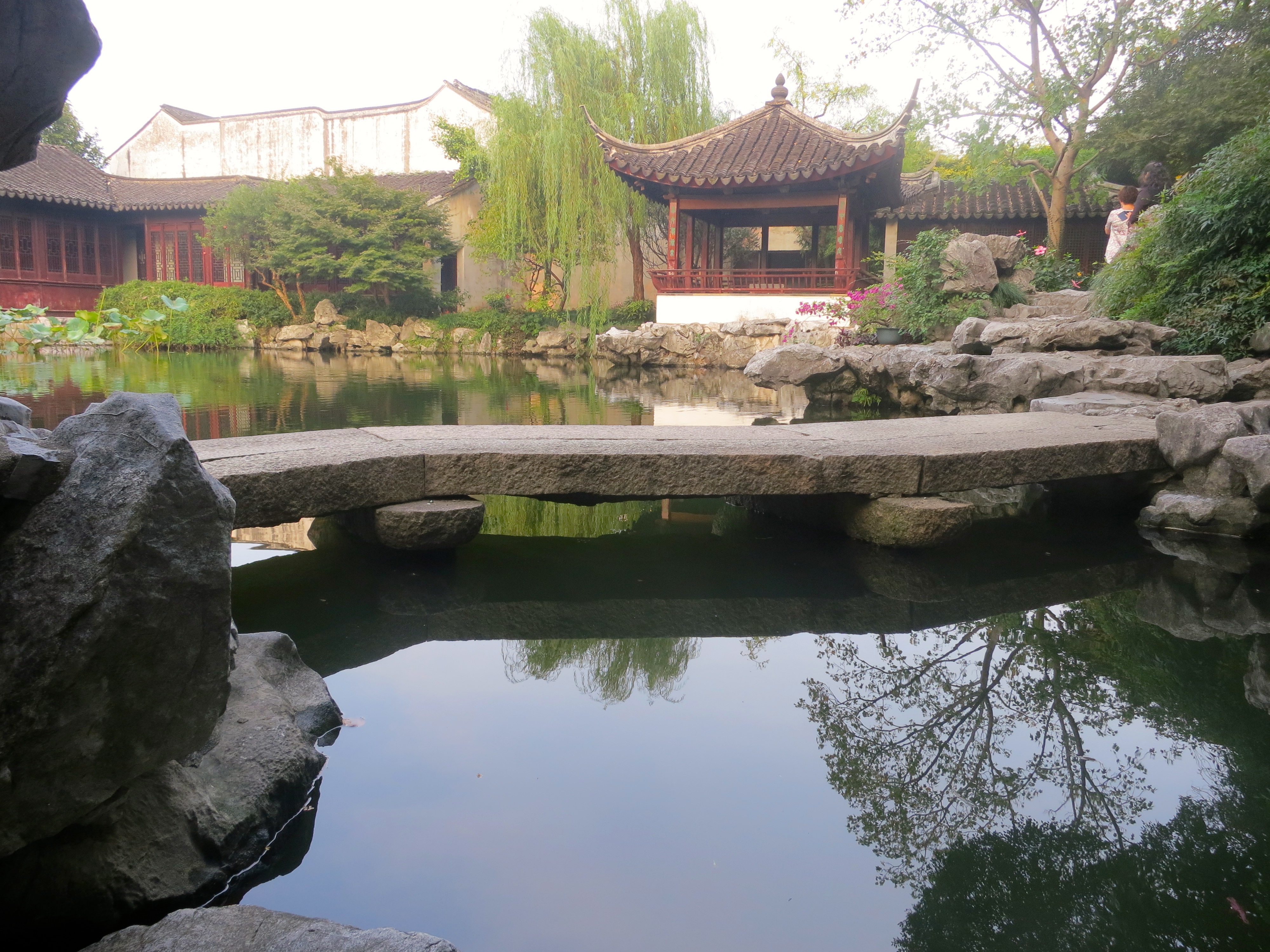
The gardens are usually centered around a pond, filled with goldfish, and surrounded by ornate pagodas, artificially constructed rock-formations, and intricate winding pathways filled with thriving flora. In addition to the above, the previous owners — the gardens are all owned by the city now — also had living quarters constructed on the edge of the water, so as to be able to rise every morning inspired by the beauty of their garden.
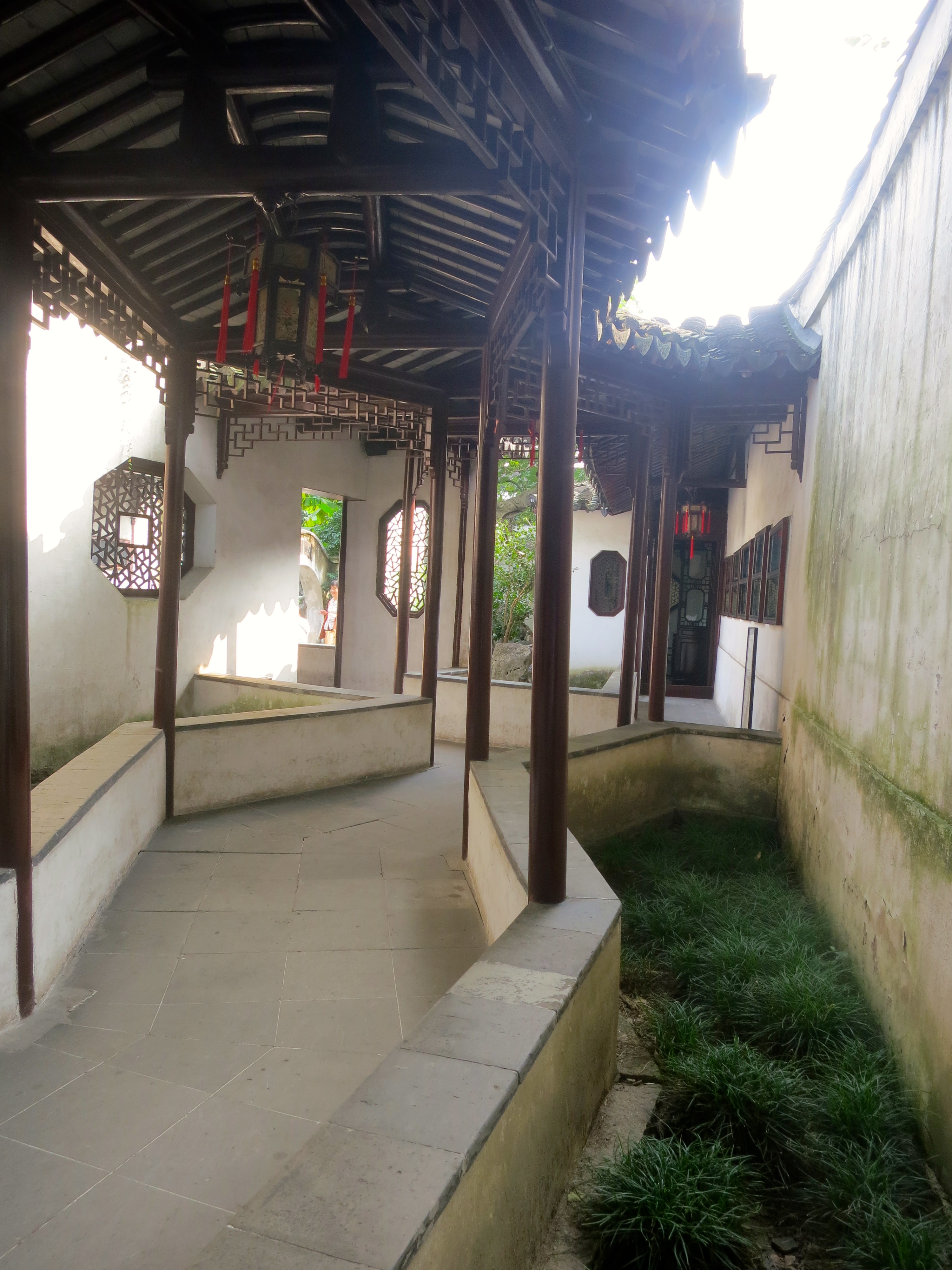
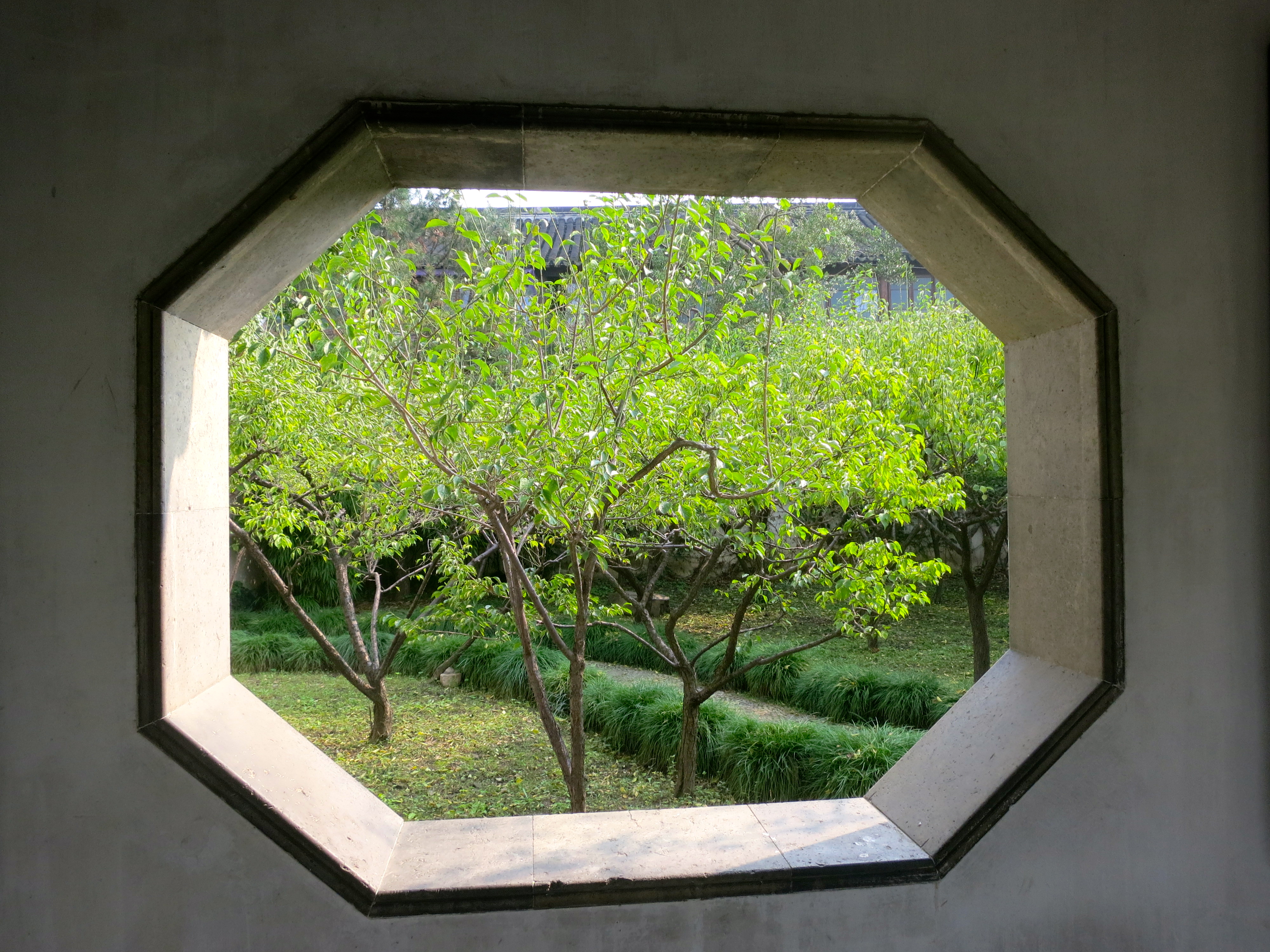
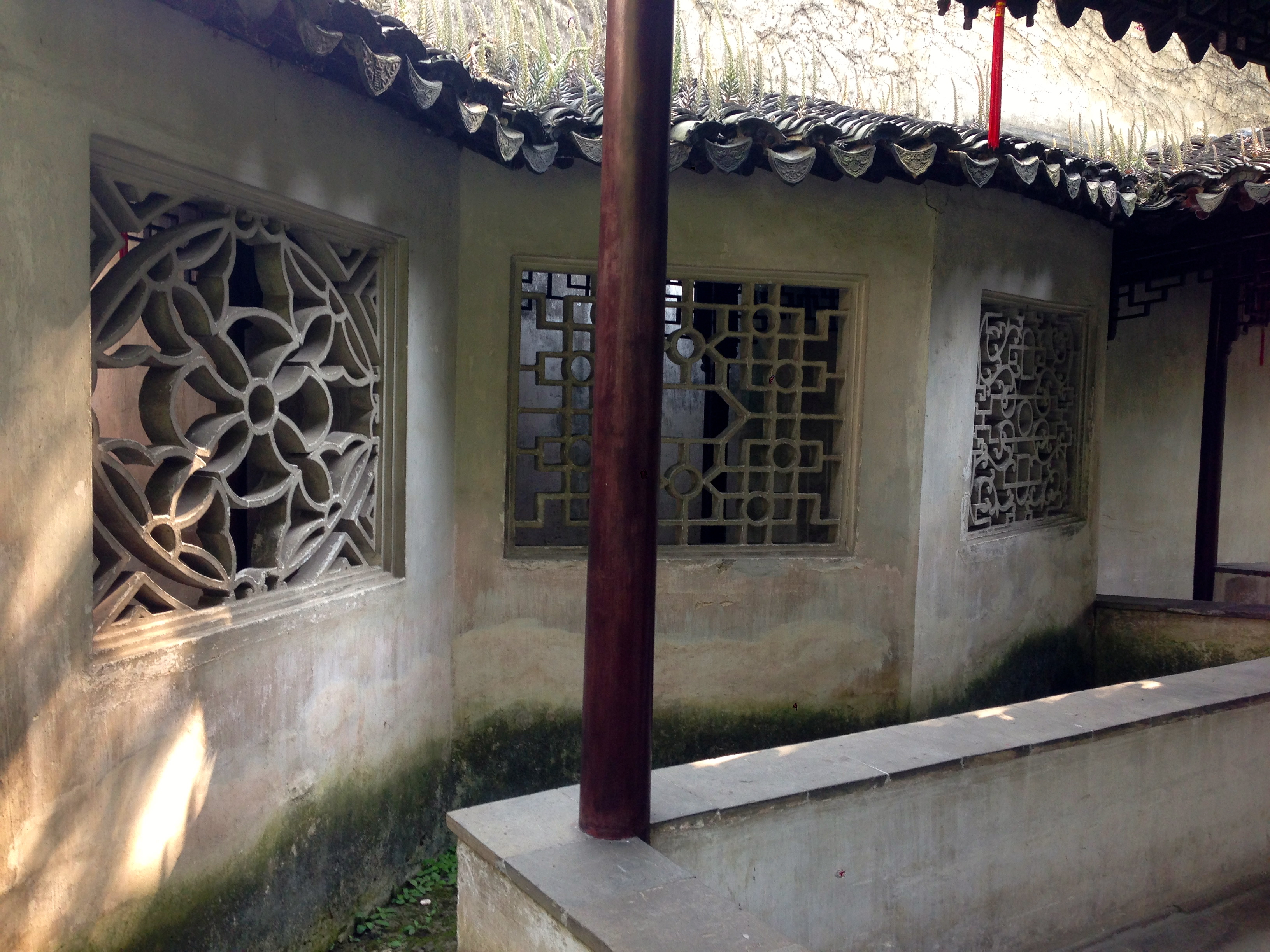
While walking through the first of the gardens I visited, I was quickly drawn back in time to Carol’s informative tour so many months ago. She explained to us then that in a Chinese garden every window design is unique, so that no single design is ever repeated throughout any one individual garden. Additionally, these windows and rounded entryways can be used to frame scenes for a viewer. I attempted to replicate this technique through some of my photographs. I was also blown away by the nature of the pathways, with their innovative designs that seemed to change not only between gardens, but also from section to section of one individual garden.
Best of all, the gardens were nearly empty. I was able to soak up the beautiful ambiance in almost total silence and serenity, as the other few tourists and locals seemed just as captivated as I by the sense that this is a place of reflection and calm, and should be treated as such. The only sound to break the spell of quietude was the periodic splash of a goldfish breaking through the surface of the pond, which, if anything, only added to the sense of tranquility.
Sadly, this isn’t the 1500s and I’m not a Chinese scholar-official, so I couldn’t stay in Suzhou forever. The last few days have been spent ironing out the details of my research project and collecting data. I’ve been interested in English language education in China from the get-go, and decided to hone in on the speaking and listening abilities of Chinese learners of English. I would like to look specifically at what extracurricular activities — think reading English books, watching English movies, going to English summer school, etc — lead to an improved ability to understand and speak English colloquially. To test for this, I’ll be contrasting students’ scores on standardized tests with my own examination of their listening and speaking skills. This is necessary because in China, the focus of the standardized tests is more on reading and writing. Once I have the data in hand, I will be able to find out if certain extracurricular uses of English lead to a greater ability to use spoken English.