Lewis & Clark Around the World

Programs associated with Lewis & Clark College, Portland OR

  • About
    • About Lewis & Clark Around the World
    • Contact Information
  • Programs
    • Featured Overseas Programs
    • View All Overseas Programs
    • View All Program Sites
  • Participants
    • Posts
      • Featured Student Posts
      • View All Posts
    • Projects
      • Featured Student Projects
      • View All Student Projects
      • Map of All Projects
  • Help
    • Participant Orientation
    • Post Reminders
    • Your Dashboard
    • Your Overseas Project
    • Setting Up a New Program
Berlin Transit

Berlin Transit

November 24, 2015 By Ben Hohman

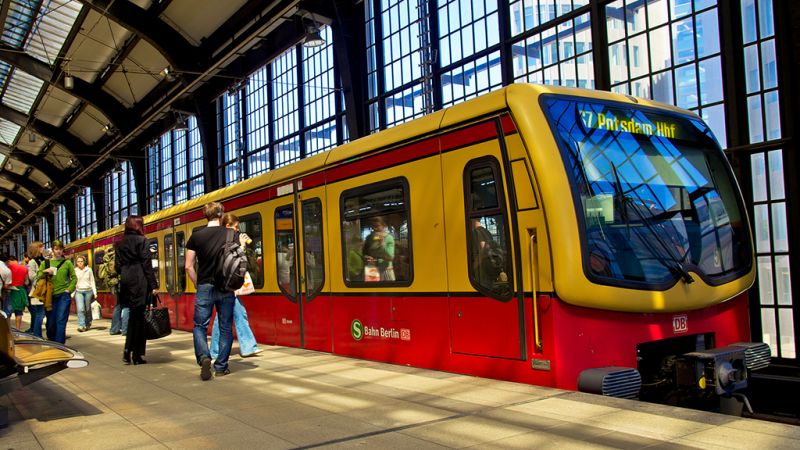
The transportation system here in Berlin has been a huge part of my experience abroad. Like my fellow students, I take it every day to and from our classes in the central district Mitte as well as to any part of the city I want in my spare time. Consequently, I have spent quite a few hours riding the rails and have had time to think a little more deeply about the whole process. To give some context, the system is split into several components: the largely elevated S-Bahn (similar to a monorail), the largely subterranean U-Bahn (similar to a subway), street trams in the eastern half of the city, a large number of buses (149 routes during the day and 63 at night), and even a few ferries. Regional trains also pass through Berlin as part of a larger German network and special S-Bahn trains nicknamed the “Ring-Bahn” circle the central part of the city. Needless to say, this system is quite comprehensive, especially when compared to anything I’ve used in the past.

Barring a few minor delays or other disturbances, the entire system works remarkably well, with safe and clean facilities, a strict schedule, and a transit network covering essentially the entirety of Berlin. There is a high degree of freedom conferred by this network, especially with our all-inclusive transit passes. In typically around 30-40 minutes, you can essentially get anywhere in or close to the city with only a few transfers on the way. A relatively quick trip to the Wannsee lakes or even the palaces of Potsdam is always a possibility. We’ve been able to go to field trips all over the city, often without even running over our allotted class time. Without the transit network, exploring such a large and interesting city as Berlin would be especially daunting.

Back in the US, with the exception of very large cities, good public transit is largely non-existent. Even when systems are present, they are sometimes quite dingy or have a certain reputation. Those who can afford to take their cars often do, leaving primarily those with a low income or a particularly environmental conscience (who are typically on their bikes anyway) to take public transit. Here in Germany, there are certainly a large number of bikers, but people from all walks of life can be found on the S-Bahn or U-Bahn, from fellow tourists and students to native Berliners headed to the daily grind. Part of this is simply that the transit system is so cheap, easy to use, and efficient while taking a car into the city could prove a hassle. However, I think this phenomenon works hand in hand with the German welfare state. With insurance and education almost exclusively provided by the state, it follows that transportation would be as well. While I’m sure building such systems could be impractical for any number of reasons, I think we could all stand to have such a great resource available for the general public.


Transit Map

Transit Map

Filed Under: Germany: Berlin Fall 2015, Posts

For more information on Lewis & Clark Overseas & Off-Campus Programs, visit our website.

Featured Programs

  • Fuji Summer 2017
  • Morocco Spring 2017
  • Cuba Spring 2017
  • Germany: Berlin Fall 2015
  • India Fall 2015
  • Fuji Summer 2014

Recent Posts

Diving Deeper into Coral Reef Ecology at Lady Elliot Island

Diving Deeper into Coral Reef Ecology at Lady Elliot Island

Another day in paradise. Today marked our third day on Lady Elliot Island, and it’s easy to see that we’re all getting used to this. Waking up early isn’t a challenge with the bright sun and the cacophony of seabirds, but for once no one is upset, as our first activity is a quick snorkel […]

Journey to the top of Queensland – 5/4/18

Journey to the top of Queensland – 5/4/18

Today marked our last day at Carnarvon, with our next stop to be the Great Barrier Reef. Although we’ve stayed at Carnarvon Gorge longer than expected due to the cyclone off the eastern coast, it allowed us to explore even more of the beautiful park. We were woken again by the sounds of Laughing Kookaburras, […]

Great Times at Great Kepple

Great Times at Great Kepple

April 7, 2018 Our first full day on Great Kepple Island! We spent the morning in lecture learning about coral, coral reefs (there’s a difference!), conservation and the general weather trends that can dictate the biogeography of the ocean. While some had come into this program with invertebrate knowledge from classes at Lewis and Clark, […]

Planes, trains, automobiles and the amazing reef!

Planes, trains, automobiles and the amazing reef!

On April 10th I woke up to the sound of the train wheels clacking. It was 5:30 in the morning. I was so tired but also so thrilled to be traveling to a new destination. Soon after we woke from the comfy and unique accommodation of the train, we all gathered our belongings and hopped […]

Under the Milky Way Tonight

Under the Milky Way Tonight

  On April 3, 2018 we stayed at the Takarakka bush resort in Carnarvon Gorge. One of the many highlights of Carnarvon George is the sky. Specifically, the entire Milky Way. Which, as our tutor brought up, used to be a sight that everyone could see. It is because of our cities light pollution that […]

Digital Scholarship Multisite © 2018 · Lewis & Clark College · Log in