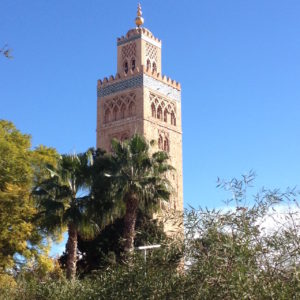
Last weekend, our group spent Saturday morning with the Director of CLC, as well as other Moroccan friends and homestay family members, on a visit to a few historically relevant sites in and near the old city, the Medina. Our first stop was the Kutubiyya, a 12th-century mosque whose minaret might look familiar to you. It was the architectural prototype for La Giralda in Sevilla, Spain. We learned that its name (includes the root for “book”) comes from the fact that when established, it attracted bookmakers and booksellers who clustered all around its base and in its gardens. When in the area, we still hear the daily call to prayer fives times a day coming from the iconic Moorish minaret.
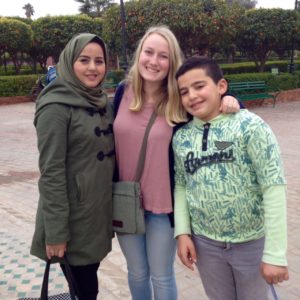
Emily C. and homestay family members
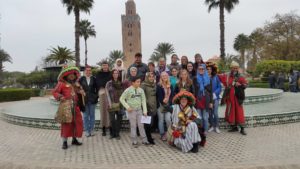
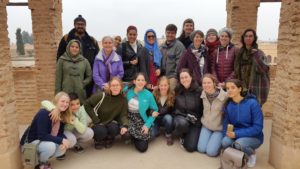
Our group and the “water sellers” of Marrakech….
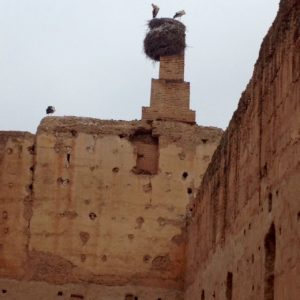
Our next stop was to the Qas’r al-Badi, or the Badi Palace, a 16th century archeological site that held special attraction for Emily H.-R., our group’s future archeologist. Although it was long ago looted and no longer features walls of gold and precious stones, we were still able to walk the grounds, see outstanding mosaic work and get a stork’s-eye view of the city. Our feathered friends were nesting in the many ramparts and looking down on us.
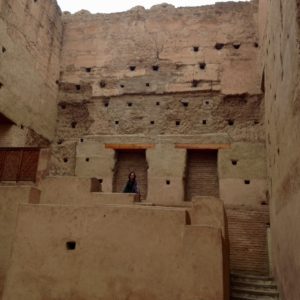
Tara and the storks…
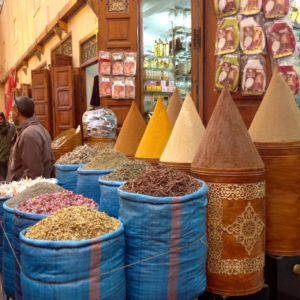
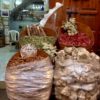
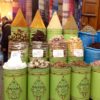
After the palace we enjoyed a little breakfast and made a brief stop in the Mellah, or Jewish Quarter of the Medina. Our senses were overwhelmed by the spices and other items being sold.
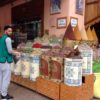
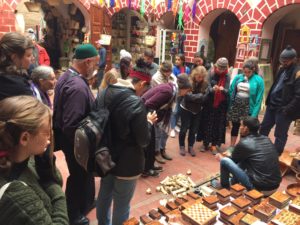
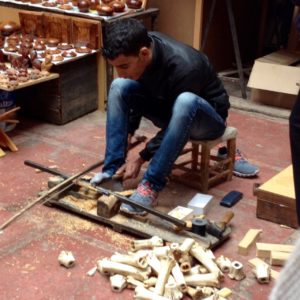
A very interesting stop while making our way through the medina was at a fondouq – a location where since medieval times Marrakshis have checked into rooming houses and worked in artisan studios, sold their wares, etc. In the photo you see the son of the artisan who currently makes prayer beads for King Mohammed VI. He demonstrated the technique for us using the bones piled near his feet, and later made us each a wooden necklace.
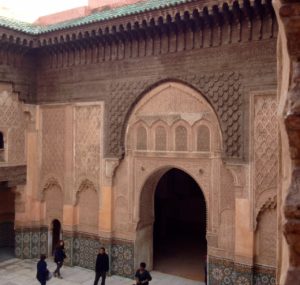
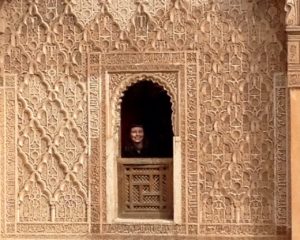
Our last stop was the Madrassa (school) Ali ben Yusuf, a 15th century Quranic learning center. It’s very hard to describe the feeling one gets looking up at intricately carved cedar cupolas and wooden lattices, or looking across at each other popping out of what were the upstairs student “dorm” rooms. On the ground level, we were surrounded by Hispano-Moresque zellij (five- colored mosaics) and carved Iraqi stucco with intertwined letters, leaves, and shells… Breathtaking.
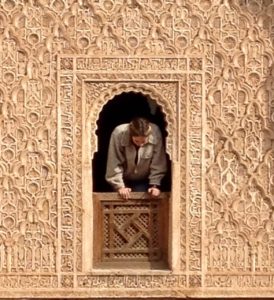
Caroline, Vela and Claire in the “dorm” rooms….
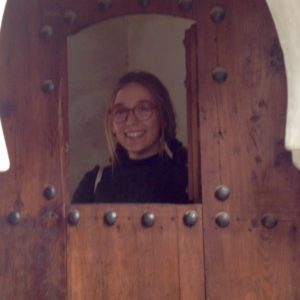
As we might be saying throughout our stay, wish you could have been with us!