While the Canary Islands brought us a multitude of unexpected adventures including a missed flight, a hurricane-like storm for the ages, and a hospital visit for one student (all is well), it also offered the opportunity to learn about water challenges on the island of Tenerife. We hiked with a guide in Malpaís and learned about research on fog collection in the Anaga Mountains with Professor Viky Marzol, of La Laguna University. Our group even made front page news.
http//www.goymad.com/212885_norteamericanos-en-el-malpais_guimar/
While there, we learned about the history, local language and culture. It was fascinating to be “in Spain” but not to hear a European Spanish accent. I kept listening and thinking I must be in the north of South America, or Central America, or Cuba. Finally, I asked our bus driver about it and was asked in return how many islands there were in Las Canarias. 7? “Oh no, 8. One is called Venezuela,” said he with a grin. Prior to tourism, there were virtually no employment opportunities on the island so as late as two generations ago most men (the bus driver’s grandfather had gone) went to South America or Cuba to work. As is to be expected, some settled and others returned, but there was constant back and forth. Today, most people watch satellite television from Venezuela. The one crop that used to be grown extensively in Las Canarias was sugar cane; hence one of the Cuba connections. We met people with family there today.
Another tidbit…. Because the islands are volcanic (all beaches on Tenerife are deep black except one that has sand brought from the Sahara by the currents) there is no fresh water supply. Underground resources were long ago used up and wells are dry, so there are almost 60 small desalination plants on the island of Tenerife alone. Each major hotel has to have its own to serve tourists and visitors.


In Agadir, a city along Morocco’s southern Atlantic coast, in the foothills of the Anti-Atlas Mountains, we settled into coursework and life in a different region of Morocco. The dedicated individuals of the NGO, Dar Si Hmad (DSH) offered us a course entitled Development and Sustainability in Morocco, taught by Dr. Jamila Bargach, Director of DSH. We also gained insights into the other contributions they make to the local, regional and world communities. For more information, see: http://darsihmad.org/en/
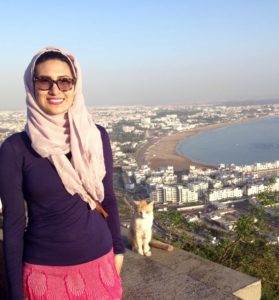
Co-Leader, Reham, above the coast of Agadir
One weekend we went with Dr. Aissa Derhem, President of Dar Si Hmad, to visit the inland Souss Valley city of Taroudannt and learned much about the role that city had played in Moroccan history. It is called “Little Marrakech” or the “Grandmother of Marrakech” and is located almost entirely within 6-7 kilometers of ancient ramparts. During the visit we were very fortunate to visit a zawiya and learn more about Sufism as well.

With Aissa, our historian…
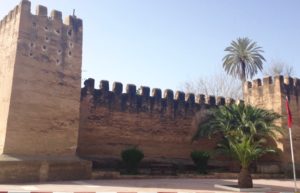
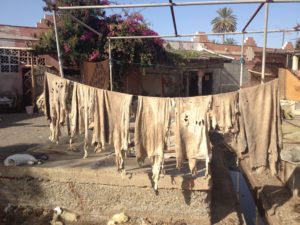
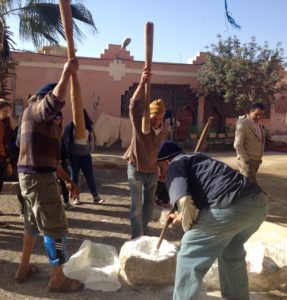
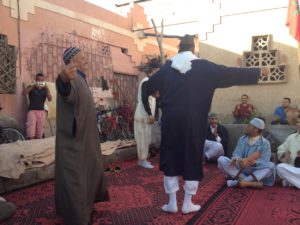
We also had the opportunity to visit a tannery, to see the work being done, and to enjoy the music of a local musical group.


Another highlight of our time in this region was our visit to Sidi Ifni and the Dar Si Hmad fog harvesting project. See Sarah’s previous post and the following article:
/2017/02/26/a-beginners-guide-to-harvesting-fog/)
http://www.newyorker.com/tech/elements/could-harvesting-fog-help-solve-the-worlds-water-crisis
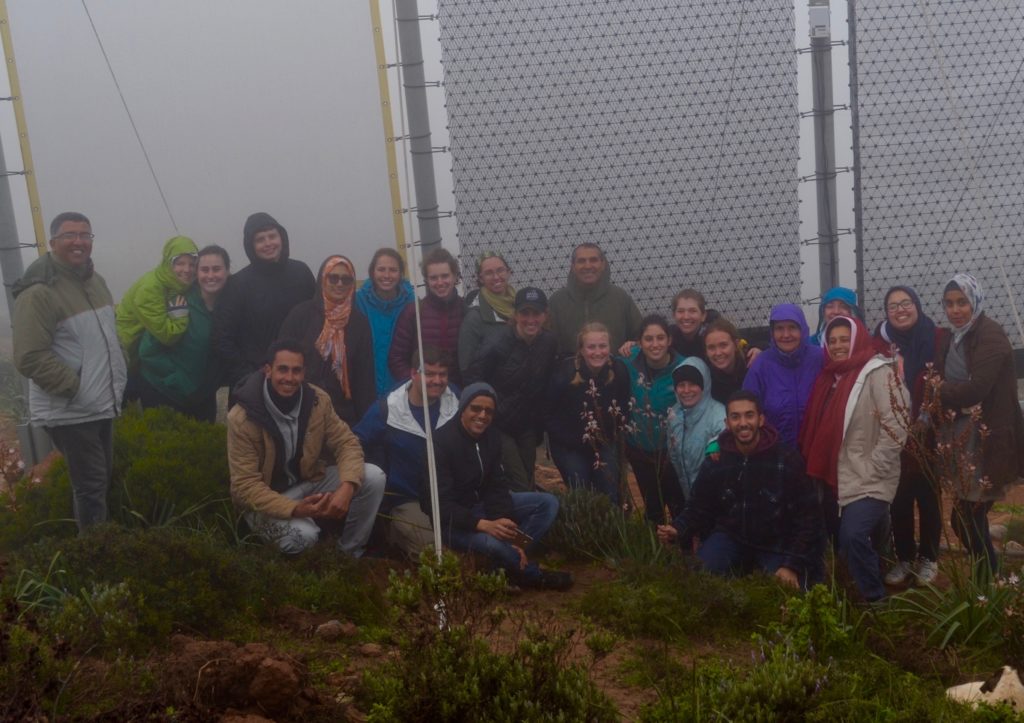
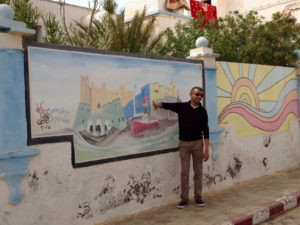
While in Sidi Ifni we were also introduced to the history of the area and to the challenges faced today in this fishing town. We learned that the Spanish had occupied the area until after Moroccan independence from France in the 1950s. This region has long been considered a gateway to the Sahara. Murals around the city tell an interesting story.


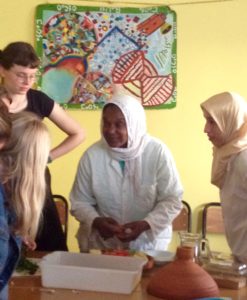
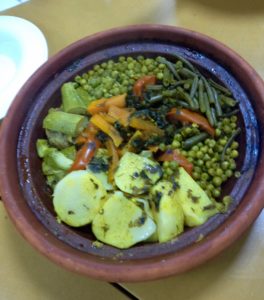
We cannot end this overview without thanks to all at Dar Si Hmad, including Hadda & Najat who not only fed us, but gave us cooking lessons!