
As I travel in Japan, I am constantly regaled with the silhouette of a steeply sloped mountain that is now iconic around the world. Mt. Fuji, the focus of our summer research, is everywhere from the horizon to the konbini (convenience store). Throughout my experiences, I’ve noticed the miniaturization of the mountain, its internationally situated context, and its role as part of Japan’s spatial and cultural environment. In the lecture hall, we discussed the abbreviation of great spiritual feats in order to make them more accessible to common laypeople. While a Buddhist temple in Asakusa allows worshipers to achieve the merit of reading several important sutras by simply spinning a wheel holding the texts, Fuji cults have historically built mini-Fujis (known as Fujizuka) that bestow visitors with the same benefits of climbing the enormous mountain. Miniaturization similarly manifests in modern commercialism to try to capture an entire “Japanese essence” in a single bauble. A magnet featuring a waving cat and cherry blossoms in front of Mt. Fuji found in a street-corner convenience store is ostensibly marketed toward foreign tourists who want to display their experience with Japan. Even products marketed towards local Japanese people transform the mountain into a handy trinket in DAISO convenience stores as paper fans and stickers. By purchasing cheap representations of Fuji, tourists and natives alike can stake a claim to an “inherent Japaneseness.”
While people around the world can take away an emblematic piece of Japan, Japanese culture is able to situate itself globally via Fuji. The mountain has long been an object of international interest, having been collected in the form of ukiyo-e prints in France and climbed by foreign ambassadors since the Meiji period. However, more recently, Fuji has entered an exclusive international club that has still furthered its claim to fame. Since Mt. Fuji’s inscription as a World Heritage Site in 2014, Fuji has particularly been compared to other cultural monuments such as the Great Wall of China and the Eiffel Tower in Paris (see the photo of a café menu chalk drawing). A street-side food vendor called Everest Fuji Dining juxtaposes the two famous mountains, although Mt. Fuji is interestingly depicted as taller than Everest despite the fact that it is much smaller (3,776 m compared to Everest’s 8,848 m). Advertisements for travel in Japan have become increasingly geared toward foreign audiences, as demonstrated by an ad including Fuji intended for Chinese tourists. A student from Lewis & Clark College’s last Mt. Fuji program in 2014 discovered that the number of foreign climbers of Fuji increased after the mountain’s inscription as a World Heritage Site (Max Haworth). Fuji has helped to increase a sense of globalism in Japan as the mountain is not only a site of national pride but also international fascination.
Even without foreign acclaim, though, depictions of Fuji in urban areas suggest that it is a part of Japan’s sense of heritage. Representations of the mountain add a sense of tradition to large, Western-style glass-and-steel buildings like Fujiya in Ginza. The kanji used to write the name of the confectionary and restaurant business are the same as an old spelling for Mt. Fuji that roughly translates to “unequaled.” The name combines a claim to excellence with a claim to history and familiar culture. Similarly, an apartment building in Shinjuku borrows the name of the mountain; this could evoke both the mountain’s grandiose majesty and the comfortable familiarity of the Japanese countryside. Although Fuji is a mountain thousands of years old, it has an honored place in the image of modern Japan. Caricatures, such as the one depicting Fuji next to the Tokyo Skytree, essentialize their subjects down to the most basic but prominent features. Mt. Fuji is an inextricable distinguishing element of the Japanese landscape both at home and abroad. Inflated and shrunken images of the mountain each help to resituate it in a moving and modern culture-scape. Although Fuji has loomed constantly over Japan for thousands of years, it continually finds new ways to manifest in commercial, residential, and artistic contexts from local to global and back again.
-
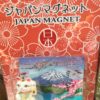
- Fuji magnet found in Shibuya at a street side convenience store
-
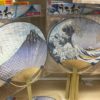
- Fuji fans found in a Harajuku DAISO
-

- Fuji stickers found in the Harajuku DAISO
-

- A Fuji chalk drawing located in a hotel cafe in Shinjuku. Fuji was drawn next to many other World Heritage sites
-

- A restaurant called Everest Fuji Dining located in Shinjuku
-
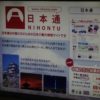
- Mt. Fuji on an ad for Chinese visitors in Ginza train station
-

- Fujiya in central Ginza is a restaurant and shop. Although no mountain is shown, the symbol is in old kanji.
-

- This apartment building near the heart of Shinjuku has a familiar name
-
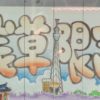
- A drawing of Tokyo Sky Tree and Mt. Fuji at a caricature print shop in Asakusa. Picture reads “Only in Asakusa.”