
Representations of Mt. Fuji abound in Asakusa. Located there is the site of the biggest Buddhist temple in Tokyo, approachable almost exclusively from a network of streets lined with souvenir and specialty shops, snack booths, and restaurants. Milling about the streets was the largest collection of foreigners that I’d yet seen in Japan. Some Japanese visitors and residents of Tokyo even dressed in yukata, choosing to treat the visit as a special event warranting traditional attire. The iconic mountain was everywhere, from souvenirs such as bags and umbrellas, to advertisements, to murals, to store names. After moments we gave up collecting photos of all the representations for our Fuji scavenger hunt. Despite their abundance, this national icon of pride and identity never appeared redundant.
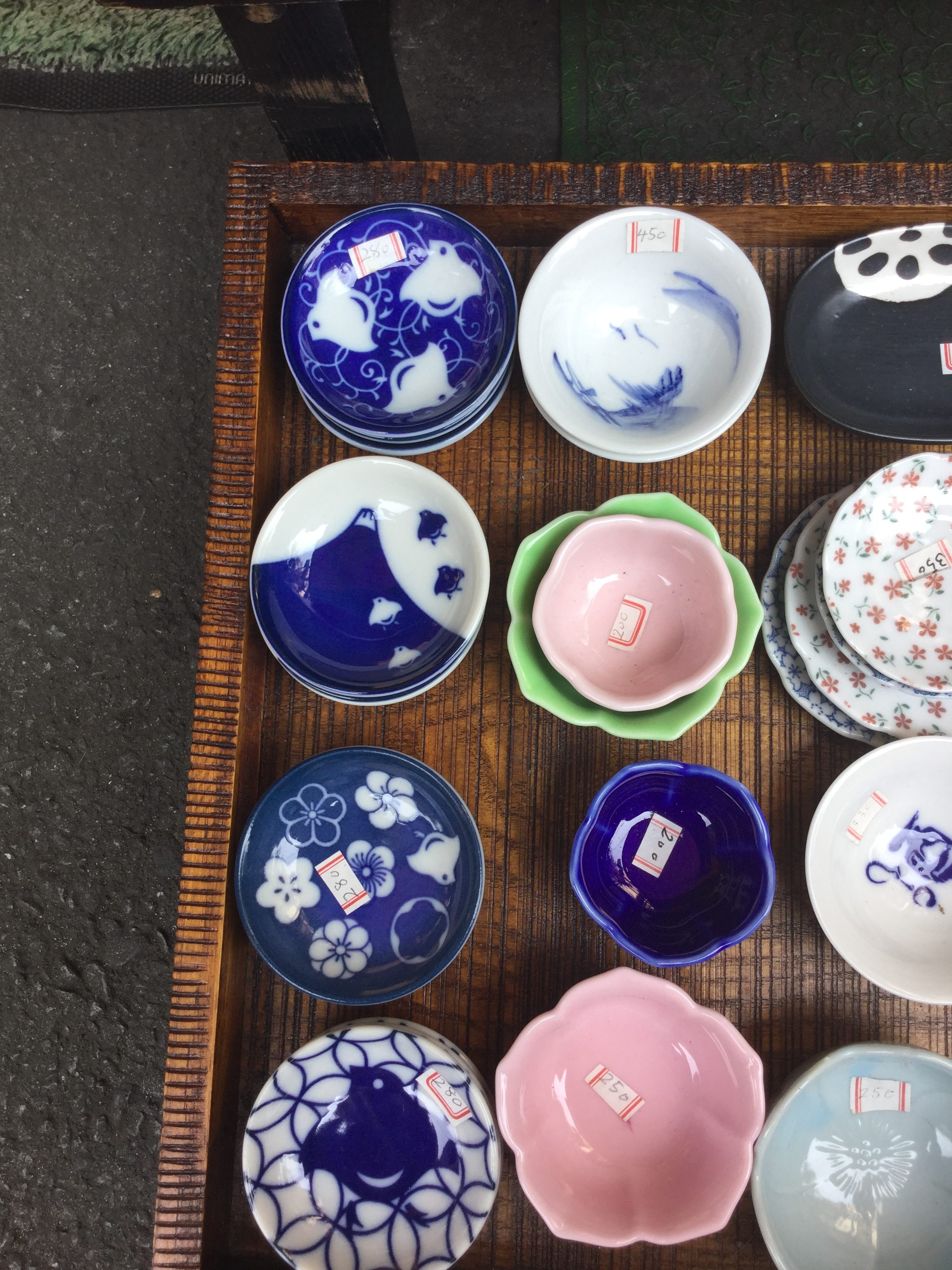
Fuji dishes outside a ceramics shop in Asakusa.
Upon reconvening with the rest of the group, we realized our experience was slightly anomalous. Perhaps we had just lucked out, given a distinctly “touristy” local in which to collect data. Others were sent to Shibuya, a shopping district perhaps targeted more towards locals, Ginza, a high-end luxury goods area, and Shinjuku, a transportation hub with malls. While the other groups didn’t necessarily struggle to find enough Fuji images, they were surprised to hear of our effortless success.
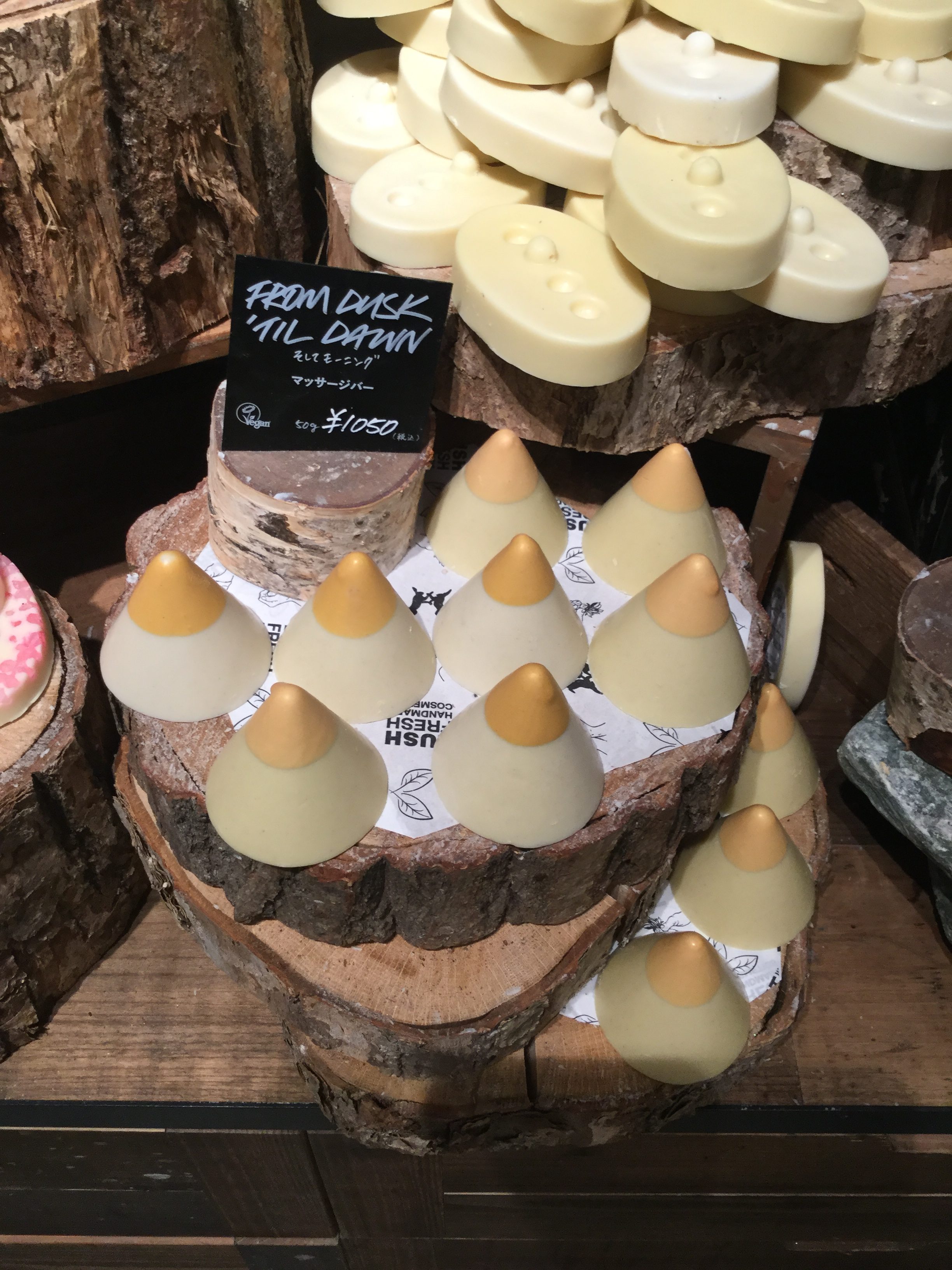
Mount Fuji massage bars found at Lush in Shibuya shopping district.
While many of the shops in Asakusa were for tourists, I noticed that some specialized in one particular type of commodity, as opposed to selling a wide variety of souvenirs. I’ll call these “specialty shops.” In this post, I focus on photos from seven of these shops, three of which came from outside Asakusa. These seven shops specialized in watches, wooden goods, ceramics, caricature drawings, golf equipment, beauty products, and thrift clothes. At each shop, Fuji was not the main selling factor, and in many cases Fuji images did not appear in abundance. Mt. Fuji just happened to be on one or more items. This is in contrast to the eclectic gift shops that had Fuji on everything, including coin purses, fans, umbrellas, bags, hats, traffic cones, Hokusai prints — you name it, all in one shop. The watch shop only sold watches, the beauty product store only sold beauty products, the ceramics store only sold ceramics, etc.
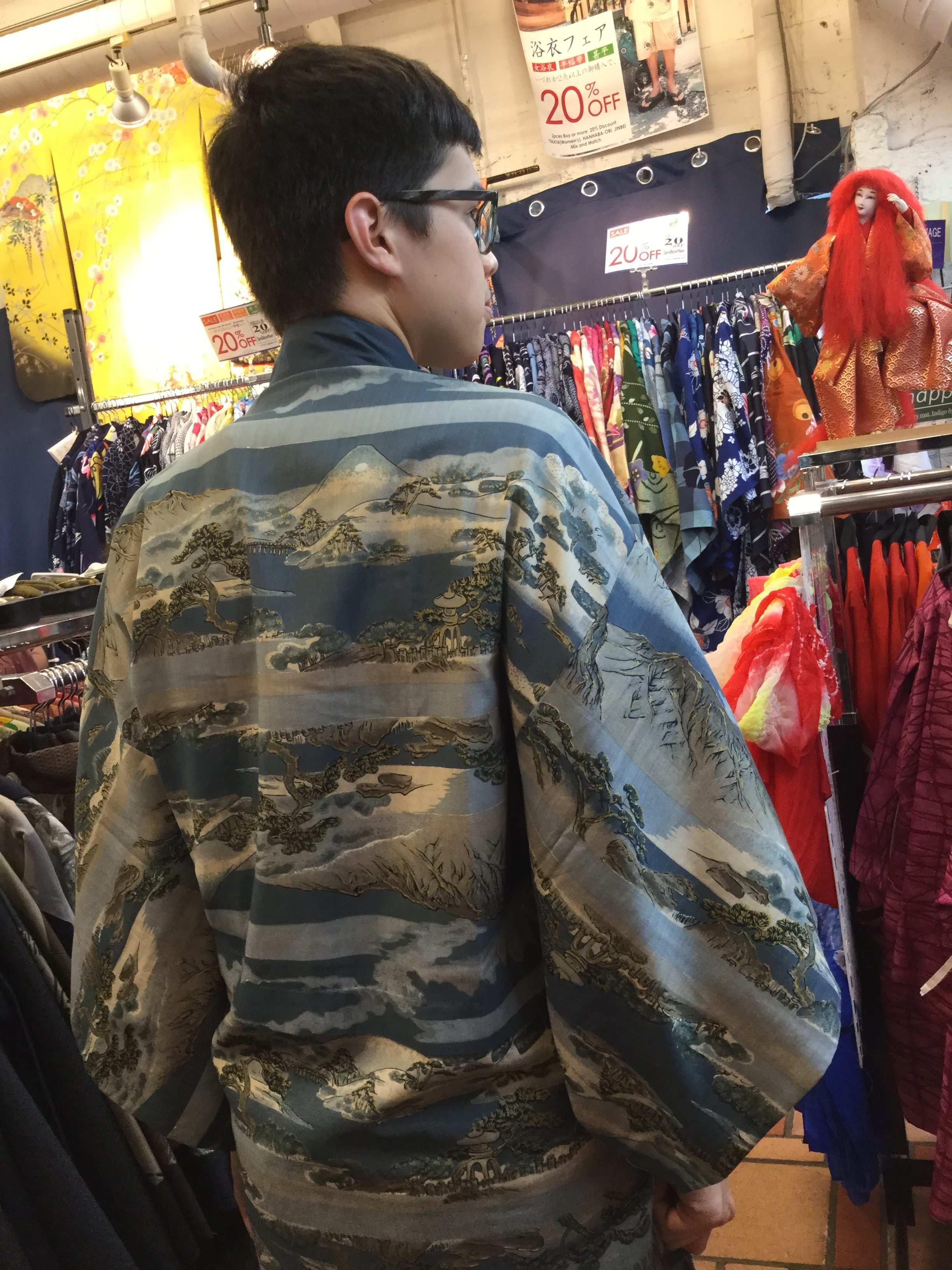
Fuji found on the back of a men’s Yukata in a thrift store.
The specialty shops of Asakusa perhaps lean towards “unique to Japan” goods and obviously cater to tourists. At the shop selling wooden paddles with Fuji painted on them, you can even watch the woman carving and painting away in the back of the shop. At the ceramic store one could get dishes for various Japanese specialties – bowls and chopstick rests, for example. At the caricature print shop, you can purchase a personal drawing, or pick one with a distinct Japanese monument on it. The image featured here reads “only in Asakusa,” with a shrine, the Tokyo Sky Tree, Asahi Brewery, and Mt. Fuji depicted below the writing. Obviously these goods are meant to remind the buyer of their time in Japan. What says Japan more than Mt. Fuji? Yet in many cases I’m left curious as to what more Mt. Fuji adds to the already concentrated Japanese essence.
Fuji on a pocket watch in a watch shop in Asakusa.
I had questions about who these items are for. A person walking through Asakusa specialty gift shops might gravitate towards an item with Fuji on it because of the concentrated Japanese essence, yet what about the the person walking into Lush in Shibuya for beauty supplies? Do they buy the Mt. Fuji massage bar simply because it’s Mt. Fuji? Or does the good already serve its purpose regardless? Does the person in need of a watch gravitate towards the one with Mt. Fuji on its face? You really need some golf tees, whether you’re a visitor or a local… What pulls you towards the cutesy mountain? Is a Fuji yukata from an eclectic thrift shop an especially precious find? One doesn’t go to these stores for Fuji, yet somehow there it is.
Fuji dishes outside a ceramics shop in Asakusa.
Perhaps a local walks into Lush, the golf store, or the thrift store, and Mt. Fuji is there for them, whether they were looking for something that so clearly says “Japan!” or not. Interestingly, Mt. Fuji is not strictly geared toward the foreigner’s memento. While Mt. Fuji is everywhere in Asakusa specialty shops, it also figures prominently in the stores which cater more towards locals. The thrift store, Lush, watch shop, and golf shop stand slightly aside from the ceramic, wooden goods, and caricature print shop. The former four shops sell goods that are not distinctly Japanese, yet representations of Fuji still appear.
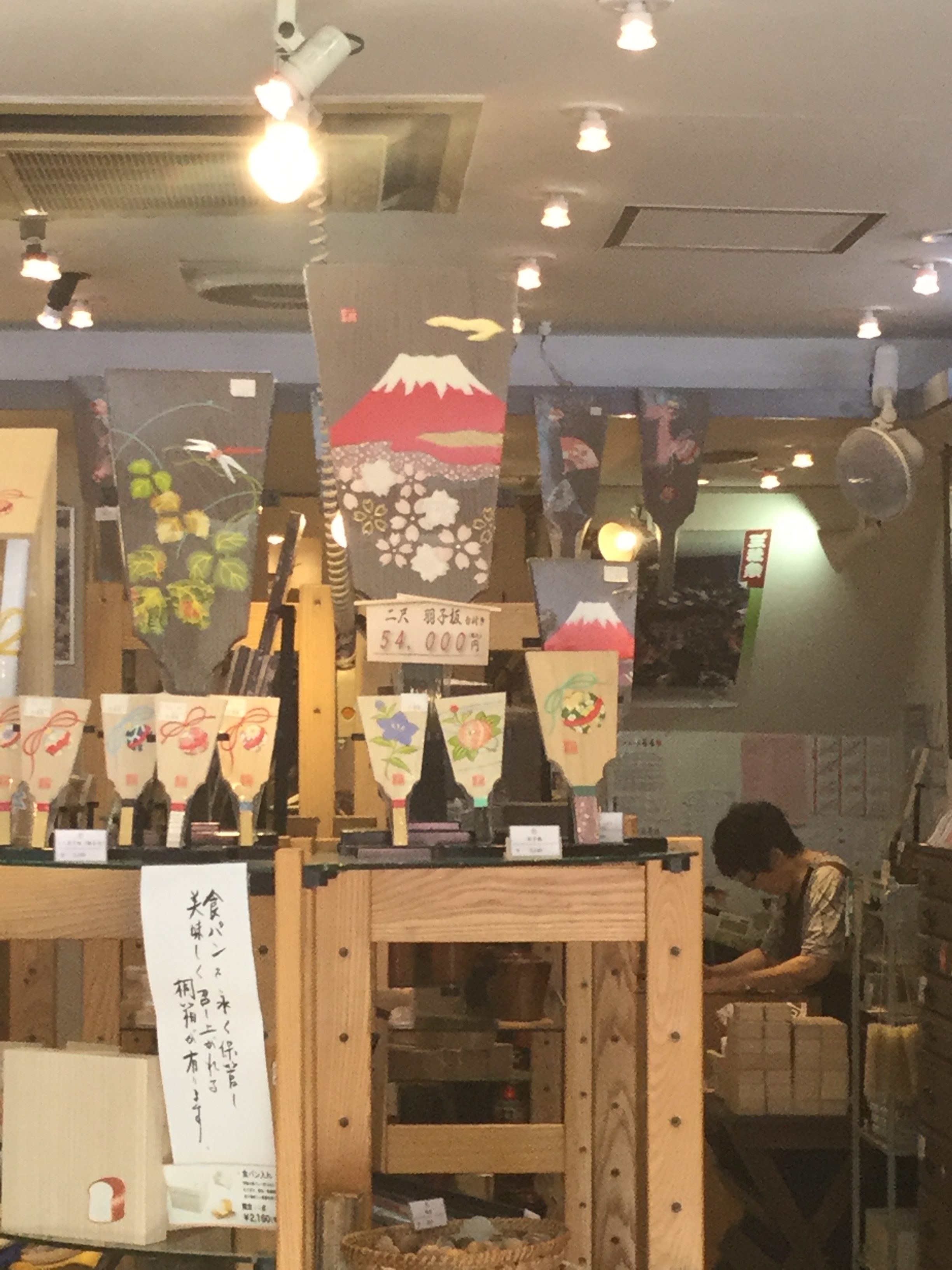
Red Fuji on a wooden paddle inside a Asakusa shop.
The power of Fuji is its ability to permeate all, whether it appears on a few items of a tourist’s gift shop selling just one type of item, or pops up in a specialty shop outside of a tourist hub. The value it adds is different in each setting, as the presence of Fuji contributes a special quality to both functional products and souvenirs.
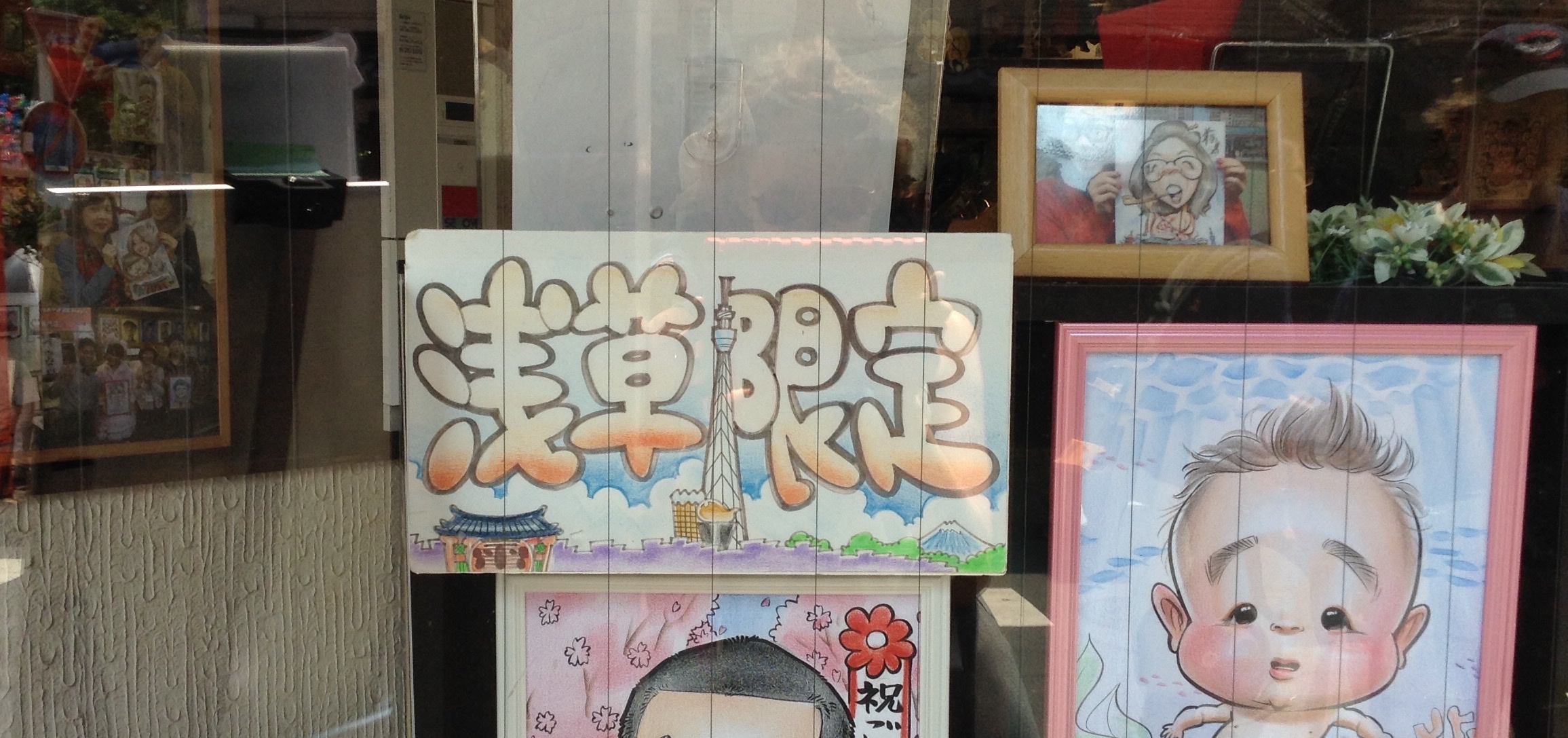
A drawing of Tokyo Sky Tree and Mt. Fuji at a caricature print shop in Asakusa. Picture reads “Only in Asakusa.”