
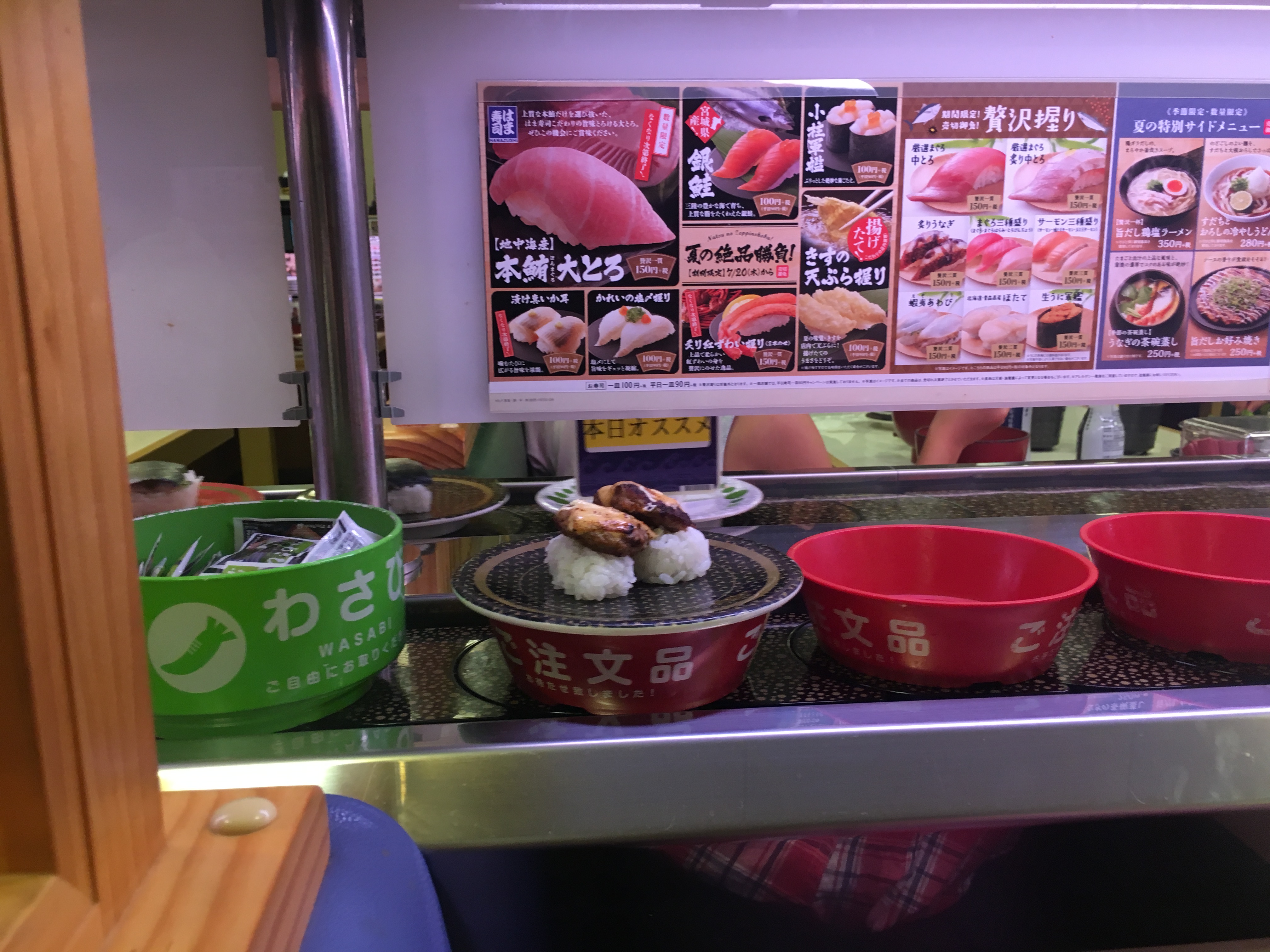
Hamburger sushi at a sushi chain.
Food is one of the most highly glocalized items in the world. In fact, my first experience with glocalization in Japan was at a vegan ramen shop run by and for Muslim women in Shinjuku on my second night in Tokyo. Since then, I could not avoid seeing the traces of glocalization at every meal I have had in Japan, from cod roe pasta to wasabi mayonnaise and hamburger sushi. Undoubtedly, the process of glocalization can also be felt in many other aspects of Japanese society besides its cuisine. Yet, instances of glocalization are not always so straight-forward in Japan, especially when they involve different interest groups. One such example is the management of national parks in Japan. The first national park in the world was established in Yellowstone, USA in 1872. The concept of national parks has often been referred as “America’s best idea” (Hetter, 2017). Many countries have adopted the concept, including Japan, which established its first national park in 1934. Clearly, this is evidence of globalization in Japan.
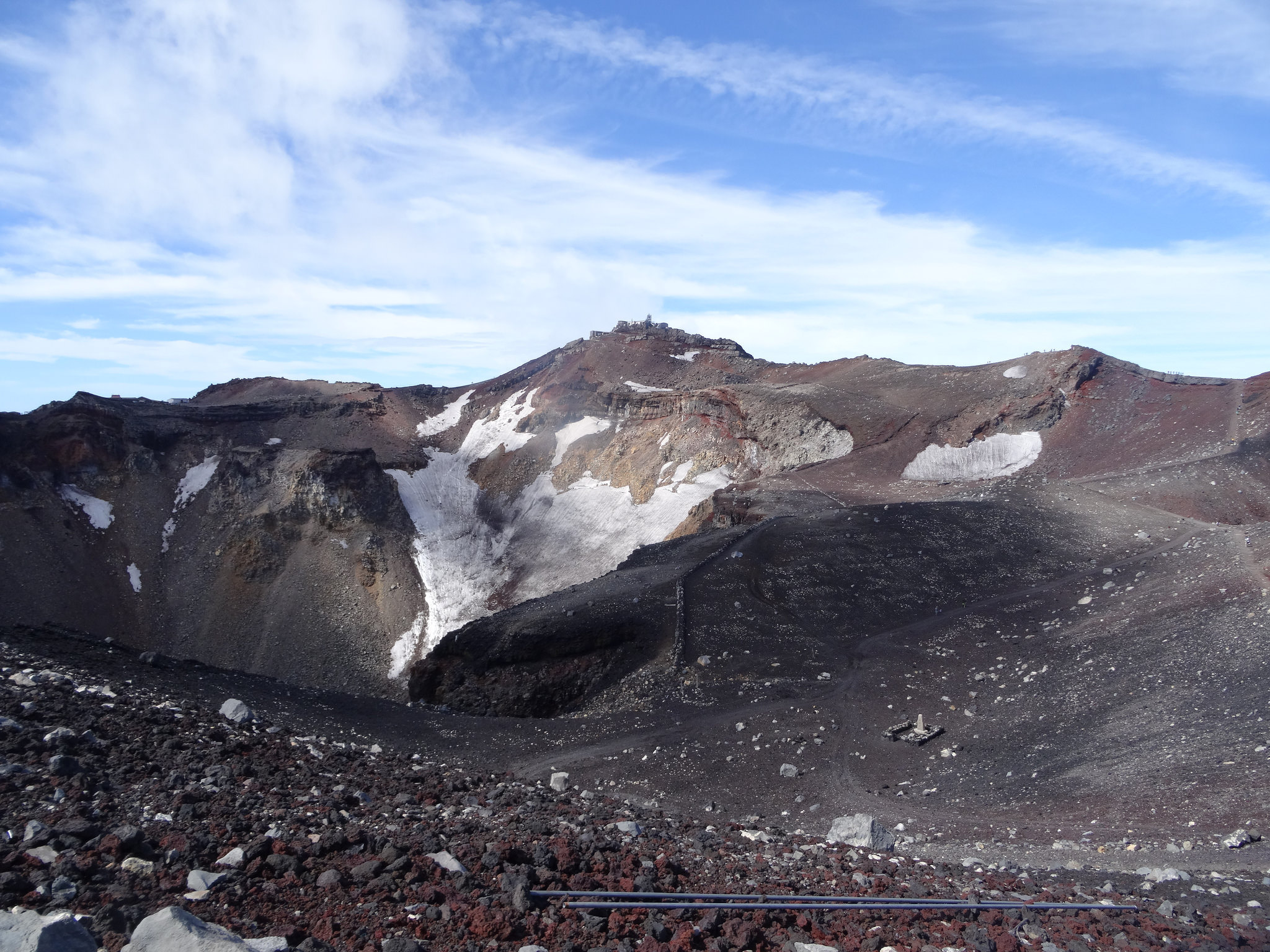
Fuji’s barren peak
Due to the conflicts of interest that often arise between these agencies, there have been difficulties in coordinating the management of national parks in Japan.
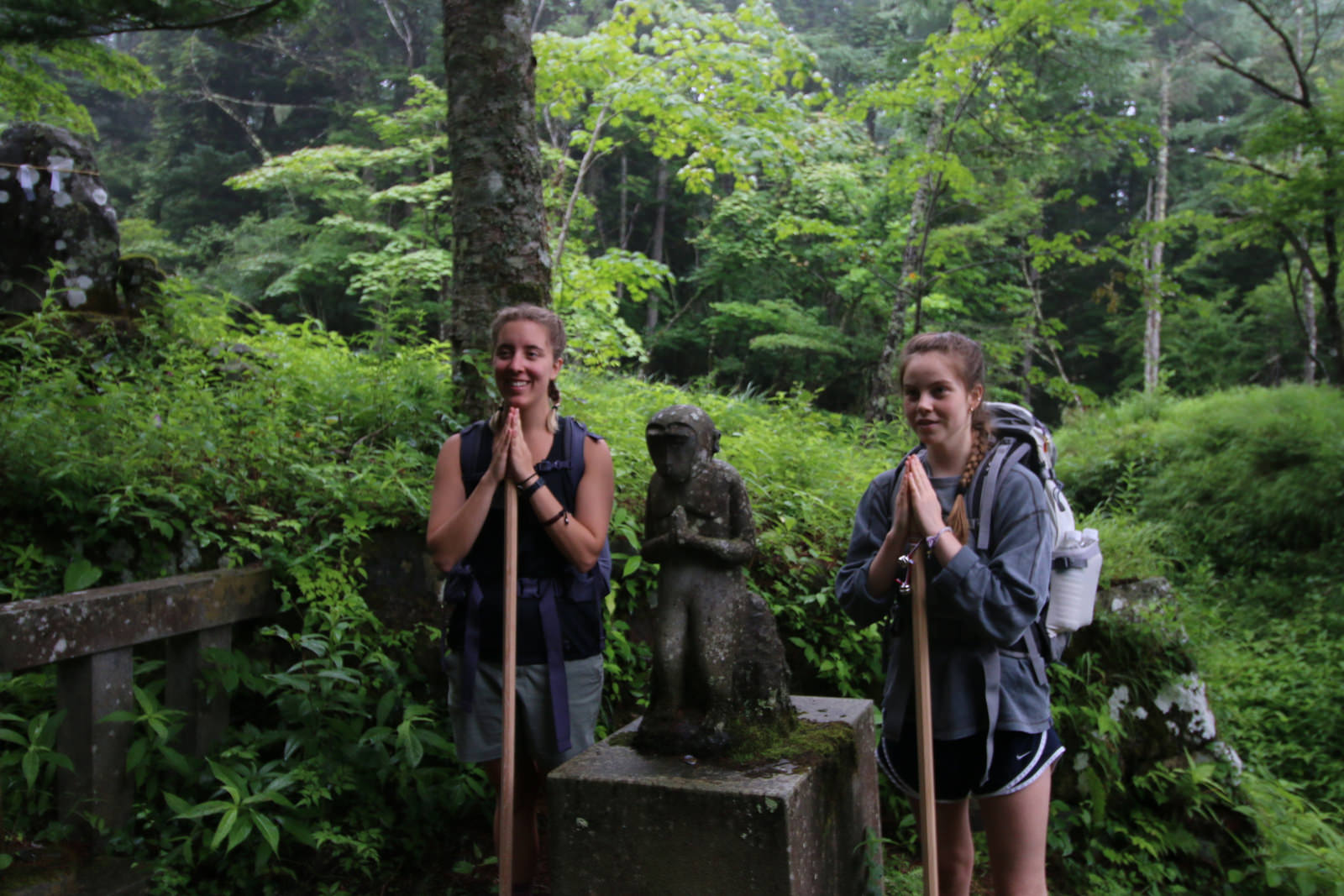
And its lush forest at the base
Fuji is an appropriate example where glocalization and the resulting conflicts of interests come into play. Fuji is located in the Fuji-Hakone-Izu national park and has long been regarded as one of the sacred mountains in Japan. Like many other national parks in Japan, Fuji is divided in three different zones: ordinary zone, protection zone, and special protection zone (from the 8th station to the summit). While human activities persist as per normal in the ordinary zone, they are increasingly more regulated as you move up to the special protection zone near the summit of Fuji, which is regarded as the most sacred part of the mountain. Thus, zoning facilitates the preservation of important cultural and scenic components of Mt. Fuji. However, since the peak of Fuji has considerably less biodiversity and ecological significance than the forested areas below the 5th station, many have criticized the zoning system for its disregard of ecological habitats in Fuji area (Jones, 2017).

Our comfy beds in a mountain hut at the 8th station of Mt. Fuji.
Furthermore, Fuji as a global and national icon also attracts a diverse group of international and local climbers. The increase in number of climbers in recent years has resulted in many positive changes to the management Fuji such as the renovation of eco-friendly ‘mountain toilets’ to replace the highly criticized ‘bottomless pit’ (Norihisa et. al, 2006). However, different groups of climbers would also have different social and consumer behaviors that contribute the the complex process of glocalization at Fuji. While there have been improvements in amenities on Fuji to cater to both the international and local crowds, surveys have found that international climbers are less willing to utilize these amenities in favor of saving money (Jones, 2017). Hence, the different processes, agencies and groups of individuals involved at Fuji and other national parks are evidence of the complexity of glocalization in Japan.
References:
Aramaki, Marisa. National Parks of Japan. Ministry of Environment. Lecture. July 6th 2017.
Hetter, Katia. A salute to U.S. oldest national parks: Yellowstone, Yosemite, Rainier, others. CNN. 2017. Accessed August 7th 2017. http://www.cnn.com/travel/article/national-park-service-history-first-sites-feat/index.html
Hiwasaki, Lisa. Research Toward Sustainable Management of National Parks in Japan: Securing Local Community and Stakeholder Participation. Environmental Management. 2005
Jones, Thomas. Evaluation of visitation at Fuji-Hakone-Izu National Park. Ritsumeikan Asia Pacific University. Lecture. August 2nd 2017.
Norihisa, Masashi, Wataru Suzuki. Mountainous Area Management in Japanese National Parks: Current Status and Challenges for the Future. Global Environmental Research Vol. 10. 2006