
Although Mt. Fuji is undoubtedly the crown jewel of Japan’s natural landscape, another landform, tucked away near the tip of the Kii Peninsula, rivals Fuji in both beauty and cultural significance. Such a place is Nachi-no-taki, a waterfall that towers over the surrounding woodland like Mt. Fuji dominates above the five lakes. Although Nachi Falls and Mt. Fuji are drastically different places physically, their impact on Japanese culture draws many parallels. Similarities regarding religious practice are strong as both places are popular pilgrimage sites, places of Shugendo practice, and gateways to the pure land for Buddhism. Fire festivals also occur at both locations as a way of welcoming the deities. Over the years, both have culturally evolved from places of purely religious association to popular tourist destinations with religious connotations. Although differences between the two places do abound, such overlapping themes display how interconnected Japan’s natural wonders can be.
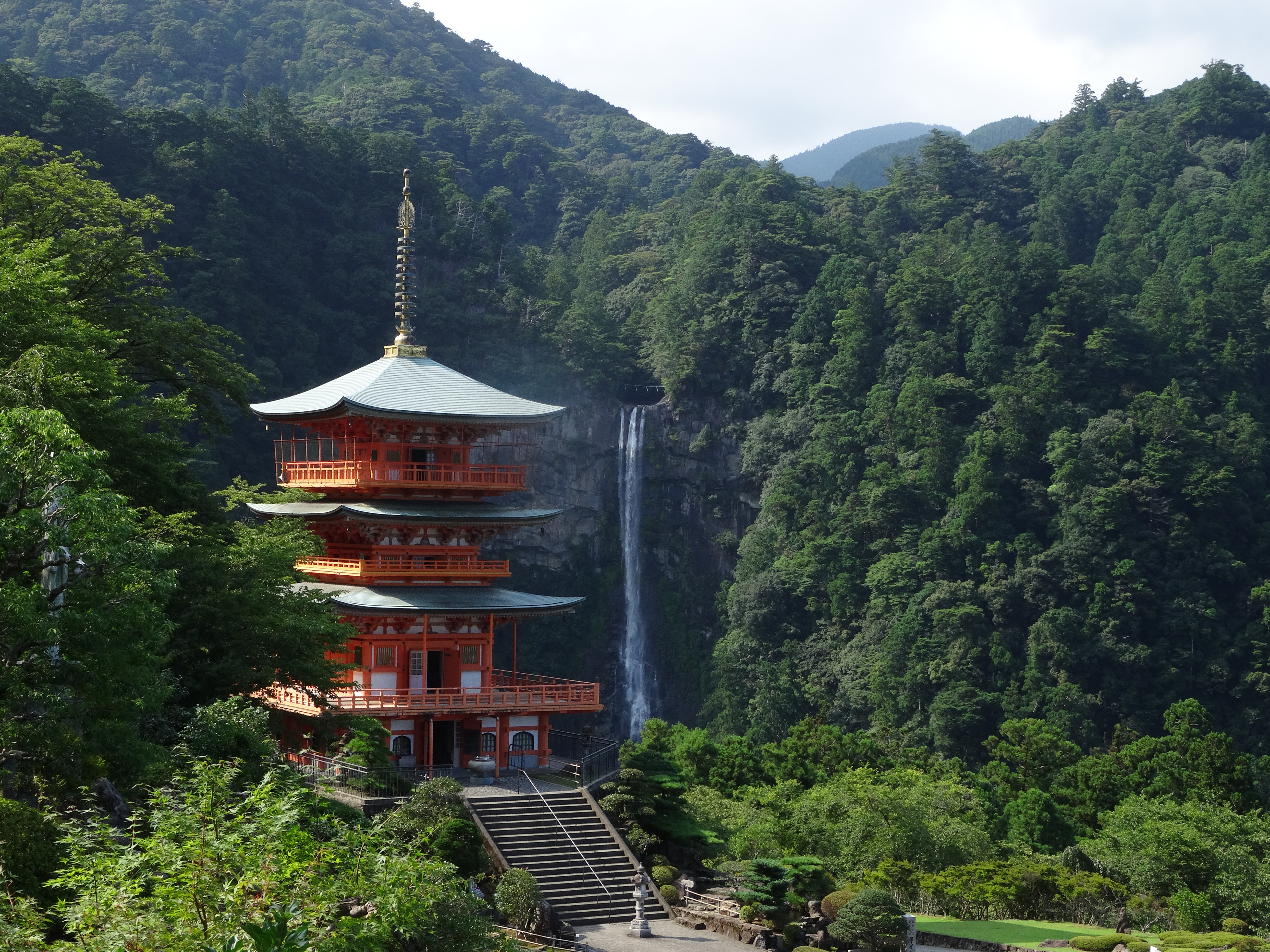
Nachi Falls and the Sanjūdō Pagoda
As the tallest single falls in Japan, Nachi Falls has been a holy site since the 4th century. According to legend, it was discovered by Ragyo Shonin, an Indian Monk. When he practiced austerities here, Kannon, the bodhisattva of mercy, appeared before him at the falls. He built a hermitage here in honor of her to be found hundreds of years later by Emperor Kazan in 988. Struck by the image of Kannon, Kazan completed 1000 days of spiritual training under the falls. After this intensive period, Kazan witnessed a vision of Kannon in the form of a dragon as Kumano Gongen. She instructed him to remap the Saigoku Kannon pilgrimage route (MacWilliams, 1995). Along with visions of Kumano Gongen, Kazan saw the “beautiful otherworldly paradise of Kannon’s Pure Land that was visible and audible to him at the this-worldly landscape of the falls” (MacWilliams, 1995). This vision of paradise at the waterfall mirrors associations of Mt. Fuji’s summit with Amida Buddha as the gateway to the pure land (Fuji Museum, 7/25/2017). Several aspects of Kazan’s visions draw similarities to Shugendo as well. Kazan performed several Shugendo rituals of prayer to the falls during his time at the site and the kami residing at the falls is female like Konohanasakuya-hime, the goddess of Mt. Fuji. Both land forms are kami themselves and both are places of great divine power.
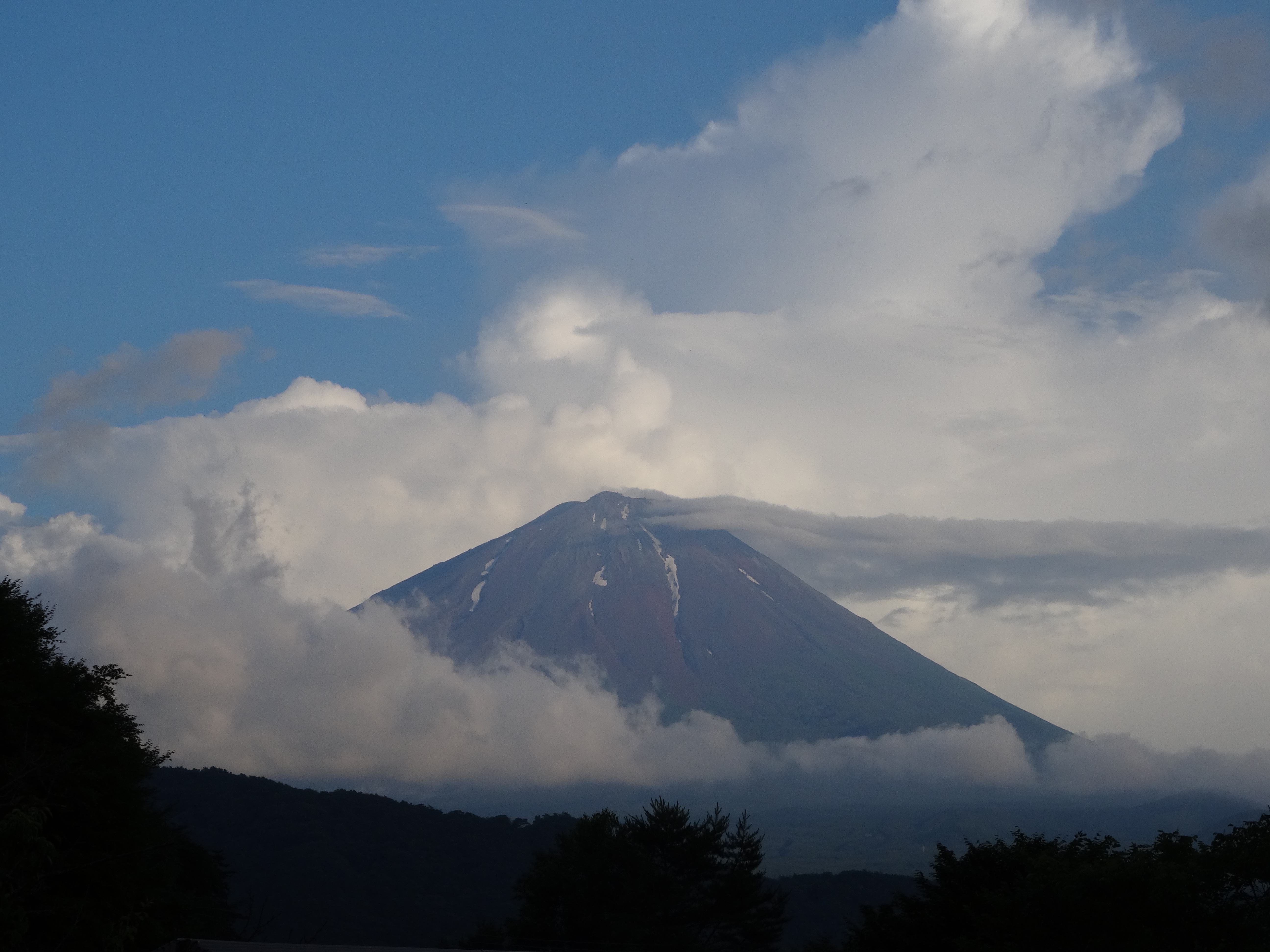
Mt. Fuji
To celebrate and acknowledge the divine at Nachi Falls, a fire festival happens here every year. The Nachi-no-Ogi-Matsuri Festival occurs every July 14. At the Nachi Fire Festival, pine torches are burned while mini shrines containing replicas of the waterfall are purified by a combination of flame and mist from the falls. This festival welcomes the gods of Kumano back to their spiritual home at Nachi Falls (Lesley, 2017). A similar fire festival happens annually at the northern base of Mt. Fuji. According to Fusōkyō priest Shishino Fumio, the Yoshida Fire Festival is performed every year at the end of the climbing season to welcome the kami into town. The Nachi-no-Ogi-Matsuri Festival mirrors the Yoshida Fire Festival as Kumano is welcomed to the falls in a similar fashion to how Konohanasakuya-hime is welcomed into Fujiyoshida. Although performed for different reasons, both festivals carry the theme of honoring and welcoming deities of striking land forms.
Although Mt. Fuji and Nachi Falls were originally represented as religious sites in Japanese culture, both have been transformed by tourism. Nachi Falls, like Mt. Fuji, is now advertised as a place to visit, not a place to pray. Commercialism has overwhelmed religious practice. Although pilgrimage and tourism are deeply intertwined in Japan, most people visiting these locations have come to see the sights, not to worship the deities. Similar to Fuji, “pilgrims [find] themselves increasingly outnumbered by pleasure seekers” (Bernstein, 2008). In fact, religious aspects of Nachi Falls, like the Seiganto-ji Temple, are currently advertised more for visual pleasure than spiritual attraction. Like Mt. Fuji, Nachi Falls is a cultural object that has been refashioned over time. One can only guess the next step of this evolution – for both Nachi Falls and Mt. Fuji.
Works Cited:
Bernstein, Andrew. “Whose Fuji?: Religion, Region, and State in the Fight for a National Symbol.” Monumenta Nipponica 63, no. 1 (2008): 51-99.
Lesley, Alison. “Shinto Nachi Fire Festival: Celebrating the Spirit of the Waterfall.” World Religion News. May 18, 2017.
Macwilliams, Mark. “Buddhist Pilgrim/Buddhist Exile: Old and New Images of Retired Emperor Kazan in the Saigoku Kannon Temple Guidebooks.” History of Religions 34, no. 4 (1995): 303-28.