I would like to start this blog post by acknowledging the Gadigal people of the Eora Nation, the traditional custodians of this land, as well as pay my respects to the Elders both past and present.
Now I’m sure those reading this blog post are a little confused, and that’s completely understandable. The first time I heard an acknowledgement of country statement in one of my earlier classes in Australia, I was also confused. But stick around, and I hope I can clarify why the acknowledgement of country is so important and essential in understanding the past, present, and future of Australia’s ever-changing culture.
Today is the 26th of January 2018. Those of you familiar with general Australian traditions will probably realize that it is Australia Day, a nationally recognized holiday that celebrates the docking of the First Fleet on the new territory of Australia. However, the celebration of this day is becoming more and more controversial with each passing year. Why you ask? Many people are beginning to argue that the celebration of the British arriving in Australia also celebrates the mass genocide that followed towards the original inhabitants of the land, the Aboriginal people. The mistreatment of Aborigines is still prevalent today, with wide wage gaps as well as higher rates of unemployment, incarceration, drug abuse, and mental health issues. The more aware the citizens of Australia become, the more aggressive the push from the “#changethedate” movement, which acquires more and more followers each year. Ironically, they are trying to change Australia Day to May 8th (May 8, May eight, mate, get it?), while making January 26th a special day to honor and acknowledge the original owners of the land.
Historically, the aboriginal people of Australia have been mistreated and ostracized for centuries. Their kids were taken away in order to incorporate them into European society, and the kidnapping and relocating of hundreds of aboriginal children, now deemed “the stolen generation”, was justified by the labeling of aboriginals as a “dying race” who’s inferiority was resulting in their deaths anyways. Aboriginal people were not recognized at the original owners of the land until 1992, and even now after the Australian government has released a formal apology, there has been no official moves to return land grants to aboriginal people or assist those struggling financially with any sort of support.
I hope you now see why I started out acknowledging the Aboriginal tribes of Australia, and more specifically, those of Sydney where I sit writing this blog post now. I have been given the privilege of being able to come to this land and learn from their history. As someone from the United States of America, knowing the importance of the Native American culture in our current society, it baffles me how behind Australia is as a country in righting it’s wrongs, and I only hope that both the U.S. and Australia can more forward and do right by these people after wronging them for so long.
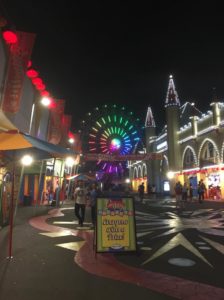
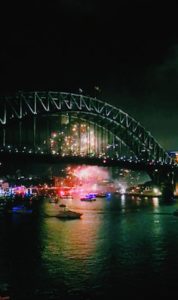
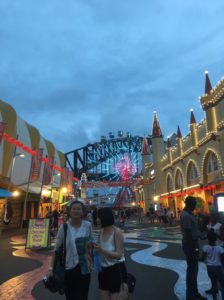
On a happier note, I had a wonderful Australian/Survival day, and it was because I was able to experience both cultures to their fullest. In the morning I attended the Yabun Festival at Victoria Park, a festival and parade that supported the aboriginal and #changethedate movements. While there I learned not only how I could get involved, but I was also able to experience so much aboriginal culture. I saw traditional dance and music performances, traditional food being served, and traditional art being created and sold. Following the festival, I took a short nap (typical, who else do you guys know who would take a nap while in a foreign country during a holiday?), and took the train to North Sydney. I went to Luna Park, an old amusement park right on the water underneath the Sydney Harbor Bridge, facing the Opera house. While here, I got to listen to the European celebrations from across the water, and was even lucky enough to watch the fireworks from a Ferris wheel in the park as they exploded over the bridge. It just goes to show that there is a wide mix of culture present in Australia, and despite the conflicts, I was very happy to have been able to experience both and make my own informed decisions based off of what I was personally able to see.
Ok guys! That’s it, thanks for sticking around with me. Look below for photos from Luna Park, the festival, and more.
Davida Johnson