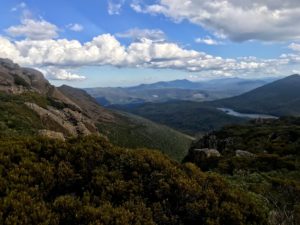
Today (February 6) we went on a 10-hour (about 10.5 miles) hike through the Tasmanian alpine at Mount Field to learn about various plants found in that ecosystem. On our hike, we saw beautiful natural pools and lakes carved out by glaciers thousands of years ago, obscure looking conifers, and dolerite boulder fields.
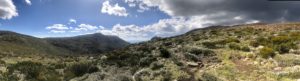
We learned about many interesting adaptations that the plants (primarily from the Proteaceae and Myrtaceae families) found in the harsh alpine environment. Some of these adaptations include flattened leaves to help retain water, shorter plant heights to avoid the intense winds, and small sharp leaves to maximize efficiency in energy transfer. Although it was a long and strenuous hike to the top, it was well worth it when we were greeted by beautiful cushion plants and spectacular mountain ranges. Today was a day well spent in the field and I am very grateful for the opportunity to study biology in such a unique classroom.