Lewis & Clark Around the World

Programs associated with Lewis & Clark College, Portland OR

  • About
    • About Lewis & Clark Around the World
    • Contact Information
  • Programs
    • Featured Overseas Programs
    • View All Overseas Programs
    • View All Program Sites
  • Participants
    • Posts
      • Featured Student Posts
      • View All Posts
    • Projects
      • Featured Student Projects
      • View All Student Projects
      • Map of All Projects
  • Help
    • Participant Orientation
    • Post Reminders
    • Your Dashboard
    • Your Overseas Project
    • Setting Up a New Program

Witnessing an Ancient Lineage of Cave Spiders

February 19, 2018 By Sierra Nelson-Liner

February 8, 2018

In Tasmania a main focus of our study was examining deep-time historical events and how they effect the biogeography of the land today. Throughout our time traveling from beaches on Maria island to forests in Maydena we had the privilege to physically look at how the historical events lead to the species and environments that were surrounding us.

One significant deep-time historical event that we studied is Gondwana. This is when all the Southern continents were joined 150 million years ago. We can then trace the dispersal species and their evolution to better understand these historical deep time events.

One of the plant species that we were lectured about and spotted out in person was Northofagus. Northofagus is a genus of 43 species. We can trace Gondwanan Northofagus  to present times and, according to one of our lecturers, is found in Australia, Hawaii, and a small island near Madagascar.

On our last day in Maydena we were lead through the bush with two field scientists. They helped us take our understandings of biogeography on a larger scale and focus it to patterns in Tasmania. We examined two more species of Gondwanan descent on our hike; an ancient shrimp that Alex caught as well as ancient cave spiders.

The cave spiders are especially relevant because we watched a documentary called Sixteen Legs which dives into the elusive Tasmanian cave spider and its sex life. We then got to go to the caves in Mt. Field National park and actually see these spiders! We were even able to see a cave spider guarding its egg sac. This is even more of incredible feat because it takes a long time for a cave spider to mate, and then lay, the eggs in their spider sacs.

Overall, these experiences we have are helping us see the puzzle pieces of evolution that form into the plants, animals, and environments that we see today.

Below is a series of pictures from the day. Picture Credits of the spiders in the cover photo and below to Anna!
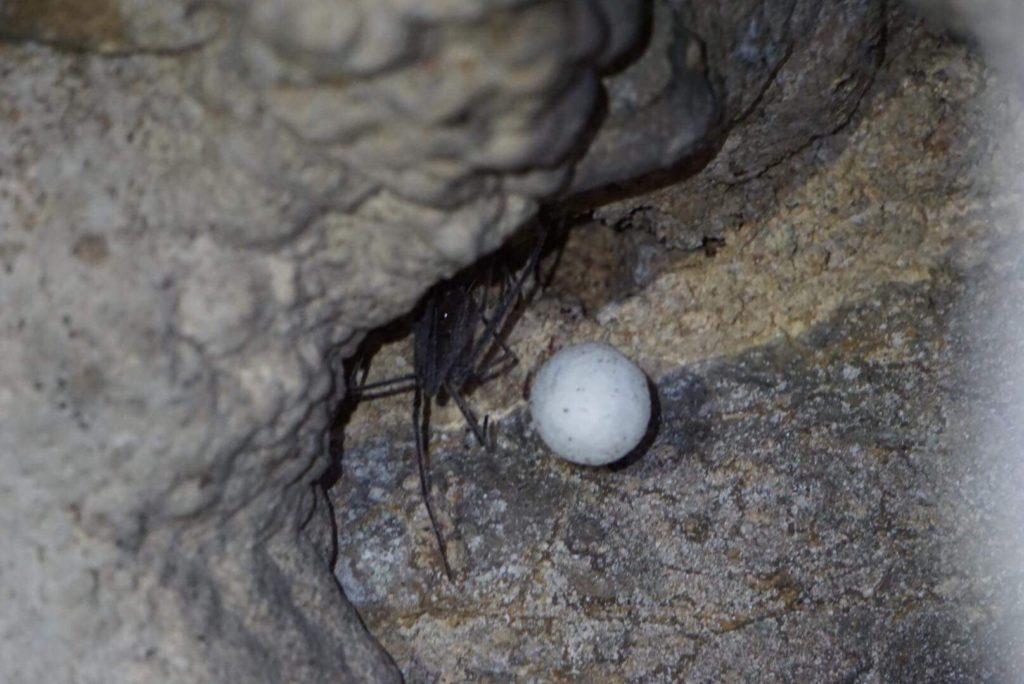
Cave spider guarding her egg sac.
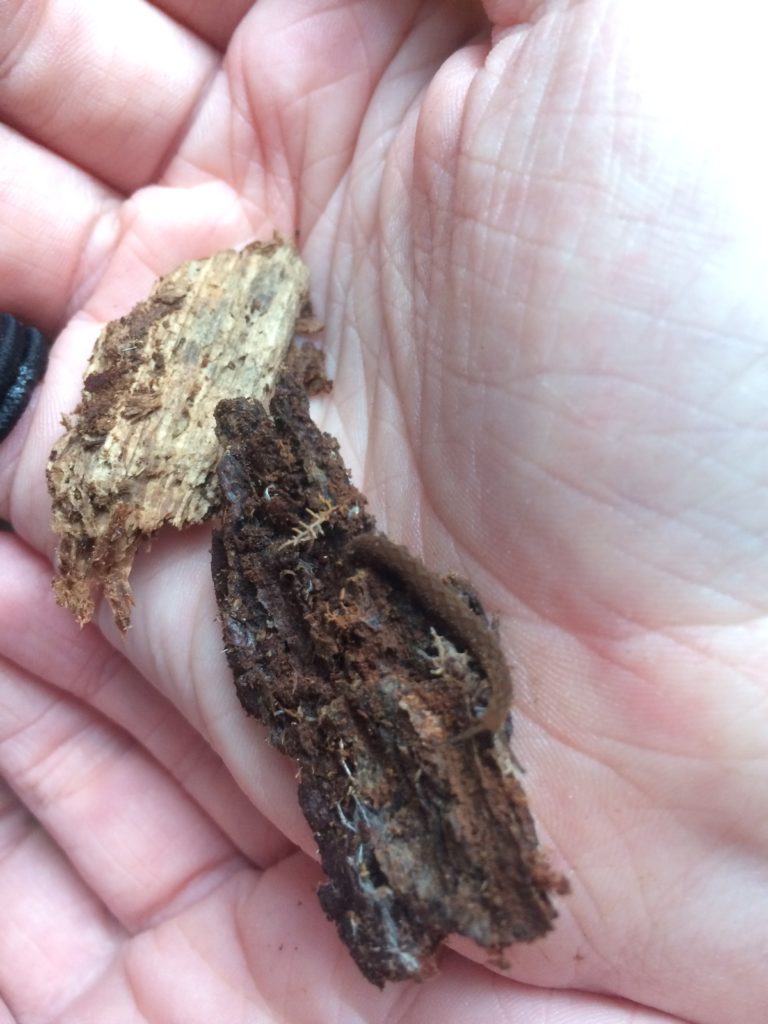
 

Our friend the velvet worm
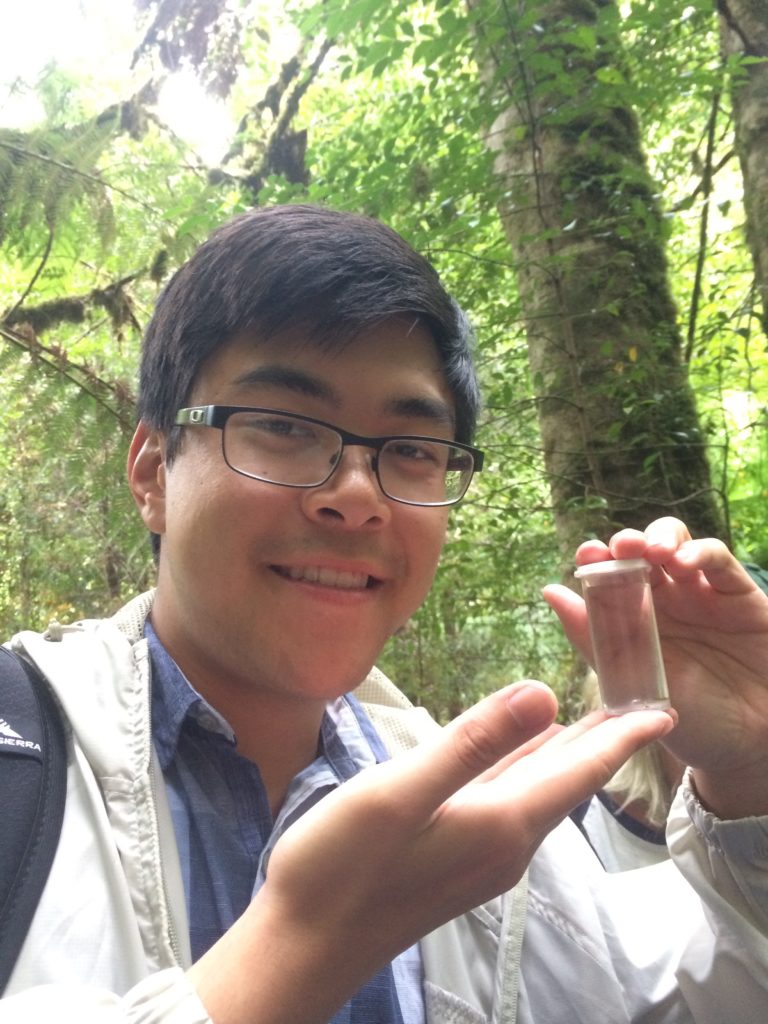
Alex and his ancient shrimp whose lineage lead to the higher crustaceans.
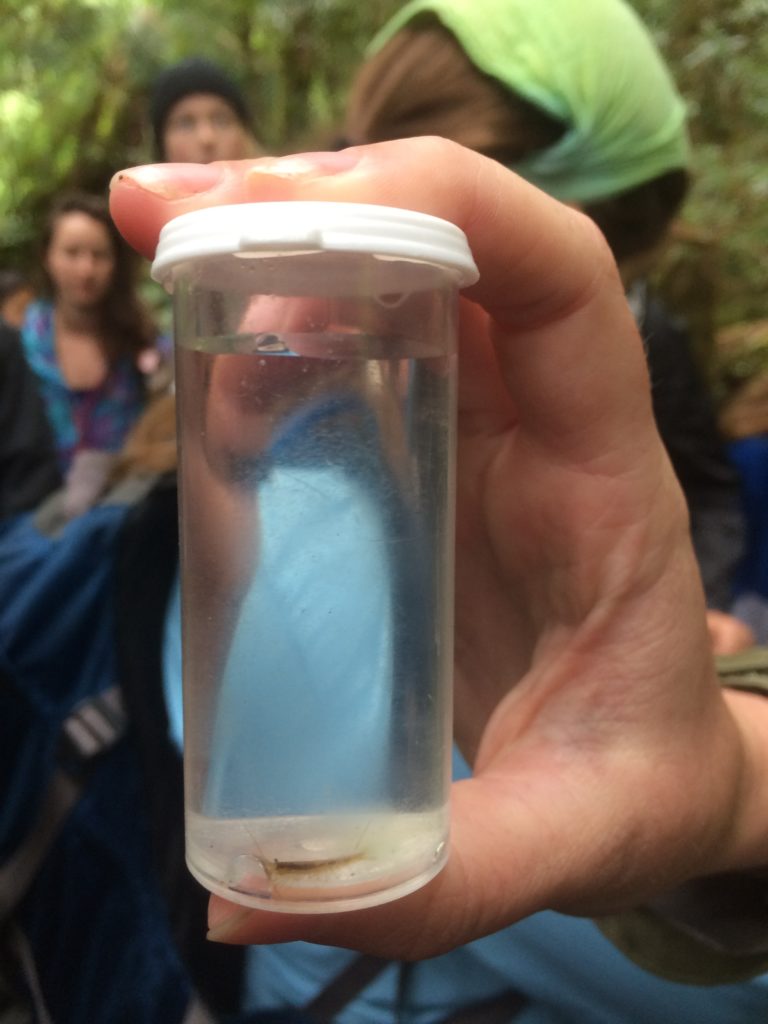
The (blurry) specimen…

Filed Under: Australia Spring 2018, Posts

For more information on Lewis & Clark Overseas & Off-Campus Programs, visit our website.

Featured Programs

  • Fuji Summer 2017
  • Morocco Spring 2017
  • Cuba Spring 2017
  • Germany: Berlin Fall 2015
  • India Fall 2015
  • Fuji Summer 2014

Recent Posts

Diving Deeper into Coral Reef Ecology at Lady Elliot Island

Diving Deeper into Coral Reef Ecology at Lady Elliot Island

Another day in paradise. Today marked our third day on Lady Elliot Island, and it’s easy to see that we’re all getting used to this. Waking up early isn’t a challenge with the bright sun and the cacophony of seabirds, but for once no one is upset, as our first activity is a quick snorkel […]

Journey to the top of Queensland – 5/4/18

Journey to the top of Queensland – 5/4/18

Today marked our last day at Carnarvon, with our next stop to be the Great Barrier Reef. Although we’ve stayed at Carnarvon Gorge longer than expected due to the cyclone off the eastern coast, it allowed us to explore even more of the beautiful park. We were woken again by the sounds of Laughing Kookaburras, […]

Great Times at Great Kepple

Great Times at Great Kepple

April 7, 2018 Our first full day on Great Kepple Island! We spent the morning in lecture learning about coral, coral reefs (there’s a difference!), conservation and the general weather trends that can dictate the biogeography of the ocean. While some had come into this program with invertebrate knowledge from classes at Lewis and Clark, […]

Planes, trains, automobiles and the amazing reef!

Planes, trains, automobiles and the amazing reef!

On April 10th I woke up to the sound of the train wheels clacking. It was 5:30 in the morning. I was so tired but also so thrilled to be traveling to a new destination. Soon after we woke from the comfy and unique accommodation of the train, we all gathered our belongings and hopped […]

Under the Milky Way Tonight

Under the Milky Way Tonight

  On April 3, 2018 we stayed at the Takarakka bush resort in Carnarvon Gorge. One of the many highlights of Carnarvon George is the sky. Specifically, the entire Milky Way. Which, as our tutor brought up, used to be a sight that everyone could see. It is because of our cities light pollution that […]

Digital Scholarship Multisite © 2018 · Lewis & Clark College · Log in