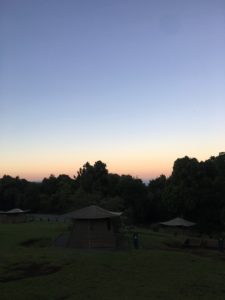
Our journey to Lamington National Park began in the early hours of a calm Tuesday. We arrived, the sun was shining, and we hustled through setting up camp. Satisfied with our work, we set off for lecture, where we learned about rainforest ecosystems and had a preview of what our field studies would be for the week. We returned to camp just in time to experience our first tropical thunderstorm!
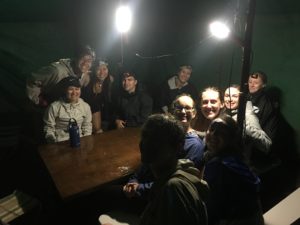
The group ran about the camp tying down everything in sight and holding down the kitchen as best they could. In all the storm lasted 30 minutes, and when it passed we were treated to a beautiful sunset and lightning show while we stuffed our faces with chicken skewers and wraps.
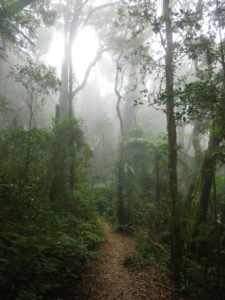
The next morning, we broke into two groups. My group (group A) started the day with an incredible bird walk around the property. We learned about bird songs and saw bowers adorned with everything from blue spoons to paperclips. 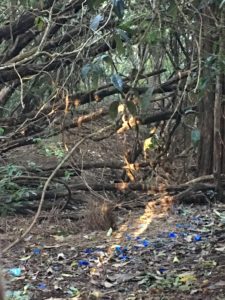 When we returned, we rallied with the other group and set off for a day of field studies. We worked our way through the rainforest, stopping to learn about epiphytes, figs, and buttress roots. When we arrived at the site, we worked in our groups to measure and evaluate quadrats of forest. The site was home to both recently burned sclerophyll forest and tropical rainforest, and the groups took turns working through both types of forest, cataloging factors like canopy cover, soil type, species richness, and tree girth.
  After a long day of field work, we came home to ice cold otter pops and watermelon. We analyzed our forest survey data while enjoying the cool treats, and discussed the trends with our tutors. After a short break, it was time for group B to begin the mammal trapping work. They rolled up peanut butter and oats to use as bait and set the Elliot traps and wire traps out in the forest. Traps were laid on either side of the track, and meticulous notes were taken to ensure no traps would be forgotten. After dinner, Group B suited up for an evening of spotlighting and trap checking, and I was lucky enough to tag along. We saw ringtail possums, insectivorous bats, and leaf tail geckos, but that wasn’t all – our invertebrate savvy crew spotted trapdoor spiders, Richmond bird-wing butterfly caterpillars, and HUGE king crickets. The group went straight from spotlighting to checking mammal traps, where we found that not only do king crickets love peanut butter, but they are large enough to set off mammal traps. In addition to crickets, we managed to catch a bush rat (Rattus fuscipes). As a mammal nerd, I was so grateful for the opportunity to work through dichotomous key with a real mammal expert to make the identification. It was easy to discern that the specimen was a member of the order Rodentia, based on head shape and dentition. If it had been a carnivorous marsupial, like an Antechinus, we would have expected to see a more standard tooth arrangement (many incisors, canines, and many cheek teeth), however this specimen had the two oversized distinctive incisors, unique to Rodents. Ultimately, it was determined that the specimen was a Rattus fuscipes, one of few placental (Eutherian) mammals endemic to Australia (many of Australia’s mammals are endemic marsupials or introduced placentals). Other contending members of the Rattus genus included R. norvegicus and R. rattus, however these introduced species could be eliminated based on key features like tail length and head shape. After clearing all the mammal traps, we returned home for a hot shower and crawled into bed, excited for what tomorrow would bring. I am so grateful that we have these opportunities to have first-hand experience in so many areas of fieldwork. It’s so easy to get sucked into a single taxon of interest, however days like this, where we range from plants and bugs to birds and mammals remind us that there is always something new and important to learn in the process of understanding the natural world.