Lewis & Clark Around the World

Programs associated with Lewis & Clark College, Portland OR

  • About
    • About Lewis & Clark Around the World
    • Contact Information
  • Programs
    • Featured Overseas Programs
    • View All Overseas Programs
    • View All Program Sites
  • Participants
    • Posts
      • Featured Student Posts
      • View All Posts
    • Projects
      • Featured Student Projects
      • View All Student Projects
      • Map of All Projects
  • Help
    • Participant Orientation
    • Post Reminders
    • Your Dashboard
    • Your Overseas Project
    • Setting Up a New Program

A Walk Through the Mangroves

February 28, 2018 By Anna DePaepe

For our second day at North Stradbroke Island, we had a lecture where we learned about the flora of the island. For example, the mangrove forests and the 18 mile swamp. We then visited the mangrove forests after morning tea. At the mangrove forests we walked down a small creek and noticed how the species of mangroves changed as we got closer to the ocean. We noticed that the bigger and tougher mangroves were closer to the ocean (tide dominating region) where they would break the waves for those trees back in the overwash zone. The mangroves in the overwash zone have shallow root systems, so if they were in the tide dominating region they would get washed away. Mangroves are adapted to live in both salt and freshwater and low nutrients. Some mangroves have snorkels that stick out of the ground so it can absorb oxygen from the air. Others have root systems that are shallow and above the ground to be able to absorb oxygen. We also looked at the sea grass biodiversity and noticed that there wasn’t very much diversity and that it wasn’t doing very well. We were then given time to explore, using nets and buckets to catch organisms in the water and identify them. We were also able to use a tool that measured the salinity of the water. We found many different organisms living in sand and sea grass such as baby squid, toadfish, sea cucumbers, and mantis shrimp burrows.

After lunch we traveled to the other side of the island, the side that faced open ocean, for we were on the side that faced the mainland. We took a short swim because the weather and water were abnormally nice that day. We then took a walk along the newest sand dunes to look at how the vegetation was different from the vegetation on the older, mainland facing, side of the island. We noticed that there was mainly grasses and small shrubs living on the dunes. A student found a couple of coconuts. Coconuts are not normally found on North Stradbroke island, so we knew it was a dispersal event which we had learned about earlier in our travels. We then traveled to the 18 mile swamp to see how that vegetation was different from the rest. We noticed that there were a lot of long grasses that prefer to have their roots submerged. The last bits of our day were spent swimming at Brown Lake and noticing that the vegetation mainly consisted of paper bark trees and grasses. The lake is also a closed system due to the sand creating an almost concrete like substance where water from the water table cannot enter the lake. The water level gets higher when it rains and lower when it hasn’t rained in a while.
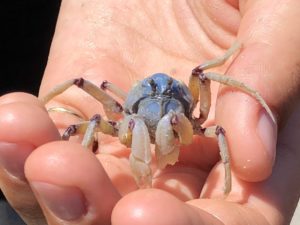
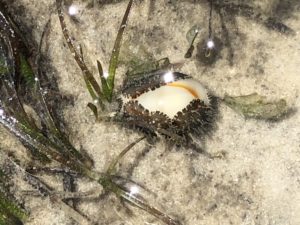


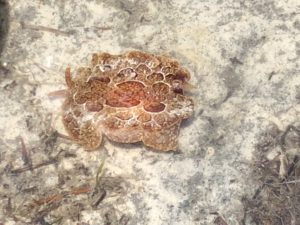
Some critters we saw while exploring the mangroves and ocean.

Left to Right: Soldier Crab, Cowrie, Sea slug, Nudibranch (Type of sea snail)

The 18 Mile Swamp.

Filed Under: Australia Spring 2018

For more information on Lewis & Clark Overseas & Off-Campus Programs, visit our website.

Featured Programs

  • Fuji Summer 2017
  • Morocco Spring 2017
  • Cuba Spring 2017
  • Germany: Berlin Fall 2015
  • India Fall 2015
  • Fuji Summer 2014

Recent Posts

Diving Deeper into Coral Reef Ecology at Lady Elliot Island

Diving Deeper into Coral Reef Ecology at Lady Elliot Island

Another day in paradise. Today marked our third day on Lady Elliot Island, and it’s easy to see that we’re all getting used to this. Waking up early isn’t a challenge with the bright sun and the cacophony of seabirds, but for once no one is upset, as our first activity is a quick snorkel […]

Journey to the top of Queensland – 5/4/18

Journey to the top of Queensland – 5/4/18

Today marked our last day at Carnarvon, with our next stop to be the Great Barrier Reef. Although we’ve stayed at Carnarvon Gorge longer than expected due to the cyclone off the eastern coast, it allowed us to explore even more of the beautiful park. We were woken again by the sounds of Laughing Kookaburras, […]

Great Times at Great Kepple

Great Times at Great Kepple

April 7, 2018 Our first full day on Great Kepple Island! We spent the morning in lecture learning about coral, coral reefs (there’s a difference!), conservation and the general weather trends that can dictate the biogeography of the ocean. While some had come into this program with invertebrate knowledge from classes at Lewis and Clark, […]

Planes, trains, automobiles and the amazing reef!

Planes, trains, automobiles and the amazing reef!

On April 10th I woke up to the sound of the train wheels clacking. It was 5:30 in the morning. I was so tired but also so thrilled to be traveling to a new destination. Soon after we woke from the comfy and unique accommodation of the train, we all gathered our belongings and hopped […]

Under the Milky Way Tonight

Under the Milky Way Tonight

  On April 3, 2018 we stayed at the Takarakka bush resort in Carnarvon Gorge. One of the many highlights of Carnarvon George is the sky. Specifically, the entire Milky Way. Which, as our tutor brought up, used to be a sight that everyone could see. It is because of our cities light pollution that […]

Digital Scholarship Multisite © 2018 · Lewis & Clark College · Log in