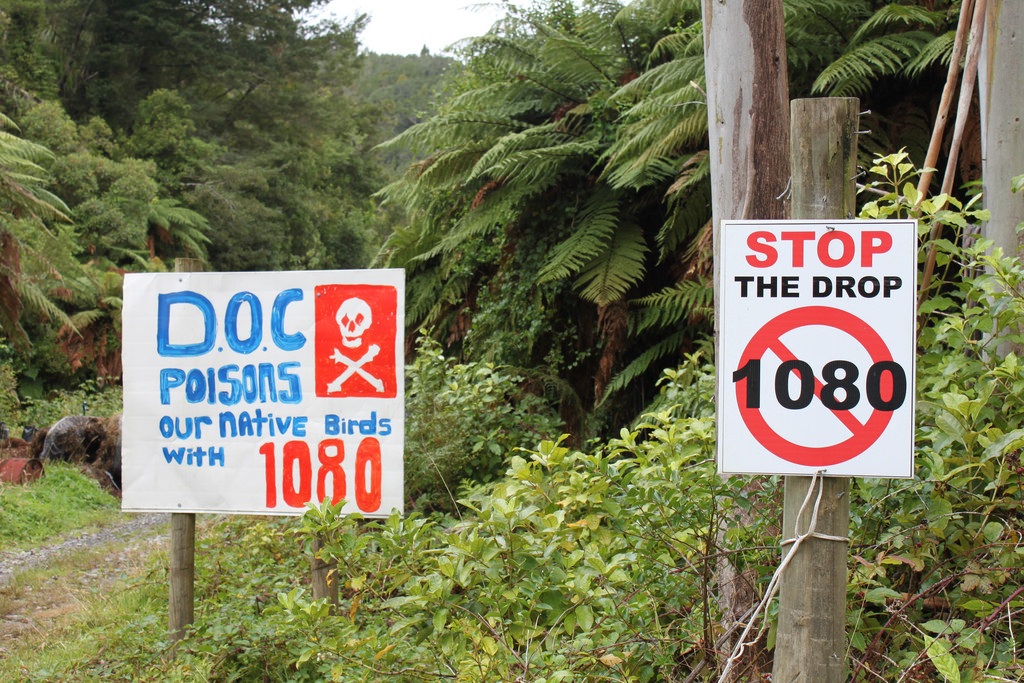
For our conservation class we put ourselves in the shoes of conservation managers, dealing with the unique challenges of New Zealand’s conservation:
“Poison rains from the sky, animals are sprawled across the landscape, dead from no ostensible outward causes. This picture rings dystopian- it is one of ecological devastation, and governmental harshness. It is not what one would picture of 100% Pure New Zealand, with clear water, pristine mountains, and exotic flora and fauna. And yet, when one follows the story of New Zealand’s environmental conservation 1080 program this is one side of the narrative that gets told. So how did this controversy come to be and what can we learn from it?
As an island nation separated from any other major land mass for 85 million years, Aotearoa New Zealand has developed one of the highest endemism rates in the world. Before human colonisation, 71% of birds were endemic and the only land mammals were three species of bat. As humans arrived, however, they did not come alone. The story of the kiore rat with the arrival of Maori settlers, and the later arrival of mustelids, deer, pigs, cattle and more with European settlers is well known. The havoc these new settlers wreaked in the so-called “land without teeth” is a dramatic tale. Native species accustomed to a predator free life were suddenly bombarded with hungry foreigners ready to gobble up the fat, flightless birds. As time has progressed, introduced predators have become the single most devastating problem for New Zealand’s native species .
This is where 1080 enters the story. 1080 (sodium fluoroacetate) is a metabolic toxin originally derived from poisonous plants. It is used in toxic baits that negatively affect mammals. Hiking through much of New Zealand, you will notice almost comically ominous signs about the dangers of 1080 along trails- skull and cross and all.
Along with on-the-ground traps, aerial application of 1080, in large and inaccessible areas, is one of Department of Conservation’s most prominent defenses against introduced pests killing the country’s beloved fauna. Cue the controversy.
New Zealanders may love their endemic birds a lot, from the tui to the kiwi, but they sure love their pets and their hunting just as much. 1080 poses a high risk towards dogs and deer, either with animals ingesting the poison or through ingesting other animals killed from the poison. According to an anti-1080 organization, 20,000 deer are poisoned annually by 1080, and at least 65 dogs were killed in 2008. With this worry about the possibility of a gruesome dog death and grisly images of dead deer, some dog owners and deer-hunters have developed visceral opposition to the non-targeted use of aerial 1080. From their perspective, 1080 may save lives, but it also kills them.
Users of 1080, such as DoC, counter that these risks are minimal and preventable. According to 1080 proponents, clear signage is in place in 1080-affected areas warning dog-owners of the risk and against letting their dog off-leash. According to the Parliamentary Commissioner for the Environment’s 2011 evaluation of 1080, only eight dogs have reportedly died from 1080 since 2007, two of those deaths were a result of a breach of standard operating procedure. This is far less than the number of dogs killed from the domestic use of rat or slug poison. From this perspective, responsible dog management is the best prevention against these risks. In regards to deer fatalities, DoC does admit that 1080 poses a risk to deer. However, they note that deer also pose a risk to native ecosystems due to browsing, and so 1080 serves its purpose in this sense. They do use deer-repellant in some recreational hunting areas to try to balance these effects.
Hitting at the heart of the matter, 1080 opponents argue that in addition to the risk of by-kill and the potential of environmental degradation, there is not sufficient evidence to support a net benefit to native birds, and therefore not justified use. 1080 proponents argue that dire circumstances calls for dire action. The Forest & Bird organization says that 80% of our birds, 88% of our lizards and 100% of our frogs are threatened with extinction. Most face this fate because of predation or ecosystem change due to introduced mammals. 1080 is the most cost-effective method for targeting these predators and protecting these vulnerable and treasured populations. In addition, they argue that they are able to conduct this widespread campaign with up to 100% effectiveness, all the while maintaining the integrity of the drinking water supply- with the indefatigable freshwater advocate, Mike Joy, as an ally- and mitigating risk.
Widespread use of aerial poison does harken our imaginations to a post-eco-apocalypse. And yet, deep and unique evolutionary lines deserve to be protected. Fortunately, these two sides are not necessarily conflicting, in fact they can work together. One example of this in action, is the co-management of deer and game animals between DoC and the Game Animal Council. Co-management is an opportunity to build bridges and allow space for both sides to have their say about what clean and green means. Recall back to that picture of 100% Pure New Zealand- is this idea threatened or protected with the growing application of 1080? The answer may be both.”