April 7, 2018
Our first full day on Great Kepple Island! We spent the morning in lecture learning about coral, coral reefs (there’s a difference!), conservation and the general weather trends that can dictate the biogeography of the ocean. While some had come into this program with invertebrate knowledge from classes at Lewis and Clark, I learned a lot about the coral, algae, echinoderms, other coelenterates/cnidarians and other anthozoa that can makeup the biodiversity of a reef ecosystem. I was interested to learn that the same species of coral can take different shapes as they want to grow to maximize access to sunlight for the zooxanthellae that live within coral polyps. We also learned “Charlie’s hypothesis” which is that two species of coral can breed and hybridize in response to a stressor and then later diverge again; and this can happen over a matter of decades rather than hundreds of years. For this reason, there may be an ever changing number of coral species. We of course also discussed coral bleaching and the “death” of the Great Barrier Reef and what I found most shocking is that our understanding of coral bleaching events is still very limited. It’s known that when the temperature of the ocean gets too hot, a coral will “expel” its zooxanthellae and then without the recolonization of zooxanthellae on this corals, the coral does not get enough nutrients to survive. So why would the coral expel the organism that helps feed it? When the
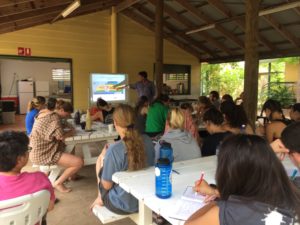
Outdoor lecture at Great Kepple
water is too warm the zooxanthellae create oxygen free radicals that are toxic to the coral and, as far as the theory goes, the coral expels the zooxanthellae through shedding its outer layer. From a biogeography perspective I found it compelling that some corals appear to be more affected or less affected by temperature change as some corals can withstand higher temperatures better than other corals.
We finished our morning lecture by trying to tackle the question, “if humans know how bad our actions can be for the environment, why do we continue to do them?” It was interesting to see how my classmates pulled information that they had gained from our Indigenous Australia studies to answer this question as well as their own experiences as biologists. Overall our tutor steered us to the idea that if we want to see change, we need to give people a compelling reason to change. And this means that we have to understand where these people are coming from, and that they do not necessarily have the same perspective as us. He shared four C’s with us – conservation, culture, commerce, and community – and the idea that the majority of people on Earth can fall into, and be compelled by, at least one of these four categories.
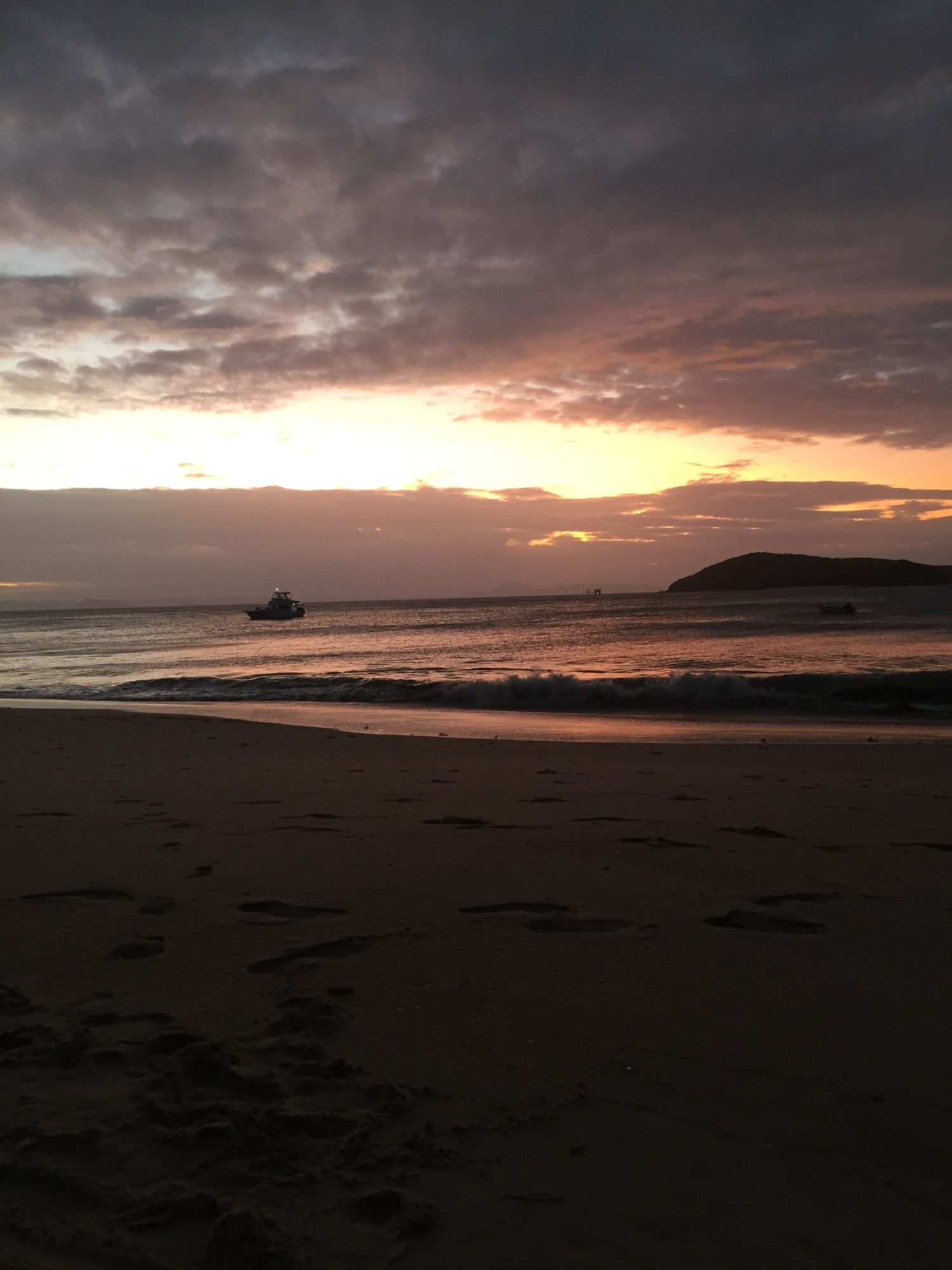
Backdoor sunset
After lunch we went for a walk along the beach (which is about 2 minutes from our lodging) and discussed how species colonize an island, the behavior and breeding of sea turtles, and eventually found ourselves at mangroves where we refreshed the knowledge of mangroves that we gained in North Stradbroke Island. The ability to walk on the beach and actually see examples of what we were being lectured about was amazing and, as cheesy as it probably sounds, I feel fortunate to have my classroom be nature itself. It was a packed day information wise but we still had plenty of time to enjoy the beach and explore the island as well as relax and listen to music or read books. We should be snorkeling soon and really dive in to the concepts we learned about today before leaving Great Kepple for Lady Elliot Island!