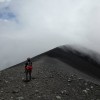
Soils that have lots of large pores allow water to pass through them faster, and therefore are poor retainers of surface water. Geologists use the term “infiltration rate” to describe the rate at which water seeps into the ground. Mt. Fuji, being mostly composed of permeable rock, has a very high infiltration rate. Once the water […]
Little Dog in Big Japan: Dachshunds in Japan as Evidence for Local/Global Forces

As I continue my journey in Japan, I have been introduced to many novel ways of looking at everyday life activities that relate to the situated themes of this program. The local/global theme is one that I see constantly whether I am in the depths of downtown Tokyo, the island of Enoshima, or near the […]
The Influence of Mt. Fuji’s Inscription as a World Heritage Site On and Around the 5 Lakes Region
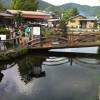
Header Image: Tourists gathering around one of the famous ponds at Oshino Hakkai The Imagining the Global dyad “local/global” was very pertinent during my research days on the north side of Mt. Fuji. There I was able to visit some very historic areas and to observe and work with the Fujisan Club, a non-profit organization that leads trash […]
From amusement parks to neighborhood dogs: a mix of global and local culture in Japan
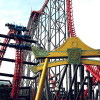
While being strapped into a roller coaster called Eejanaika at the Fuji-Q Highland amusement park, I could almost swear that I was at Six Flags or the Santa Cruz Boardwalk back in California, given the lines of smiling tourists in shorts and flip flops, smells of churros and soda pop, and muffled, indiscernible words blasting […]
Old wood, New niches: Change and Continuity in Japan 2014
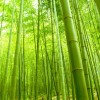
During our field research situated on the Kenmarubi lava flow, I gained a small insight connecting directly to our program’s “continuity/change” dyad. This area was heavily deforested before and during World War II for timber, so there was a need to reseed the area and develop a new forest. Because this area is extremely rocky […]