Skyscraper National Park

  • Home
  • About
    • Welcome to me!
    • About This Site
  • Courses
    • Environmental Theory
      • Post Summaries
      • Running Posts
  • Thesis
    • Whiskey’s for Drinkin’, Water’s for Fightin’
  • Research Archive
    • Poster Gallery
    • Salmon Safe Certification
    • Attitudes Towards Conservation in Swaziland
    • Deconstructing Dams
    • Peri-Urban Development in Swaziland
    • Agricultural Policy and Cannabis Production in Swaziland

What happens if Congress says no?

November 4, 2014 By Kelsey Kahn Leave a Comment

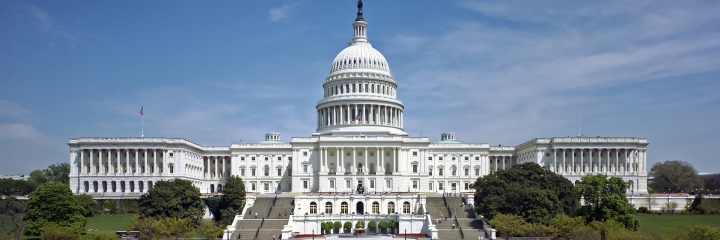
Congress is currently facing a decision: whether or not to grant the Secretary of the Interior the authority to approve of the Klamath Basin Restoration Act (KBRA), the Klamath Hydroelectric Settlement Agreement (KHSA) and the Upper Basin Water Sharing Agreement. Together referred to as the Klamath Settlement Decision (KSD), these agreements include provisions like Federal land transfers and relinquishments of tribal water rights, but that’s not why Congress is involved. Giving the Secretary the authority to make decisions is just one of the plenary powers of Congress. The Secretary of the Interior already has the ability to come to determinations about land transfer and tribal affairs, so Congress doesn’t have to play a part. The trouble only starts when money comes into play, and oh boy, the KSD is asking for a lot of it.

There have been some speculations about the future of the KSD. Some are saying that it’s dead in the water. For the KSD to be passed, the Department of the Interior, Department of Commerce, and Department of Agriculture have to approve the projects as well as the states of California and Oregon and, on top it all off, because money is involved, Congress gets to vote. If any one of these parties does not vote aye, the KSD is history. But the problems in the basin still persist, PacifiCorp will still not have licenses for the four dams that are proposed for removal but they will still be operating.  So what happens if someone says no?

Here are the posible outcomes:

The likelihood of the KSD agreement getting accepted is low. The likelihood of FERC approving PacifiCorp’s license is even lower (because it will not meet Oregon or California’s Clean Water Act requirements). That leaves PacifiCorp in an interesting position, whether or not it will choose to litigate or pay for the dam removal themselves. It would conceivably cost more for PacifiCorp to remove the dams than litigate which will just hold up the process more. The future looks bleak for those who want the dams to come out, bleak indeed.

Filed Under: ENVS 397, Thesis Tagged With: envsthesis

Leave a Reply Cancel reply

Your email address will not be published. Required fields are marked *

Well hello there

I am a fun-loving Environmental Studies Major at Lewis & Clark College. My work focuses on alternative energy policy in the United States and the transfer of scientific research into action.

What I’ve Been Up To

  • I am done now (for now) May 2, 2015
  • Blogs are (apparently) the way of the future April 21, 2015
  • I am an Honors Curmudgeon April 14, 2015
  • Defending and Postering April 7, 2015

Archives

  • May 2015
  • April 2015
  • March 2015
  • February 2015
  • January 2015
  • November 2014
  • October 2014
  • September 2014
  • June 2014
  • May 2014
  • April 2014
  • March 2014
  • February 2014
  • January 2014

RSS New Yorker News

  • More Legal Trouble for Paul Manafort—and Donald Trump June 5, 2018
    John Cassidy writes about the court filing against Paul Manafort accusing Donald Trump’s former campaign chairman of witness tampering.
    John Cassidy
  • The New Co-Working Space that Will Literally Turn You Into Snapchat’s Evan Spiegel June 5, 2018
    Annah Feinberg writes a satirical piece about a co-working space, named Spieg, that literally turns its members into the Snapchat founder Evan Spiegel.
    Annah Feinberg
  • Coney Island, Then and Now—the Cyclone, Nathan’s Famous, and the Wonder Wheel June 5, 2018
    Rachel Lipstein introduces a video that highlights the history of Coney Island, including the Cyclone roller coaster, Nathan’s Famous Hot Dogs, and more.
    Rachel Lipstein

Digital Scholarship Multisite © 2018 · Lewis & Clark College · Log in