ENVS 311
"Natural Disaster" - a phrase used to describe earth processes and events such as earthquakes, landslides, tsunamis, hurricanes, fires, floods, etc., all of which affect both our surrounding environment and human communities. However, the extent of naturalness, and the extent of disaster, are both scaleable and dependent on a number of factors. For example, the naturalness of an event often refers to aspects of the event that are outside of human control or impact. Yet our infrastructure, climate change, and community organization all affect the frequency, scale, and damage of different types of disaster.
Examples of this include the location and infrastructure of New Orleans and the Mississippi River delta, city infrastructure increasing risk and damage from earthquakes, climate change increasing frequency of hurricanes, etc. All of these examples have different types of consequences for humans, even more so when combined with the make up of communities, vulnerability, and resources available. When all of these components fail, the event is usually labeled a "disaster." If natural earth processes functioned without affecting human settlement, the term disaster would never be used. Rousseau questioned this in a way that stuck with me: do we care or talk about an earthquake in the desert? Acknowledging that both "natural" and "disaster" are circumstantial would provide us a better understanding of how these events affect communities disproportionately and how we can mitigate unequal distribution of destruction and recovery.
An over arching theme of this course is the Cascadia Subduction Zone Earthquake, commonly referred to as "The Big One." The likely 9+ magnitude earthquake is estimated to greatly affect the three west coast US states - Washington, Oregon, California - as well as parts of Canada and Mexico. Coastal cities and towns will be vulnerable to both earthquake and tsunami dangers, and utility access is expected to be unavailable ranging from a few days, months, or even years in some cases. These availability and hazards are compounded with social vulnerabilities of different communities. In Portland, these vulnerabilities can be combined with hazard data to help map which communities will likely be most affected by the subduction zone earthquake.
A major component of this class was the planning, implementation, and reflection on a series of outreach events to Lewis and Clark College's students and neighboring community. The outreach events were split into two courses, and informational open-house and an improvisational skills clinic. A detailed event description and assessment can be found here.
Related Posts
Reflections on ENVS 311 (Un)Natural Disasters
I am glad that I took the (Un)natural Disasters course alongside both my nuclear power independent study and my ENVS 330 core course, Situating Environmental Problems and Solutions. This trio of classes was an excellent combination for the spring of my junior year, as I begin to prep for thesis. The goal of my independent […]
Teaching Disaster through Three Mile Island, Chernobyl, and Fukushima
Earlier this week I taught a class on nuclear disasters in the ENVS 311 (Un)natural Disasters class with Liz Safran. My goal for the class was to inform the students about specifics of the three major nuclear disasters to date, while also providing framework and a platform to discuss nuclear disasters in comparison to other […]
Cascadia Subduction Zone Earthquake: implications of Portland hazard demographics
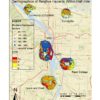
Introduction Natural phenomena, such as earthquakes, tsunamis, hurricanes, etc., are often referred to as “natural disasters.” This phrase combines two aspects of natural phenomena: hazardous physical earth processes combined with the social effects of the event on human populations. Wisner et. al., defines disaster as, “a situation involving a natural hazard which has consequences in […]
Demographics of Portland Hazard Zones: where NOT to be during the Big One
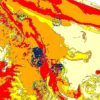
Now that I have mapped the distribution of renters around college campuses, it is time to look at the possible hazards that those communities will likely face in the event of a subduction zone earthquake. Using data collected about the geological state of Portland, a hazards map was created by the state of Oregon to determine […]
Earthquake Evictions: renting near Portland college campuses
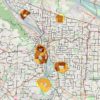
Whether or not you believe the subduction zone earthquake is going to hit the west coast, being vulnerable in a city during an earthquake is still a great concern, no matter where you are. With that in mind (and The Big One), our class is taking the time to look at communities surrounding college campuses […]