
Team Members: Lauren Cloughesy, Norbu Globus, Keldy Mason, Jade Murphy Definition: Political Ecology is the study of understanding how human societies – their political, social, and economic factors – relate to changes in our ecosystem and to link the effect of changes in social systems to the changes in our ecosystem. Political Ecology tends to […]
Team Assignments
Is environmental postcolonialism even a thing?

Definition According to the Oxford online dictionaries, Postcolonialism is defined as: “The political or cultural condition of a former colony.” and “[The] theoretical approach in various disciplines that is concerned with the lasting impact of colonization in former colonies.” In a wider context this theory and area of study seeks to explore, analyse and explain […]
Biophilia: A Problematic Love

Team Members: Ben Carsner, Nicole Godbout, Lauren Walker Definition Biophilia was popularly defined in Edward O. Wilson’s book The Biophilia Hypothesis as “the innate tendency in human beings to focus on life and lifelike processes” (Kellert and Wilson, 1993). It is often used to describe the extent to which humans are hardwired to need connection with […]
A Sub(Lime) World of Materials

This post was created by Emma Hay and Kurt Barbara. Overview The sedimentary rock limestone, generally is a combination of mineral calcite and grains, made up of various skeletal fragments such as coral, diatoms, peloids, intraclasts and foraminifera, but can vary depending on region location (5). For example, the limestone in Southeast Asia consists largely […]
ARSENIC, a useful Toxin.

Overview Arsenic, in the elemental form, exists in a number of forms. Yellow arsenic, which reacts readily, is extremely poisonous. Gray arsenic, a more ordinary stable form, exhibits low thermal conductivity and is brittle. The semi-metallic form of arsenic is steel gray in color with a bright luster. It is very brittle and is a […]
Worldwide Tungsten Production
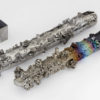
Overview: Tungsten, also known as wolfram, is a rare transition metal found almost exclusively in the chemical compounds scheelite and wolframite. Tungsten is a strong, brittle metal which remarkably exhibits the highest melting point of all the elements, with a density very similar to gold. Interestingly, tungsten is the heaviest element found in biomolecules, where […]
What A Steel!
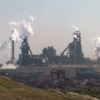
What is this mineral? Steel, the material we use in creating car body panels, to the utensils we use to feed ourselves that ever-so coveted slice of cake, is used on a daily basis. Steel is a combination of iron, with a small amount of carbon. In order to make steel, metallic iron […]
Lead in the Wrong Direction
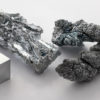
By Jakob Riedal, Connor Schenk, Karli Uwaine and Heisman Hosoda An Overview of Lead Lead (Pb, atomic number 82) is a soft heavy dense metal that is low cost to extract and relatively abundant. The mineral is mainly found in ores usually combined with zinc and copper where the lead is extracted through a multi […]
Lithium: Charging the Future of Energy
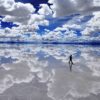
Paige Barta, Leela Hornbach, Molly Sheridan Lithium Production and Overview It’s no secret that crude oil extraction ought not fuel the future, especially when lithium can help recharging it. Lithium, is a silver—white alkali metal. It is the least dense solid element and lightest metal. Lithium is highly reactive, for this reason it generally appears […]
Silicon puts the “Si” in Significance
By: Berkly Martell, Summer Watkins, Shoshana Rybeck, Kyle Mezrahi, Jesse Milman An Introduction to Silicon The eighth most common element by mass in the universe, silicon (Si), is a shiny, charcoal colored metalloid, labeled with the atomic number 14. Although not identified as silicon in its natural state, it is mined as silica and produced […]
Mining Copper: From the Bronze Age to 21st Century Tech Boom
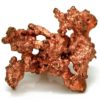
By: Maxwell Lorenze, Jesse McDermott-Hughes, and Anna Tobin Overview Copper is one of the oldest and most important minerals used in human history. It was the first metal worked by humans and the color gave the Bronze Age its name. Copper is still used today in worldwide; it is now ranked the third highest consumed […]
Titanium: It’s in Your Toothpaste

By Shawn Bolker, Gabe Commissaris and Justin Wilson Overview: Titanium is a type of metal that is distinguished by its silver color, low density, and high strength. Titanium has the ability to be alloyed with other minerals like aluminum which then can then be used in the construction of aircraft, spacecraft, and missiles. Titanium’s resistance […]
Mailin’ Kaolin (flown, not always locally known)
Clay Minerals-Kaolin Kaolinite, or Kaolin in its mined form, is one of the most common types of clay minerals. It is also referred to as “china clay”. It is a soft, malleable clay and is usually white colored although sometimes, exposure to iron oxide can cause it to have a rust hue. Kaolin is produced […]
Industrial Diamonds: Impure but Valuable
Introduction Diamonds are typically are known for their high value and beauty within the jewelry industry, as well as other aesthetically pleasing goods. However, not all diamonds are used for this exquisite purpose. In fact, all the irregularly shaped or discolored diamond ore unsuited for jewels is processed for important industrial usage. These diamonds are […]
Pumice Rocks!
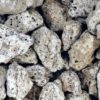
Overview Pumice is a rough, extrusive volcanic rock, produced when super-heated lava containing a high content of water and gas is violently discharged from a volcanic eruption. The highly pressurized gas bubbles escape the lava as the co-occurring cooling and depressurization create a frothy texture that then hardens and results in a very lightweight, lightly-colored, […]
Asbestos: the Useful Carcinogen
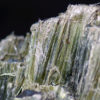
A post by M. Fries and C. Woolums Introduction Asbestos is a mineral that is composed of long fibrous crystals, which give it tensile strength, heat resistance, and insulation properties, making it used in everything imaginable, from house insulation to military use, from cement to fireproof vests. It is found all over the world, with […]
Zinc Inc: Connecting People and Place
By: Sabrina Cerquera and Thea Crowley Of all the elements in the Earth’s crust, zinc is the 24th most common. It is number 30 on the periodic table. Zinc is known for its bluish-silver coloring and its common presence in alloys like brass. Although zinc has been used since the third millennium BC, the […]
International Gypsum Mining: Interactions between Humans and Nature
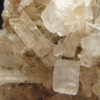
Faith Michal, Cassie Kent, Julia Neish Overview Gypsum is a sulfate mineral composed of calcium sulfate dihydrate with origins from dried concentration of seawater. The deposits of calcium and sulfate condense over millions of years to make this soft mineral. Therefore, the locations that used to be oceans or lagoons now have large holdings of […]
Nickel Me This
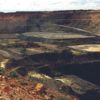
By Lauren Cloughesy, Norbu Globus, Keldy Mason, Jade Murphy Overview Nickel is silvery-white, hard and ductile metal. It is a transition metal and it is a fairly good conductor of heat and electricity. Nickel is the fifth most common element found on Earth, most of it though is found in the earth’s inner and outer […]
What’s the Point? Graphite as more than just a sharp pencil
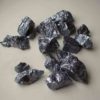
Graphite Graphite is a crystalline form of carbon. It is relatively stable, which is why it is often used in thermochemistry. It is also found commonly in pencils, batteries, and steel making. Graphite has a layered structure and each individual layer is called graphene. Graphite is highly valued for it’s ability to conduct electricity. As […]
Wollastonite: The Hidden Hero You’ve Never Heard of
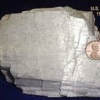
Julia Chavez & Jaime Monsher What is Wollastonite? Wollastonite is a mineral with the chemical makeup of (CaSiO3); it is a hard material with a white appearance and high transparency. Wollastonite can be found in metamorphosed deposits of limestone, and can be found primarily in Essex and Lewis counties in New York, but other deposits […]
All Gold Everything
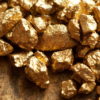
Trini Susuico Rachel Applebaum Ashley Aguiar Gold is Au on the periodic table and in it’s elemental form is a bright, slightly reddish yellow, dense, soft, and malleable metal. It is a transition metal, generally taking a hardened form, and is one of the least radioactive elements on the periodic table. It comes often in […]
Iodine: from Mine or Brine?
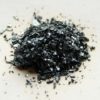
Ellen Richards and Ireland Flannery Overview Iodine is the heaviest and least abundant halogen on the periodic table of elements. It was discovered by French chemist Barnard Courtois in 1811. At room temperature, the nonmetallic element exists as a solid with a purple-black appearance, but it appears violet as a gas. It has a melting […]
Feeding the Mountain that Eats Men
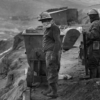
A Note to the Reader: An amendment has been added to this post March 30, 2017. The amendment is intended to correct erroneous and over-reaching statements made in the original post. An Overview of Tin Tin is a soft, malleable metal (Sn, atomic mass number 50) with numerous uses in the modern world. Tin […]
Minerals, Mercury, and Mining

The team members in this project are: Curtis Hall and Sofi Ronning About Mercury Though Mercury can be found in its native state, it is very rare and only lightly covers certain mercury ores, predominantly Cinnabar. Almost all production of mercury comes from cinnabar, which is heated by a current of air in order to […]