• About
    • This Site & ENVS
    • ENVS Site Navigation
  • Communications
    • Communications Archives
      • ENVS Announcements Archive
      • ENVS Alum Email Archive
      • ENVX Newsletter Archive
    • Contact ENVS/DS SAAB Tutors
    • Instagram Feed
    • Make an Appointment
    • Nominate Your Post/Project/Site
    • Opportunities Posts
    • Poster Design
    • Share/Read/Display DS Site Post RSS Feeds
  • Major/Minor Info
    • The ENVS Major & Minor
    • ENVS Core Courses
    • ENVS 244/295/499
    • Future Courses
    • Your Student Record
    • Your Concentration
    • Your Projects
    • Your Senior Capstone
    • Related PSU/PCC Courses
  • Course Resources
    • Doing Situated Research
      • Situated Research Details
    • ENVS Course & Project Portfolio Templates
      • Course Portfolio Template
      • Project Portfolio Template
    • ENVS Records: Scoring Rubrics
    • Interdisciplinarity and Concept Mapping
    • Mapping Actors & Processes
    • Models of Environmental Communication
    • New York Times Environment Articles
    • Resources for ENVS Topics
      • ENVS Topics Glossary
    • Share Spatial Data
    • Style Reminders for ENVS Students
    • Styling Citations via Chicago Author-Date
  • Databases
    • About Student Databases
    • ENVS Students
    • ENVS Concentrations
    • Senior Capstones
    • Student Projects
    • Map of All Projects
  • Other Sites
    • ENVS LC Site ➤
      • Events
      • News
      • Symposium
    • Bridges (ENVS 295)
    • DS Multisite Home ➤
      • DS Help Site
      • DS Training Site
    • EcoTypes Site
    • Environmental Action LLC Site
    • ENVS 160 SP18 (Login Only)
    • ENVS Facebook Page
    • ENVX Site
    • Overseas Site

ENVS Program

Lewis & Clark Environmental Studies

December 20, 2016 2:13 pm

Maine Conservation Corps Accepting Applications for Trail Training Members

Hello ENVS Community,

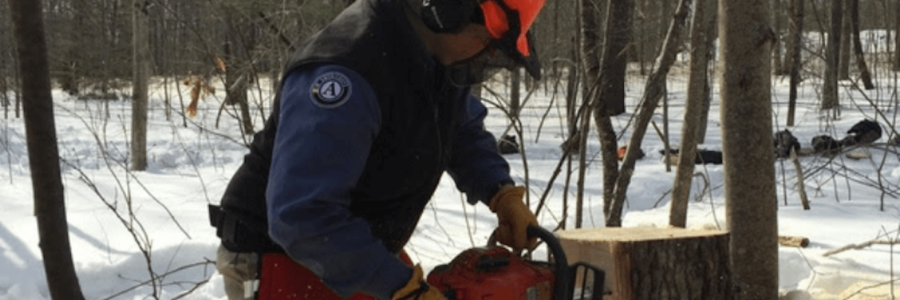
Trail Training Members serve Maine’s communities, participate in the AmeriCorps program, receive leadership training and gain hands-on experience.  MCC is dedicated to accomplishing outdoor recreation and conservation projects for the public, promoting and managing volunteer opportunities, providing conservation education, building self-esteem and leadership, strengthen the future employability of members, while raising the aspirations of members and volunteers. 

Attitude:

  • Have the ability to live and perform strenuous work under challenging conditions
  • Have the desire to learn, serve others, and make a difference
  • Ability to perform tasks as part of a cooperative team
  • Follows directions
  • Non-judgmental attitude, sensitivity to others, approachable
  • Responsible and reliable
  • Interest in personal growth and in participating in on-going training

Qualifications:

  • Must be eligible for AmeriCorps Education Award – 300 hour term during training
  • High School diploma
  • Must be at least 20 years old
  • Must be a US Citizen
  • Must submit to criminal history checks
  • One season of outdoor living experience

Desired Skills:

  • Approved to drive State vehicles by the Risk Management Division
  • Good communication skills
  • Strong organizational skills
  • Excellent work ethic
  • Possesses motivation and initiative
  • Previous conservation experience
  • Ability to teach

Program-specific Duties:

  • Learn all aspects of trail construction and rehabilitation.
  • Participate in and lead job readiness training workshops
  • Adhere to the MCC safety rules and guidelines.
  • Adhere to the MCC Code of Conduct, and all guidelines set forth in member agreement and MCC Handbook.
  • Adhere to the MCC drug free workplace policy.
  • Submit paperwork in a timely manner
  • Represent, in a professional and supportive manner, the MCC, to the public and media.
  • Live cooperatively with other members during training and service sessions.  Willingly perform joint living tasks, such as food shopping, cooking and cleaning and maintaining hygiene.
  • Build new trails and rehabilitate existing trail
  • Build bridges, wooden ladders, retaining walls, etc.
  • Construct rock water bars, retaining walls, causeways, stone steps, etc.
  • Clear trails (cut and haul brush, dig to mineral soil, pull stumps, etc.)
  • Other tread way work (crush rock, haul gravel)
  • Assume the key responsibilities of a MCC Field Team Leader, upon the successful completion of trail training

Training:

  • Attend training, such as: Wilderness First Responder, chainsaw safety training, Maine Driving Dynamics, Griphoist operations, building with stone and stonecutting, introduction to small engines and power tools, camping skills, outdoor leadership, trail design and layout, harassment awareness, and project planning.
  • Attend member orientation training, such as: leadership styles, communication, and conflict case studies
  • Job readiness skills – resume  and cover letter writing, job search components, appropriate workplace behaviors, interview skills

Schedule: 40 hours a week; overnights and weekends required

Benefits: Stipend of $150 per week during training; $270 – $440 per week during field season (less taxes); Housing during training and orientation; health insurance; $1,221.96 AmeriCorps Education Award (300 hour term during training); Student Loan Forbearance, if eligible; State Park Pass

To Apply: By December 30th, submit a MCC Application, Certifications, and References. Please email Corps.Conservation@maine.gov for questions and information

Unemployed, underemployed, minorities and veterans are encouraged to apply.

The Maine Conservation Corps provides equal opportunity in employment and programs. Reasonable accommodations may be made to enable individuals with disabilities to perform essential functions. Accommodation arrangements must be requested in advance by contacting MCC staff.

Related

Filed Under: Job Opportunities, Off-campus

Opportunities Post Categories

  • Opportunities (520)
    • Education Opportunities (205)
    • Funding Opportunities (54)
    • Internship Opportunities (91)
    • Job Opportunities (114)
    • Off-campus (245)
    • On-campus (99)
    • Study Abroad Opportunities (25)
    • Volunteer Opportunities (53)
  • Post (23)

Recent ENVS Posts

Who is she?: Gaia and other Big Words
16th May 18By KT Kelly
Prioritization of Conservation: Intersections of the Peruvian Amazon and the Andean Mountain Range
8th May 18By Jon Hosch
Capstone 3
5th May 18By Alannah Balfour
Capstone #2
5th May 18By Alannah Balfour
Capstone #1
5th May 18By Alannah Balfour
Kokuritsukouen: The Past and Future of Japan’s National Parks
4th May 18By Rachel Aragaki
Investigating Climate Change: Understanding the Effects of Increasing Sea Surface Temperature (SST) on Arctic Fish Populations
3rd May 18By Marissa Weileder
Analyzing Anthropogenic Influence: A Look into How Humans Have Shaped the Perceptions of Climate Change
3rd May 18By Marissa Weileder
Freshwater & Fish: A Case Study of the Effects of Melting Permafrost on Arctic Freshwater Species
3rd May 18By Marissa Weileder
If You Die in the Game, You Die in Real Life: Video Game Environments and Disaster Preparedness
3rd May 18By Rachel Aragaki
Knickpoint Retreat and Stream Channel Morphology in the Columbia River Gorge
3rd May 18By Shawn Bolker
Barriers to Justice: Environmental Litigation in Hawaii
3rd May 18By Kassie Kometani
Satoyama Services: Historical versus Modern Roles of Japan’s Hybridized Landscapes
3rd May 18By Rachel Aragaki
Development Indicators for Fostering Development in Cambodia
3rd May 18By Nick Sievers
Building Flood Resilience in Urban Australia
3rd May 18By Curtis Hall
Choosing Direct Trade: Combating Vulnerability of Smallholding Coffee Farmers
3rd May 18By Evan Howell
Home-Based Water Recycling in Urban Australia
3rd May 18By Curtis Hall
The Sinking of Christchurch: Increased Flood Vulnerability after the 2011 Christchurch Earthquake
3rd May 18By Curtis Hall
Implications of a Growing Middle Class and Increased Consumption Patterns in India
3rd May 18By Nick Sievers
Alleviating Marginalization with Your Wallet: Investigating Fair Trade Coffee Consumer Behavior in Portland, Oregon
3rd May 18By Evan Howell
Religious Pilgrimage and Tourism on Mt. Fuji, Japan
3rd May 18By Shawn Bolker
Situating National Environmental Policies Within a Global Market (Proposal 3)
3rd May 18By Jonas Miller-Stockie
Using Trees to Alleviate the Coffee Crisis: Investigating Farmers’ Knowledge of Ecosystem Services in Veracruz, Mexico
3rd May 18By Evan Howell
Energy Security in South Korea: Methods of Reducing Foreign Fossil-Fuel Dependency
3rd May 18By Nick Sievers
Capstone Proposal #3: The Role Of Environmental Lobbying Firms Towards Progress In Environmental Policy In the U.S.
3rd May 18By Sabrina Cerquera
How the American People Conserve Energy: Can they Do Better?
3rd May 18By Jack Kamysz
Mediation of Climate Change in the U.S.
3rd May 18By Jack Kamysz
Assessing the Impacts of Waterfall Tourism in the Columbia River Gorge
3rd May 18By Shawn Bolker
Violence in Colombia: Illegal Gold Mining Leaves Indigenous Colombians at Risk
3rd May 18By Grace Boyd
The Interactions between hard and soft law in the Comprehensive Nuclear Test Ban Treaty
3rd May 18By Jack Kamysz

Recent Opportunity Posts

Eco Practicum Catskills – application deadline extension

Eco Practicum Catskills – application deadline extension

May 2, 2018

Actionable Climate Science Skills-Building Webinar Series

Actionable Climate Science Skills-Building Webinar Series

April 26, 2018

Lewis and Clark Summer Geospatial Project Assistant Student Position

Lewis and Clark Summer Geospatial Project Assistant Student Position

April 26, 2018

More Opportunity Posts

Digital Scholarship Multisite © 2018 · Lewis & Clark College · Environmental Studies Program · Log in