• About
    • This Site & ENVS
    • ENVS Site Navigation
  • Communications
    • Communications Archives
      • ENVS Announcements Archive
      • ENVS Alum Email Archive
      • ENVX Newsletter Archive
    • Contact ENVS/DS SAAB Tutors
    • Instagram Feed
    • Make an Appointment
    • Nominate Your Post/Project/Site
    • Opportunities Posts
    • Poster Design
    • Share/Read/Display DS Site Post RSS Feeds
  • Major/Minor Info
    • The ENVS Major & Minor
    • ENVS Core Courses
    • ENVS 244/295/499
    • Future Courses
    • Your Student Record
    • Your Concentration
    • Your Projects
    • Your Senior Capstone
    • Related PSU/PCC Courses
  • Course Resources
    • Doing Situated Research
      • Situated Research Details
    • ENVS Course & Project Portfolio Templates
      • Course Portfolio Template
      • Project Portfolio Template
    • ENVS Records: Scoring Rubrics
    • Interdisciplinarity and Concept Mapping
    • Mapping Actors & Processes
    • Models of Environmental Communication
    • New York Times Environment Articles
    • Resources for ENVS Topics
      • ENVS Topics Glossary
    • Share Spatial Data
    • Style Reminders for ENVS Students
    • Styling Citations via Chicago Author-Date
  • Databases
    • About Student Databases
    • ENVS Students
    • ENVS Concentrations
    • Senior Capstones
    • Student Projects
    • Map of All Projects
  • Other Sites
    • ENVS LC Site ➤
      • Events
      • News
      • Symposium
    • Bridges (ENVS 295)
    • DS Multisite Home ➤
      • DS Help Site
      • DS Training Site
    • EcoTypes Site
    • Environmental Action LLC Site
    • ENVS 160 SP18 (Login Only)
    • ENVS Facebook Page
    • ENVX Site
    • Overseas Site

ENVS Program

Lewis & Clark Environmental Studies

February 23, 2017 3:41 pm

Tatoosh School in Southeast Alaska – Apply today!

Summer field courses and research in Alaska! – Tatoosh School

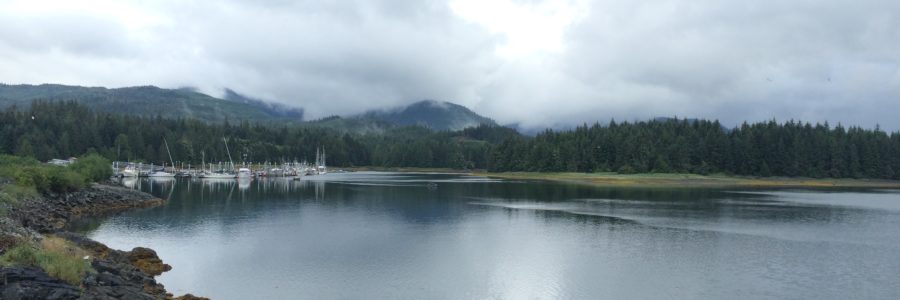
The Tatoosh School is a nonprofit, university-level field school with a beachfront base camp on Prince of Wales Island and lecture halls in the towns, oceans, and forests of Alaska’s Inside Passage. It is the school’s mission to foster first-hand learning about the ecology and environmental policy of southern Southeast Alaska. This summer the Tatoosh School will be offering 3 sessions. See below for descriptions of each session to learn more and check out the Tatoosh School Website.  

3-week Intensive I:  May 17 – June 8, 2017 

Community Ecology: Salmon, People, Place

This 3-week intensive focuses on the communities that inhabit the heart of the Pacific Coastal Ecoregion. Conceived broadly, the course theme of community ecology launches explorations from the outer coast to the Inside Passage to study interactions at varying scales and across biological, social, biophysical, and cultural boundaries.

The CE course will begin with a 4-7 day backcountry expedition in the Prince of Wales Island archipelago. The remainder of CE will be spent in the forests and rivers of Prince of Wales, with a base camp in Coffman Cove. Classes will be interdisciplinary, conducted in both lecture- and activity-based formats.

6-week Summer Session: June 21-August 3, 2017 

Aquatic and Terrestrial Ecology & Politics of Place

The six-week core session is designed to foster first-hand learning about the ecology and environmental policy of southern Southeast Alaska. Expedition-based and experience-centered, this program makes wild lands and the working landscape your lecture hall. A rural base camp is the jumping-off point for sea kayak expeditions on the outer coast and the Inside Passage, linked by lectures from community leaders and stakeholders and participation in two long-term ecological monitoring programs.

3-week Intensive II: August 23-September 14, 2017

Stewardship of Salmon Rivers

There is nothing quite like casting a fly to the schools of salmon and feeding char and trout in the heart of the Pacific Coastal Ecoregion. The crown jewel of the National Forest system, the Tongass includes 17,000 miles of clean, undammed creeks, rivers, and lakes with short runs to the sea. The forest is a fishing paradise, and salmon sustain local culture and rural ways of life. Salmon and trout contribute an estimated $1 billion to the regional economy; stewardship of their habitat is necessary work. The time to learn about and engage in this work is now.

The SSR course will begin with a 4-5 day backcountry expedition in the Prince of Wales Island archipelago.  The remainder of SSR will be spent in the communities of Coffman Cove, Klawock, Craig, and Thorne Bay and in the forests and rivers of the Island.  Classes will be interdisciplinary, conducted in both lecture- and activity-based formats.  In addition, students will receive lectures from experts from across the region to gain a rich understanding of the diversity of perspectives, challenges, and opportunities in the field.

Learn more and apply at http://tatooshschool.org. Questions? peter@tatooshschool.org or 503.347.2599.

Like us on Facebook for the latest updates, videos & photos. http://facebook.com/tatooshschool

And also feel free to contact Tatoosh alumni that attend LC to learn more about their experiences:

Perri Pond (ppond@lclark.edu) and Georgia Reid (reid@lclark.edu).

Related

Filed Under: Education Opportunities, Off-campus, Study Abroad Opportunities

Opportunities Post Categories

  • Opportunities (520)
    • Education Opportunities (205)
    • Funding Opportunities (54)
    • Internship Opportunities (91)
    • Job Opportunities (114)
    • Off-campus (245)
    • On-campus (99)
    • Study Abroad Opportunities (25)
    • Volunteer Opportunities (53)
  • Post (23)

Recent ENVS Posts

Who is she?: Gaia and other Big Words
16th May 18By KT Kelly
Prioritization of Conservation: Intersections of the Peruvian Amazon and the Andean Mountain Range
8th May 18By Jon Hosch
Capstone 3
5th May 18By Alannah Balfour
Capstone #2
5th May 18By Alannah Balfour
Capstone #1
5th May 18By Alannah Balfour
Kokuritsukouen: The Past and Future of Japan’s National Parks
4th May 18By Rachel Aragaki
Investigating Climate Change: Understanding the Effects of Increasing Sea Surface Temperature (SST) on Arctic Fish Populations
3rd May 18By Marissa Weileder
Analyzing Anthropogenic Influence: A Look into How Humans Have Shaped the Perceptions of Climate Change
3rd May 18By Marissa Weileder
Freshwater & Fish: A Case Study of the Effects of Melting Permafrost on Arctic Freshwater Species
3rd May 18By Marissa Weileder
If You Die in the Game, You Die in Real Life: Video Game Environments and Disaster Preparedness
3rd May 18By Rachel Aragaki
Knickpoint Retreat and Stream Channel Morphology in the Columbia River Gorge
3rd May 18By Shawn Bolker
Barriers to Justice: Environmental Litigation in Hawaii
3rd May 18By Kassie Kometani
Satoyama Services: Historical versus Modern Roles of Japan’s Hybridized Landscapes
3rd May 18By Rachel Aragaki
Development Indicators for Fostering Development in Cambodia
3rd May 18By Nick Sievers
Building Flood Resilience in Urban Australia
3rd May 18By Curtis Hall
Choosing Direct Trade: Combating Vulnerability of Smallholding Coffee Farmers
3rd May 18By Evan Howell
Home-Based Water Recycling in Urban Australia
3rd May 18By Curtis Hall
The Sinking of Christchurch: Increased Flood Vulnerability after the 2011 Christchurch Earthquake
3rd May 18By Curtis Hall
Implications of a Growing Middle Class and Increased Consumption Patterns in India
3rd May 18By Nick Sievers
Alleviating Marginalization with Your Wallet: Investigating Fair Trade Coffee Consumer Behavior in Portland, Oregon
3rd May 18By Evan Howell
Religious Pilgrimage and Tourism on Mt. Fuji, Japan
3rd May 18By Shawn Bolker
Situating National Environmental Policies Within a Global Market (Proposal 3)
3rd May 18By Jonas Miller-Stockie
Using Trees to Alleviate the Coffee Crisis: Investigating Farmers’ Knowledge of Ecosystem Services in Veracruz, Mexico
3rd May 18By Evan Howell
Energy Security in South Korea: Methods of Reducing Foreign Fossil-Fuel Dependency
3rd May 18By Nick Sievers
Capstone Proposal #3: The Role Of Environmental Lobbying Firms Towards Progress In Environmental Policy In the U.S.
3rd May 18By Sabrina Cerquera
How the American People Conserve Energy: Can they Do Better?
3rd May 18By Jack Kamysz
Mediation of Climate Change in the U.S.
3rd May 18By Jack Kamysz
Assessing the Impacts of Waterfall Tourism in the Columbia River Gorge
3rd May 18By Shawn Bolker
Violence in Colombia: Illegal Gold Mining Leaves Indigenous Colombians at Risk
3rd May 18By Grace Boyd
The Interactions between hard and soft law in the Comprehensive Nuclear Test Ban Treaty
3rd May 18By Jack Kamysz

Recent Opportunity Posts

Eco Practicum Catskills – application deadline extension

Eco Practicum Catskills – application deadline extension

May 2, 2018

Actionable Climate Science Skills-Building Webinar Series

Actionable Climate Science Skills-Building Webinar Series

April 26, 2018

Lewis and Clark Summer Geospatial Project Assistant Student Position

Lewis and Clark Summer Geospatial Project Assistant Student Position

April 26, 2018

More Opportunity Posts

Digital Scholarship Multisite © 2018 · Lewis & Clark College · Environmental Studies Program · Log in