• About
    • This Site & ENVS
    • ENVS Site Navigation
  • Communications
    • Communications Archives
      • ENVS Announcements Archive
      • ENVS Alum Email Archive
      • ENVX Newsletter Archive
    • Contact ENVS/DS SAAB Tutors
    • Instagram Feed
    • Make an Appointment
    • Nominate Your Post/Project/Site
    • Opportunities Posts
    • Poster Design
    • Share/Read/Display DS Site Post RSS Feeds
  • Major/Minor Info
    • The ENVS Major & Minor
    • ENVS Core Courses
    • ENVS 244/295/499
    • Future Courses
    • Your Student Record
    • Your Concentration
    • Your Projects
    • Your Senior Capstone
    • Related PSU/PCC Courses
  • Course Resources
    • Doing Situated Research
      • Situated Research Details
    • ENVS Course & Project Portfolio Templates
      • Course Portfolio Template
      • Project Portfolio Template
    • ENVS Records: Scoring Rubrics
    • Interdisciplinarity and Concept Mapping
    • Mapping Actors & Processes
    • Models of Environmental Communication
    • New York Times Environment Articles
    • Resources for ENVS Topics
      • ENVS Topics Glossary
    • Share Spatial Data
    • Style Reminders for ENVS Students
    • Styling Citations via Chicago Author-Date
  • Databases
    • About Student Databases
    • ENVS Students
    • ENVS Concentrations
    • Senior Capstones
    • Student Projects
    • Map of All Projects
  • Other Sites
    • ENVS LC Site ➤
      • Events
      • News
      • Symposium
    • Bridges (ENVS 295)
    • DS Multisite Home ➤
      • DS Help Site
      • DS Training Site
    • EcoTypes Site
    • Environmental Action LLC Site
    • ENVS 160 SP18 (Login Only)
    • ENVS Facebook Page
    • ENVX Site
    • Overseas Site

ENVS Program

Lewis & Clark Environmental Studies

April 26, 2018 9:27 am

Mosaic Ecology hiring a Data Technician I/Assistant Crew Leader

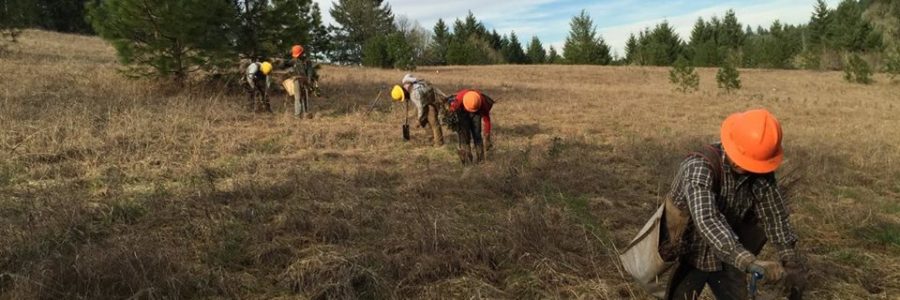
Mosaic Ecology is looking for experienced individuals to assist in data collection and crew leadership within a growing habitat restoration company. The applicant should provide experience in the form of various data collection methods, while contributing as a part of a field crew. This position shifts between various roles to conduct a diverse array of tasks.

Preferred Qualifications:

  • Bachelors degree or higher in Biology, Ecology, Environmental Science, Environmental Studies, Geology, Geography, or similar field;
  • At least one year of work experience in ecological restoration or similar field;
  • Applicable college level classes or experience with geospatial technologies and ArcGIS;
  • Experience with plant identification through coursework or previous employment;
  • Clearly demonstrates the ability and willingness to conduct hard labor, learn, and be a part of a team.

Job Responsibilities: Data Technician IThe Data Technician 1 assists the staff biologist in projects associated with vegetation surveys, GIS mapping, drone flights, and similar data collection tasks. Specific job duties include:

  • Possessing an advanced understanding of geospatial equipment and programs in order to collect data, conduct maintenance, and trouble shoot issues in the field;
  • Assisting and leading fellow data collectors by foot, vehicle, or boat;- Learning to identify target plants within the field and through use of a dichotomous key;
  • Analyzing and presenting geospatial data collected in the field using ArcGIS, Excel, remote sensing software, and similar programs;
  • Adhering to FAA laws associated with drone flights;
  • Leading survey and data collection efforts in the absence of staff biologist;
  • Utilizing technology and quality assurance protocols to efficiently collect high quality data;
  • Acquiring and maintaining an aquatic CPA category and Part 107 FAA license;
  • Assisting in and taking lead on job bids related to GIS, and drone projects;
  • Communicating daily with project lead when independently collecting or processing data.

Job Responsibilities: Assistant Crew Lead:

  • Creating and maintaining a positive team environment;
  • Having the knowledge and ability to mix herbicide safely and effectively;
  • Acquiring and maintaining a State of Oregon Commercial Pesticide License in multiple categories;
  • Identifying a majority of the common native and invasive plants of the PNW;
  • Teaching crew members common native and non-native trees, shrubs, and herbaceous species as well as their preferred habitats;
  • Knowing the best techniques for managing non-native plants and directing others to efficiently and
    appropriately implement those management techniques.
  • Teaching and overseeing the correct methodology for installation of bare-root and
    containerized plants, trees, shrubs, plugs, and bulbs;
  • Careful tracking of crew time, herbicides and other materials used at project sites utilizing
    provided technology and programs;
  • Packing and unpacking vehicles, and safely driving to work sites;
  • Finding the most efficient and effective way to utilize resources to accomplish assigned tasks.

Skills Requirements:

  • Ability to communicate effectively with people from diverse backgrounds;
  • Excellent organizational and data management skills;
  • Extensive knowledge of native and non-native plant species, with an emphasis on aquatic flora;
  • Ability to utilize ArcCollector, Fulcrum, Google Suite, mobile tablets, UAVs, various GPS receivers, and other forms of software/hardware for data collection in the field;
  • Ability to efficiently utilize office time and work independently in the field;
  • Excellent spatial awareness and ability to interpret maps while off trail and out of cell service;
  • Advanced knowledge of state and federal regulations related to workplace safety;
  • Understanding of safety requirements for applicable agencies and our insurance providers;
  • Ability to make independent, well-reasoned decisions while knowing when to ask for instruction;
  • Knowledge of the principles of operating and maintaining gas powered tools;
  • Good driving record;
  • Proficiency with speaking, reading, and writing in English.

Schedule and Benefits:

  • Work-Week: 40 hours per week (Scheduling to be determined based on weather and work needs.) Overtime will be regularly required in order to complete record keeping and driving responsibilities.
  • This is a year round position.
  • Wage:  $20/hour worked.
  • Simple IRA upon eligibility
  • Health insurance reimbursement upon eligibility
  • Paid Time Off: 120 hours per calendar year.
  • Six paid holidays (New Year’s Day, Memorial Day, Fourth of July, Labor Day, Thanksgiving, Christmas Day)

Position Breakdown (Changes seasonally)

  • 20% Assisting lead biologist in data collection projects
  • 20% Independently conducting data collection or data processing
  • 20% Assisting crew leader in restoration projects
  • 40% Field work as part of restoration crew


Interested applicants should submit a cover letter and resume by e-mail to Lauren@MosaicEcology.com the subject line reading “Data Technician I/ Assistant Crew Lead” by 4/30/2018. 

Related

Filed Under: Job Opportunities, Off-campus, Opportunities

Opportunities Post Categories

  • Opportunities (520)
    • Education Opportunities (205)
    • Funding Opportunities (54)
    • Internship Opportunities (91)
    • Job Opportunities (114)
    • Off-campus (245)
    • On-campus (99)
    • Study Abroad Opportunities (25)
    • Volunteer Opportunities (53)
  • Post (23)

Recent ENVS Posts

Who is she?: Gaia and other Big Words
16th May 18By KT Kelly
Prioritization of Conservation: Intersections of the Peruvian Amazon and the Andean Mountain Range
8th May 18By Jon Hosch
Capstone 3
5th May 18By Alannah Balfour
Capstone #2
5th May 18By Alannah Balfour
Capstone #1
5th May 18By Alannah Balfour
Kokuritsukouen: The Past and Future of Japan’s National Parks
4th May 18By Rachel Aragaki
Investigating Climate Change: Understanding the Effects of Increasing Sea Surface Temperature (SST) on Arctic Fish Populations
3rd May 18By Marissa Weileder
Analyzing Anthropogenic Influence: A Look into How Humans Have Shaped the Perceptions of Climate Change
3rd May 18By Marissa Weileder
Freshwater & Fish: A Case Study of the Effects of Melting Permafrost on Arctic Freshwater Species
3rd May 18By Marissa Weileder
If You Die in the Game, You Die in Real Life: Video Game Environments and Disaster Preparedness
3rd May 18By Rachel Aragaki
Knickpoint Retreat and Stream Channel Morphology in the Columbia River Gorge
3rd May 18By Shawn Bolker
Barriers to Justice: Environmental Litigation in Hawaii
3rd May 18By Kassie Kometani
Satoyama Services: Historical versus Modern Roles of Japan’s Hybridized Landscapes
3rd May 18By Rachel Aragaki
Development Indicators for Fostering Development in Cambodia
3rd May 18By Nick Sievers
Building Flood Resilience in Urban Australia
3rd May 18By Curtis Hall
Choosing Direct Trade: Combating Vulnerability of Smallholding Coffee Farmers
3rd May 18By Evan Howell
Home-Based Water Recycling in Urban Australia
3rd May 18By Curtis Hall
The Sinking of Christchurch: Increased Flood Vulnerability after the 2011 Christchurch Earthquake
3rd May 18By Curtis Hall
Implications of a Growing Middle Class and Increased Consumption Patterns in India
3rd May 18By Nick Sievers
Alleviating Marginalization with Your Wallet: Investigating Fair Trade Coffee Consumer Behavior in Portland, Oregon
3rd May 18By Evan Howell
Religious Pilgrimage and Tourism on Mt. Fuji, Japan
3rd May 18By Shawn Bolker
Situating National Environmental Policies Within a Global Market (Proposal 3)
3rd May 18By Jonas Miller-Stockie
Using Trees to Alleviate the Coffee Crisis: Investigating Farmers’ Knowledge of Ecosystem Services in Veracruz, Mexico
3rd May 18By Evan Howell
Energy Security in South Korea: Methods of Reducing Foreign Fossil-Fuel Dependency
3rd May 18By Nick Sievers
Capstone Proposal #3: The Role Of Environmental Lobbying Firms Towards Progress In Environmental Policy In the U.S.
3rd May 18By Sabrina Cerquera
How the American People Conserve Energy: Can they Do Better?
3rd May 18By Jack Kamysz
Mediation of Climate Change in the U.S.
3rd May 18By Jack Kamysz
Assessing the Impacts of Waterfall Tourism in the Columbia River Gorge
3rd May 18By Shawn Bolker
Violence in Colombia: Illegal Gold Mining Leaves Indigenous Colombians at Risk
3rd May 18By Grace Boyd
The Interactions between hard and soft law in the Comprehensive Nuclear Test Ban Treaty
3rd May 18By Jack Kamysz

Digital Scholarship Multisite © 2018 · Lewis & Clark College · Environmental Studies Program · Log in